Lenovo 4XB7A93484 ThinkSystem 30.72TB U.2 NVMe PCIe 5.0 Read Intensive SSD
Overview
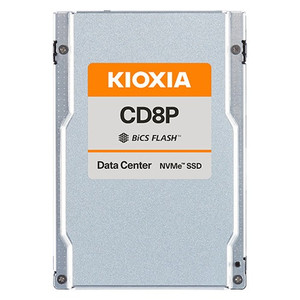
The Lenovo 4XB7A93484 is a 30.72TB, 2.5-inch U.2 NVMe solid-state drive built for ThinkSystem servers running read-dominated workloads — think video surveillance archives, AI inference data lakes, analytics query engines, and high-throughput object storage tiers where sequential read bandwidth and random IOPS per terabyte define the performance ceiling. Running on a PCIe 5.0 x4 interface, this drive delivers bandwidth figures that prior-generation PCIe 4.0 U.2 drives simply cannot reach, making it the right call when you are refreshing a storage node and need to extract maximum throughput per drive bay without adding slots.
At 30.72TB on a single 2.5-inch carrier, this drive fits a high-density JBOF or all-flash array shelf without consuming additional U.2 or E3.S slots. TLC NAND keeps cost-per-terabyte lower than SLC or MLC alternatives while still delivering the endurance profile appropriate for read-intensive enterprise workloads.
Key Features
- 1,600,000 Random Read IOPS (4KB): At 1.6 million read IOPS, a single 4XB7A93484 can handle the concurrent random-read demand of dozens of simultaneous video stream retrievals or database index scans without becoming a bottleneck. This is the spec that matters most for surveillance VMS playback servers pulling stored footage for forensic review across large deployments.
- 10,000 MB/s Sequential Read Throughput: PCIe 5.0 x4 delivers a 10 GB/s sequential read ceiling — roughly 2× what a PCIe 4.0 x4 drive achieves. If your workload involves large sequential reads (bulk video export, AI model loading, analytics scan queries), this bandwidth headroom directly reduces job completion time.
- 4,900 MB/s Sequential Write Throughput: At 4.9 GB/s sustained sequential write, ingest pipelines feeding continuous video recording or bulk data migration won't stall waiting on storage. This is adequate for most write-intensive ingest scenarios even though the drive is positioned as read-intensive.
- 150,000 Random Write IOPS (4KB): Write IOPS are intentionally lower than read — consistent with a read-optimized NAND layout. For workloads that are 80%+ read (surveillance replay, cold analytics), 150K write IOPS is more than sufficient; if your ratio runs closer to 50/50, evaluate a mixed-use variant instead.
- 99 µs Read Latency / 10 µs Write Latency: Sub-100 µs read latency keeps application response times predictable under queue depth. The 10 µs write latency figure is especially tight for a TLC drive at this capacity, reflecting the PCIe 5.0 controller's reduced command completion overhead versus older NVMe generations.
- TCG Opal 2.0 Hardware Encryption: Self-encrypting drive capability via TCG Opal 2.0 means data-at-rest encryption is handled entirely in the drive controller — no CPU overhead, no software key management complexity on the host. Encryption is always-on from a compliance standpoint once provisioned, which matters for HIPAA, PCI-DSS, and government security requirements on stored video or sensitive datasets.
- Hot-Swap Support: The U.2 hot-swap carrier design lets you pull and replace the drive without taking the server offline. In multi-bay storage nodes, this eliminates maintenance windows for drive replacement — critical in 24/7 surveillance recording environments where downtime means lost footage.
- S.M.A.R.T. Support: Full S.M.A.R.T. telemetry integrates with ThinkSystem XClarity and third-party monitoring stacks, giving you predictive failure alerts before a drive drops out of a RAID or erasure-coded pool. Catching a degrading drive before it fails is the difference between a planned hot-swap and an unplanned rebuild event on a 30TB member.
- TLC NAND, Read-Intensive Endurance Profile: TLC cells deliver a favorable cost-per-terabyte versus MLC at this capacity tier. For workloads where read/write ratios exceed 4:1, TLC endurance is well-matched — the drive's wear rate under mostly-read workloads will be a fraction of what a write-heavy workload would impose.
Integration and Compatibility
The 4XB7A93484 is a ThinkSystem-qualified U.2 NVMe drive designed to install directly into compatible Lenovo ThinkSystem servers with U.2 (SFF-8639) hot-swap bays. It operates on the PCIe 5.0 x4 interface standard, which requires a host platform with PCIe 5.0 U.2 connectivity — confirm your ThinkSystem server generation and backplane revision before ordering, as PCIe 4.0 backplanes will negotiate down to PCIe 4.0 speeds and you will not realize the full 10,000 MB/s read ceiling. The U.2 form factor is mechanically compatible with most 2.5-inch NVMe hot-swap trays, but electrical compatibility depends on backplane generation. Pair with Lenovo XClarity Administrator for SMART monitoring, firmware update management, and predictive failure alerting across a fleet of these drives in a storage-dense deployment.
For enterprise data storage configurations combining this drive with surveillance or analytics workloads, verify your RAID controller or software-defined storage layer (e.g., Ceph, ONTAP, VMware vSAN) supports NVMe-native passthrough or NVMe-oF for maximum IOPS delivery. Placing a traditional SAS/SATA RAID controller in the path will negate the PCIe 5.0 bandwidth advantage. Review Lenovo's ThinkSystem server storage compatibility matrices for validated configurations and any minimum firmware requirements for this specific drive capacity point.
Frequently Asked Questions
Q: What PCIe generation does the 4XB7A93484 use, and does it work in PCIe 4.0 servers?
A: The 4XB7A93484 runs on PCIe 5.0 x4. It is backward-compatible with PCIe 4.0 backplanes, but the drive will negotiate down to PCIe 4.0 x4 speeds — meaning sequential read throughput will be roughly half the rated 10,000 MB/s maximum. If your server has a PCIe 4.0 backplane, the drive will function, but you won't achieve the full 10 GB/s ceiling until you're on a PCIe 5.0 platform.
Q: Is the 4XB7A93484 a self-encrypting drive (SED)?
A: Yes. It supports TCG Opal 2.0 hardware encryption, making it a self-encrypting drive. Encryption is handled entirely in the drive controller — no host CPU overhead. This satisfies data-at-rest encryption requirements for compliance frameworks such as HIPAA, PCI-DSS, and government security mandates, provided it is provisioned correctly via compatible management software.
Q: What is the rated random read IOPS for this drive?
A: The 4XB7A93484 is rated at 1,600,000 random read IOPS at a 4KB block size. Random write IOPS are rated at 150,000 — consistent with its read-intensive classification. If your workload is write-heavy or mixed-use at a near 50/50 ratio, consider a mixed-use NVMe variant instead.
Q: Does this drive support hot-swap replacement?
A: Yes. The 4XB7A93484 ships in a U.2 hot-swap carrier format, allowing drive replacement in compatible ThinkSystem servers without taking the host system offline. This is particularly important in 24/7 recording and storage environments where unplanned downtime carries an operational cost.
Q: What NAND type does the 4XB7A93484 use, and how does that affect endurance?
A: It uses TLC (Triple-Level Cell) NAND. TLC delivers a better cost-per-terabyte than MLC or SLC at the 30.72TB capacity point. For read-intensive workloads — where write cycles are a small fraction of total I/O — TLC endurance is well-suited and the additional cost of MLC would not be justified. If your workload is write-heavy, a different drive classification is more appropriate.
Q: What is the read latency on the 4XB7A93484?
A: Random read latency is rated at up to 99 µs and random write latency at up to 10 µs. These are controller-level latency figures — actual application latency will be higher depending on queue depth, host path overhead, and workload mix, but sub-100 µs read latency keeps most latency-sensitive applications well within acceptable response bounds.
When I look at the 4XB7A93484, the number that stands out immediately is 10,000 MB/s sequential read — that is a PCIe 5.0 x4 ceiling that prior-generation U.2 drives cannot touch, and at 30.72TB per 2.5-inch slot, it reshapes the economics of high-density read-heavy storage nodes. This drive is purpose-built for architectures where you are pulling far more data than you are writing.
Technical Highlights:
- 1,600,000 Read IOPS @ 4KB: In a surveillance VMS playback server or analytics query node, 1.6 million IOPS means this single drive can service a very large number of concurrent random-read requests before saturating. Most all-flash array workloads won't push it anywhere near that ceiling in normal operation.
- TCG Opal 2.0 Hardware Encryption: Self-encrypting drive capability means zero CPU-side encryption overhead. On a storage-dense node running 12–24 of these drives, that is a meaningful difference versus software-layer AES encryption — you keep all host compute cycles for your actual workload.
- 99 µs Read Latency: Sub-100 µs at the drive level is achievable here because the PCIe 5.0 controller reduces command path latency compared to PCIe 4.0 predecessors. Stack NVMe-oF on top and you can still deliver sub-millisecond application latency across a fabric.
Deployment Considerations:
- PCIe 5.0 x4 requires a PCIe 5.0 U.2 backplane — confirm your ThinkSystem server generation explicitly. A PCIe 4.0 backplane will accept the drive but cap sequential read at roughly 5,000 MB/s, negating the primary performance argument for this SKU over a less expensive PCIe 4.0 option.
- TLC NAND at this capacity is appropriate for read-intensive ratios (80%+ read). If your workload drifts toward mixed-use or write-heavy over time, monitor endurance telemetry via SMART — the endurance budget will deplete faster than rated under sustained write-heavy conditions.
For a high-density surveillance storage node or AI inference data tier running on current-generation ThinkSystem servers, the 4XB7A93484 is a strong fit: 30.72TB per bay minimizes slot consumption, PCIe 5.0 throughput handles bulk sequential reads without bottlenecking, and the Opal 2.0 SED capability checks the encryption compliance box at zero performance cost.