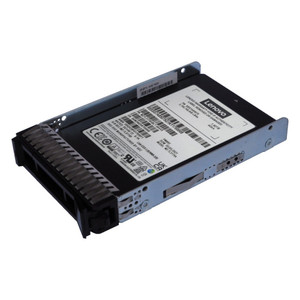
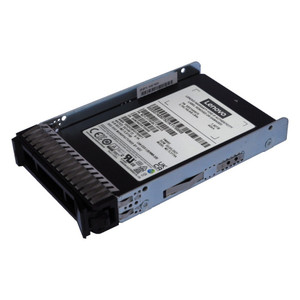
Lenovo 4XB7A93481 ThinkSystem 2.5-Inch U.2 CD8P 3.84TB Read-Intensive NVMe PCIe 5.0 x4 Hot-Swap SSD
Overview
The Lenovo 4XB7A93481 is a 3.84TB 2.5-inch U.2 NVMe solid-state drive built for ThinkSystem servers running read-heavy enterprise workloads — database query serving, VMS video retrieval, AI inference storage, and large-scale surveillance archive reads. Riding PCIe 5.0 x4, it delivers sequential read throughput that prior-generation PCIe 4.0 drives simply cannot match, making it a practical upgrade path for platforms where storage I/O is the bottleneck. If your ThinkSystem deployment is choking on read-back latency or sequential throughput, this is the drive tier to evaluate first. Explore the broader Lenovo server storage catalog to compare capacity and workload tiers before finalizing your configuration.
Key Features
- PCIe 5.0 x4 Interface (NVMe): PCIe 5.0 doubles the per-lane bandwidth of PCIe 4.0 — translating here into 12,000 MB/s sequential read and 5,500 MB/s sequential write. For workloads that stream large video files or scan wide database tables, that headroom means fewer I/O wait cycles and faster job completion. Check your ThinkSystem platform compatibility list before ordering, as PCIe 5.0 U.2 requires a host slot that supports the generation.
- 1,900,000 Random Read IOPS (4KB): At 1.9 million 4KB random read IOPS, this drive handles dense metadata-heavy workloads — think VMS platforms serving simultaneous playback requests from dozens of operator workstations, or OLTP databases under concurrent query load. The 200,000 random write IOPS figure confirms this is a read-optimized profile: write-heavy workloads (logging, ingest) belong on a write-intensive or mixed-use tier instead.
- 69 µs Read Latency / 10 µs Write Latency: Sub-70 microsecond read latency is meaningful in latency-sensitive environments — real-time analytics pipelines, video forensics retrieval, or any application where the storage layer is in the critical path. The 10 µs write latency is notably low for a read-intensive drive, keeping write acknowledgments fast even under bursts.
- 3.84 TB TLC NAND Capacity: TLC NAND at 3.84TB hits the sweet spot between cost-per-gigabyte and endurance for read-intensive use. For surveillance deployments retaining 30–90 days of high-resolution footage per server node, a single drive at this capacity reduces slot consumption compared to smaller 1.92TB units, freeing bays for expansion or redundancy.
- Hot-Swap Support: The U.2 hot-swap carrier means drive replacement happens without powering down the host — critical in 24/7 surveillance, financial, or healthcare environments where planned downtime is not an option. Pair with a RAID or storage-pool configuration to maintain availability during a swap.
- TCG Opal 2.0 Hardware Encryption: On-drive hardware encryption via TCG Opal 2.0 offloads encryption processing from the host CPU and meets enterprise data-at-rest compliance requirements (HIPAA, PCI-DSS, and similar frameworks). Drives can be cryptographically erased in seconds — useful for asset decommissioning without physical destruction.
- S.M.A.R.T. Monitoring: Full S.M.A.R.T. support means your storage management stack can track wear indicators, reallocated sector counts, and endurance remaining — giving you early warning before a failure event rather than a surprise outage. Most ThinkSystem management tools surface S.M.A.R.T. data natively via XClarity.
- Read-Intensive (RI) Workload Targeting: Lenovo's RI classification reflects the endurance rating and NAND write budget behind this drive. For enterprise server storage deployments where the read-to-write ratio exceeds roughly 70:30, the RI tier gives you more capacity per dollar than a mixed-use drive without sacrificing the endurance you need. If your workload is balanced or write-heavy, evaluate the mixed-use variant in the CD8P family instead.
Integration and Compatibility
The 4XB7A93481 is designed for Lenovo ThinkSystem servers that expose U.2 (SFF-8639) NVMe drive bays with PCIe 5.0 backplane support. Verify your specific ThinkSystem platform's Storage Configuration Guide — not every U.2 bay in every chassis runs PCIe 5.0; some bays are electrically limited to PCIe 4.0 or PCIe 3.0 even if the connector is physically U.2. Mixing PCIe generations within a storage pool is technically possible but will cap array performance to the slowest member. For network video recorder platforms built on ThinkSystem compute, this drive pairs well with Lenovo's RAID adapters that support NVMe passthrough or NVMe RAID, depending on your redundancy model. The TCG Opal 2.0 encryption layer requires a compatible key management solution (ISE or SED management via XClarity or third-party tools) to activate — drives ship in unencrypted mode by default and must be provisioned before sensitive data is written. Review your NVMe SSD selection guide for guidance on matching drive tiers to VMS and AI workload profiles.
Frequently Asked Questions
Q: What is the sequential read throughput of the Lenovo 4XB7A93481?
A: The 4XB7A93481 delivers up to 12,000 MB/s sequential read and 5,500 MB/s sequential write throughput using the PCIe 5.0 x4 interface, as measured via ATTO benchmark methodology.
Q: Is this drive compatible with non-Lenovo servers?
A: The 4XB7A93481 uses a standard U.2 (SFF-8639) connector and NVMe protocol, so physical installation in a non-Lenovo U.2 bay is possible. However, Lenovo ThinkSystem drives are validated and supported on ThinkSystem platforms — compatibility with third-party servers is not guaranteed and firmware updates are distributed through Lenovo's update channels.
Q: Does the 4XB7A93481 support hardware encryption?
A: Yes. The drive implements TCG Opal 2.0 hardware-based self-encrypting drive (SED) technology. Encryption is handled on the drive controller without CPU overhead. Key management must be configured via a compatible solution before the encryption layer is active — the drive does not encrypt automatically out of the box.
Q: What is the random read IOPS rating and what workloads does it suit?
A: The drive is rated at 1,900,000 random read IOPS and 200,000 random write IOPS at 4KB block size. The read-to-write ratio in the IOPS spec confirms this is optimized for read-dominant workloads: VMS video playback and retrieval, database query serving, AI inference, and surveillance archive access. Write-intensive workloads such as continuous ingest or logging should use a mixed-use or write-intensive drive tier.
Q: Does the 4XB7A93481 support hot-swap?
A: Yes. The drive is hot-swap capable, meaning it can be removed and replaced while the server remains powered on, provided the host backplane and OS/storage stack support hot-plug NVMe. Consult your ThinkSystem platform documentation to confirm hot-plug NVMe is enabled in the firmware configuration.
Q: What NAND type does this drive use, and why does it matter?
A: The 4XB7A93481 uses TLC (Triple-Level Cell) NAND. TLC offers a favorable cost-per-gigabyte for read-intensive workloads. Because TLC writes fewer program/erase cycles than MLC before wearing out, Lenovo rates this drive for read-intensive duty cycles rather than sustained heavy writes — matching the RI classification in the part number.
The spec that stands out to me on the 4XB7A93481 is the 1,900,000 random read IOPS at 4KB — that is not a rounding-error improvement over prior-generation U.2 NVMe drives, it is a genuine step change enabled by the PCIe 5.0 x4 bus. For integrators sizing storage nodes for large VMS deployments or AI-inferencing pipelines where dozens of concurrent read streams compete for I/O, this drive tier removes the storage bottleneck that used to force architects into larger all-flash arrays.
Technical Highlights:
- 12,000 MB/s Sequential Read: PCIe 5.0 x4 delivers twice the raw bus bandwidth of PCIe 4.0 x4 — at 12 GB/s sequential read, a single drive can saturate most 100GbE network uplinks on its own. For video-streaming workloads serving high-bitrate footage to multiple concurrent clients, this is the spec that collapses what previously required striped drive pools into a single-slot solution.
- TCG Opal 2.0 Hardware Encryption: On-controller encryption means zero CPU tax on the host — relevant in dense server configurations where you are already pushing the processor with analytics or VMS processing. Cryptographic erase on decommission is also substantially faster than software-based overwrite of 3.84TB.
- 69 µs Read Latency: Sub-70 microsecond read response keeps forensic retrieval and database query latency tight. In surveillance environments where operators are scrubbing through hours of multi-camera footage simultaneously, this latency profile prevents the playback stalls that characterize slower SAS or SATA SSD tiers.
Deployment Considerations:
- Confirm your ThinkSystem backplane slot is electrically PCIe 5.0 — not just physically U.2. Some ThinkSystem chassis mix PCIe 4.0 and PCIe 5.0 bays on the same backplane; installing this drive in a PCIe 4.0 slot will cap throughput at roughly half the rated sequential figures and may affect warranty support classification.
- The RI workload rating means endurance is sized for read-dominant duty cycles. If your storage pool handles both continuous write ingest (camera streams writing in real time) and archive reads, profile your actual write percentage before committing to this tier — exceeding the RI write budget accelerates wear and may void drive warranty coverage.
This drive is the right call for ThinkSystem-based VMS archive nodes or AI inference platforms where read throughput and random IOPS are the design constraints — specifically, multi-site surveillance consolidation nodes serving 100+ camera streams from a single server, where prior PCIe 4.0 NVMe tiers were the I/O ceiling.