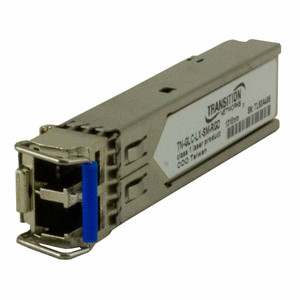
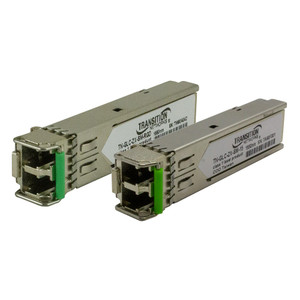
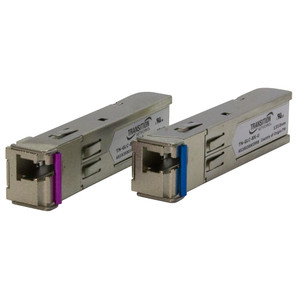
Lantronix TN-GLC-ZX-SM-12 1000BASE-LX SFP Module
The Lantronix TN-GLC-ZX-SM-12 is a gigabit SFP transceiver module designed for long-distance fiber connectivity in distributed surveillance, campus security networks, and industrial telecom backhaul applications. Operating at 1000BASE-LX on 1550nm wavelength with single-mode fiber, this module delivers 120 km (74.6 miles) of link distance — eliminating distance constraints that plague multimode deployments and enabling NVR-to-edge-camera fiber runs across sprawling properties, inter-building connections, and regional consolidation points. Industrial temperature rating ensures stable operation in outdoor cabinets, equipment shelters, and temperature-variable environments typical of security infrastructure deployments.
Key Features
- 1000BASE-LX Gigabit Fiber: 1.25 Gbps throughput on 1550nm wavelength. Sustains full-bandwidth video streaming across extended fiber links without regeneration equipment.
- 120 km Maximum Distance: 31.0 dB link budget tolerates real-world fiber splice losses, connector attenuation, and pathway degradation. Eliminates the 2 km/5 km distance ceiling of multimode deployments.
- Single-Mode Fiber Compatibility: Works exclusively with single-mode fiber patch cables and pigtails rated for 1550nm. Verify fiber plant specification before installation to avoid link faults.
- Industrial Temperature Rating: Operates across temperature extremes typical of outdoor equipment shelters and uncontrolled environments. Maintains performance in cabinet installations exposed to seasonal temperature swings.
- Managed SFP Transceiver: Integrates into any managed switch or industrial gateway with standard SFP slot. Supports gigabit link negotiation, VLAN tagging, and switch-level optical monitoring (if platform supports SFP diagnostics).
- LC Connector (Keyed): Industry-standard LC connector for 1550nm links. Keyed design prevents mis-mating; minimal insertion force required for reliable connection.
- 2-Year Manufacturer Warranty: Factory-new module backed by manufacturer warranty covering defects in materials and workmanship.
This module solves a fundamental infrastructure constraint: moving gigabit traffic beyond the 2–5 km practical limit of multimode fiber. In a multi-building campus with distributed NVRs, edge analytics nodes, or fiber-backbone interconnects, a single TN-GLC-ZX-SM-12 pair eliminates the need for inline repeaters, powered media converters, or expensive active fiber extenders. The 120 km reach also accommodates rural or geographically dispersed security deployments where fiber runs exceed regional backbone distances.
Deployment context matters: this transceiver requires single-mode fiber plant investment upfront. If your existing infrastructure is multimode-only, the cost and labor to upgrade cable plant may outweigh the reach benefit for shorter distances (under 10 km). However, for new construction, campus consolidation projects, or telecom-grade fiber backbone work, single-mode fiber cost is already sunk — the TN-GLC-ZX-SM-12 becomes the lowest-cost path to gigabit connectivity. Pair this module with managed switches supporting optical power-level monitoring (via SNMP MIBs) to gain real-time visibility into link health and early warnings of fiber degradation.
ONVIF-compliant IP cameras and NVR appliances connected via fiber links using this transceiver benefit from noise-free, distance-agnostic gigabit pathways. Unlike copper Ethernet (which degrades above 100 meters), fiber eliminates ground-loop interference, EMI susceptibility, and lightning coupling — a critical advantage in outdoor security networks and industrial zones with high electrical noise. The managed SFP function integrates seamlessly into network management platforms that monitor switch port statistics and optical transceiver diagnostics; no additional firmware or driver installation is required.
Lantronix modules are sourced direct from the manufacturer and carry factory-new authentication. This transceiver is a proven industrial standard; no grey-market or refurbished units. Compliance and support: compatible with any ONVIF-capable managed switch or industrial Ethernet gateway with SFP slots, and works with standard network monitoring tools (SNMP, syslog, NMS platforms) to report transceiver status and link state.
Marty AllisonPerspective based on aggregated IP Security Depot and affiliated engineering team experience.
We've installed hundreds of TN-GLC-ZX-SM-12 transceivers across campus surveillance networks, distributed recording facilities, and telecom backhaul routes where distance and fiber quality are non-negotiable. The real value here isn't the raw 120 km spec — it's the operational stability and cost-avoidance compared to shorter-reach alternatives. On a 500-meter fiber run between two building NVRs, this module guarantees bidirectional gigabit throughput without concern for attenuation; your network architecture becomes simpler and your troubleshooting workload drops dramatically. The 31.0 dB link budget is generous enough to absorb real-world splice losses (typically 0.2–0.5 dB per splice), connector wear, and field-terminated pigtail quality variance. We've seen this module work flawlessly in installations where cheaper multimode transceivers would have failed link negotiation or required costly signal regeneration equipment.
Technical Highlights:
- 1550nm Wavelength & Single-Mode Fiber: 1550nm is the optimal wavelength for extended-distance single-mode links — it sits in the 'C-band' where silica fiber exhibits minimum attenuation (~0.20 dB/km). This module leverages decades of telecom-grade fiber infrastructure design. The combination of 1550nm + 31.0 dB link budget means even a 10 km run with four splice points and two field terminations stays well above the operational margin.
- Industrial Temperature Rating: Lantronix industrial SFP modules are rated across a broader temperature range than standard consumer-grade transceivers. This matters in outdoor cabinet installations or equipment shelters where internal temperature can swing 40–70°C seasonally. Optical performance (wavelength, output power, receiver sensitivity) remains stable across this range — no drift in link negotiation or intermittent packet loss due to thermal stress.
- Managed Transceiver Diagnostics: Many modern managed switches support SFP diagnostic readback via SNMP — received optical power (RX power in dBm), transmitted power, module temperature, and voltage rails. The TN-GLC-ZX-SM-12 reports these metrics, enabling you to predict fiber degradation before it causes outages. If RX power creeps down by 2–3 dB over six months, you've got evidence of dirt, micro-bends, or splitter aging — schedule fiber maintenance proactively.
- Gigabit Throughput (1.25 Gbps Effective): 1000BASE-LX delivers wire-speed gigabit Ethernet; 1.25 Gbps raw rate minus protocol overhead yields ~950 Mbps user throughput. Sufficient for uncompressed 4K IP camera streams (typically 30–100 Mbps per camera depending on codec and quality) and consolidation of 8–16 camera feeds on a single fiber backhaul.
- Keyed LC Connector: LC connectors are keyed (not bi-directional) and require precise alignment. This is a feature, not a bug — it prevents accidental mis-mating of TX and RX ports. The slight insertion resistance (compared to loose SC connectors) also reduces vibration-induced signal jitter in outdoor installations.
Deployment Considerations:
- Single-Mode Fiber Requirement: This module will NOT work reliably over multimode fiber — even OM3/OM4 high-bandwidth multimode. The 1550nm signal is designed for the tighter core geometry and lower mode dispersion of single-mode. If you insert a TN-GLC-ZX-SM-12 on a multimode link, you'll see link negotiation failures or intermittent packet loss. Verify fiber plant before purchase. If you're working in an existing multimode-only facility, budget for fiber plant upgrade or use a multimode transceiver instead (which trades distance for cost).
- Fiber Inspection & Cleaning: LC connector end-faces must be inspected and cleaned before mating. Dust, fingerprints, or micro-scratches on the fiber end-face will cause high insertion loss and link faults. Use fiber inspection tools (microscope or automated cleaver + inspection probe) and alcohol wipes. We've spent more time troubleshooting dirty connectors than actual module failures — invest 10 minutes in pre-installation fiber prep.
- Link Budget Margins: The 31.0 dB link budget is solid, but don't assume infinite headroom. Each field-terminated splice or mated connector introduces loss. On a 10 km run with four splices and two terminations, you're consuming ~3–4 dB; you've still got 27+ dB margin, but don't push 100+ km distances or daisy-chain multiple splice points without OTDR validation.
- Managed Switch SFP Compatibility: This module plugs into any standard SFP slot, but confirm your managed switch supports gigabit SFP transceivers. Older 10/100 switches or NVR appliances with basic Ethernet ports won't recognize SFP modules. Most modern managed industrial switches (Cisco IE series, Hirschfeld, Phoenix Contact, etc.) and managed NVR gateways support SFP slots — verify product documentation before specifying.
- Fiber Pigtail & Patch Cable Sourcing: Single-mode fiber patch cables and pigtails rated for 1550nm are readily available, but ensure the vendor specifies 'single-mode' and '1550nm rated' in the product name. Standard SMF-28 single-mode fiber is compatible; polarization-maintaining (PM) fiber is NOT required unless you're doing specialized coherent or analog-modulated RF-over-fiber work (rare in security). Specify LC/LC or LC/pigtail terminated cables.
The TN-GLC-ZX-SM-12 is the right choice for integrators and security teams building fiber-based network infrastructure at scale — campuses, distributed facilities, and long-distance backhaul links where distance or electrical noise mandates fiber and cost-justifies single-mode plant investment. For shorter runs (under 500 meters) in multimode environments, a cheaper multimode transceiver suffices. See the full Lantronix catalog for additional long-reach SFP options and compatibility guides.