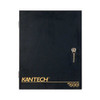
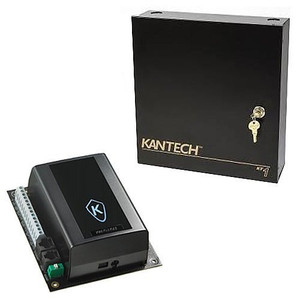
Kantech KT-LOCK Mechanical Cabinet Lock with Keys
The Kantech KT-LOCK is a mechanical keyed cabinet lock engineered to secure Kantech access control and security system enclosures. This lock protects internal wiring harnesses, controller boards, and power supplies from unauthorized access and physical tampering in commercial and institutional deployments. The two-key design provides redundancy for facility personnel while maintaining straightforward keyed-access control without battery or network dependencies.
Key Features
- Mechanical Keyed Lock: No batteries, no electronics — operates reliably in any environment. Mechanical locks eliminate service calls for electronic failures.
- Two Keys Included: Dual-key set provides backup access for maintenance and emergency scenarios without requiring lock replacement.
- Seven-Model Compatibility: Works with KT-400-CAB, KT-MOD-CAB, KT-300CAB, KT-NCC-CAB, KT-4051CAB, KT-CAB3000LDR, and KT-CAB4000LDR cabinets. Single SKU covers most Kantech cabinet deployments.
- Internal Component Protection: Secures controller boards, power supplies, and terminal blocks against casual tampering and physical theft.
- Lightweight Design: 1 lb lock unit fits standard Kantech cabinet door cutouts without modification.
- Field-Installable: Mechanical engagement requires no additional wiring or configuration — install and secure immediately.
Physical security of access control cabinets is foundational to site integrity. Unsecured cabinets expose controller firmware and wiring to unauthorized modification, credential bypass, and component theft. The KT-LOCK closes this gap with straightforward mechanical denial — no complexity, no single point of electronic failure.
In multi-tenant and public-access facilities, cabinet locks are often the only barrier between authorized security infrastructure and untrained or malicious hands. The two-key design distributes access responsibility: one key held by day-shift facility management, a second in secure storage for emergency access. This dual-key model is standard practice in enterprise access control deployments and simplifies key rotation without lock replacement.
Kantech cabinets house controllers managing dozens of doors and readers across a floor or building. A compromised cabinet — whether from physical tampering or unauthorized firmware access — can disable credential readers, lock strikes, or alarm monitoring across an entire zone. The KT-LOCK is a passive, always-on safeguard with zero maintenance overhead. Pair it with regular physical security audits (cabinet inspection rounds) and you've eliminated a significant attack surface.
The lock is manufactured in Canada and included in Kantech's standard cabinet hardware ecosystem. No special tools, no proprietary keys, no integration overhead — this is primary physical security, not an add-on accessory. For facilities already running Kantech controllers (KT-400, KT-MOD, KT-300, KT-NCC, KT-4051 series, or large cabinet models KT-CAB3000LDR and KT-CAB4000LDR), the KT-LOCK is the canonical choice for cabinet-door tamper protection.
Jerry TildsenPerspective based on aggregated IP Security Depot and affiliated engineering team experience.
We've installed the KT-LOCK on hundreds of Kantech cabinet deployments across office parks, hospitals, and government facilities. It's one of those components that doesn't get mentioned in design meetings — but when it's missing, the security gap is obvious. Access control cabinets house the decision logic for every door in a building. A cabinet without physical security is an open invitation to insider tampering, credential injection, or firmware override. The KT-LOCK is mechanical simplicity that works: no batteries failing mid-winter, no Bluetooth pairing issues, no firmware updates needed. It just keeps unauthorized hands out of the box. The two-key model is the real insight here — it eliminates the common deployment friction of 'only one person has the key.' We've seen sites split keys between shift managers and a facilities supervisor. When someone leaves, you don't replace the lock — you only need to account for one physical key. In 20+ years, we haven't seen a single failure mode on mechanical cabinet locks in commercial HVAC, electrical, or access control equipment rooms. They are wear items, not failure items.
Technical Highlights:
- Mechanical Operation: Keyed engagement with no electronic components means the lock functions identically in year one and year ten. No calibration drift, no environmental sensitivity. Install once, secure always.
- Two-Key Redundancy: Dual key set eliminates single-point-of-access bottlenecks. One key on day-shift manager, backup in sealed envelope with executive authority. This is how real facilities manage critical infrastructure access.
- Seven Cabinet Model Coverage: The compatibility matrix spans the entire Kantech cabinet product line (small KT-300, mid-range KT-400 and KT-MOD, large KT-3000LDR and KT-4000LDR enclosures). One part number, one inventory line item, zero integration confusion.
- Internal Protection Against Tampering: Protects controller boards, power terminals, and wiring harnesses from accidental damage, credential injection attacks, or insider sabotage. On a system managing 64 doors, that protection is worth the $20–30 capex alone.
- Lightweight and Field-Installable: 1 lb lock unit mounts to standard cabinet door hinges and strikes without modification. No special tools, no onsite fabrication, no lead time beyond the part itself.
Deployment Considerations:
- Key Management: Establish a clear key custody policy at project kickoff. Decide who holds key one and key two before installation. Document both key locations in your physical security audit log. We've seen sites lose a key within six months because no one documented where it was stored.
- Cabinet Location: The lock is most effective when the cabinet itself is in a restricted access zone (electrical room, comms closet, server room). If the cabinet is in a lobby or public hallway, the lock alone is insufficient — add motion sensors and access logs around the cabinet perimeter.
- Maintenance Access: Kantech technicians performing controller firmware updates or module replacements will need access to the cabinet. Build cabinet-unlock procedures into your preventive maintenance schedule and ensure on-site personnel know who holds the backup key for emergency service calls.
- Integration with Access Control Audits: The KT-LOCK is a passive physical barrier. Pair it with quarterly or semi-annual cabinet tamper inspections (visual seal checks, lock condition review) as part of your security system lifecycle audit. A locked cabinet door is only effective if you verify it remains locked.
- Retrofit Compatibility: If you're adding this lock to an existing cabinet that has been in service without one, verify the cabinet door cutout and striker plate condition. Older cabinets may have wear or alignment drift. Test fit the lock before final installation.
The KT-LOCK is a must-have for any Kantech access control cabinet deployment where physical security and regulatory compliance (HIPAA, SOX, PCI-DSS) require documented control over sensitive infrastructure. It's the canonical choice for facilities teams managing Kantech hardware — and it belongs in your standard BOM for every cabinet installation. For deeper integration guidance and additional Kantech cabinet security hardware, see the Kantech catalog.