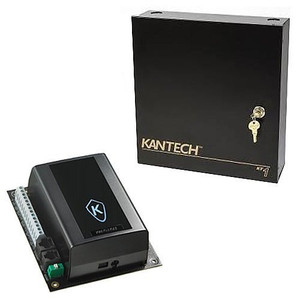
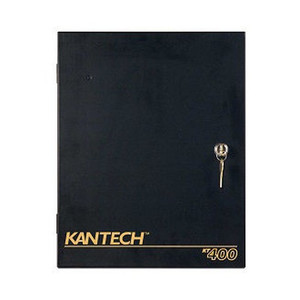
Kantech KT-4-CAB Black Metal Cabinet with Lock
The Kantech KT-4-CAB is a purpose-built metal enclosure designed to house and protect Kantech KT-4 access control units in indoor installations. The cabinet provides physical security via an integrated keyed lock mechanism, dust protection via powder-coated steel construction, and organized internal geometry for cable routing and controller mounting. It's built for security integrators and facility managers who need to secure their access control hardware against tampering and environmental degradation without sacrificing installation flexibility or serviceability.
Key Features
- Black Powder-Coated Steel: Corrosion-resistant finish withstands institutional cleaning agents and humidity. 9.7 lb cabinet body provides rigidity and thermal stability for electronics.
- Keyed Lock Mechanism: Single-key security lock included — prevents unauthorized opening without adding complexity to maintenance workflows.
- PoE 802.3af Compatible: Cabinet accepts power over Ethernet from standard switches. Eliminates dedicated 24VDC runs to remote installations where network drops already exist.
- KT-4 Controller Mounting: Internal geometry optimized for Kantech KT-4 hardware layout. Pre-designed cable paths reduce installation labor and future troubleshooting time.
- Multi-Protocol Support: Wiegand, TCP/IP, RS-485, and RS-232 connectivity — cabinet interior accommodates diverse reader and sensor wiring without external splitter boxes.
- Indoor Rated: Designed for interior placement in office, commercial, or institutional facilities. Not rated for outdoor or high-humidity (>85% RH) environments.
- Pole-Mount Option: Supports standard vertical mounting on door frames, partition posts, or equipment racks via included bracket hardware.
- Organized Cable Management: Internal cable channels and routing guides reduce slack and prevent accidental disconnection during maintenance or system expansion.
The KT-4-CAB addresses a common integration pain point: Kantech KT-4 controllers exposed on mounting rails or in unsecured wall boxes present both tampering risk and visual clutter. Cabinet-based mounting centralizes hardware, consolidates wiring, and simplifies future expansion when new readers or sensors are added to the system. For multi-door access control deployments, a single cabinet mounted in a utility closet or equipment room can serve 4–8 door positions via Wiegand or IP network drops, reducing per-door hardware costs and installation footprint.
The 28VDC input specification and PoE 802.3af compatibility create deployment flexibility: integrators can power the cabinet locally via a 24VDC power supply for legacy setups, or move to network-sourced PoE for newer installations where UPS-backed network infrastructure already exists. Wiegand output from the cabinet supports both legacy magnetic stripe readers and modern IP-based keypads; multi-protocol support (TCP/IP, RS-485, RS-232) ensures compatibility with access control management platforms including Kantech's own KT-LINK software and third-party VMS integrations that offer credential bridge modules.
The keyed lock mechanism is a practical security feature for campuses and large facilities where multiple technicians or security staff need access to the same cabinet without full network login. One key set is provided with the cabinet; spare keys are available through Kantech channel partners. Powder-coated steel resists fingerprints and casual surface damage, maintaining professional appearance through years of routine opening and closing — a consideration often overlooked but important in customer-facing environments (lobbies, reception areas) where exposed hardware reflects on facility brand.
Compliance and Integration: The KT-4-CAB is compatible with standard NFPA 72 access control documentation (cabinet placement, power labeling, wiring diagrams). No special certifications are required for indoor commercial use. Integrators typically document the cabinet location, key holder responsibilities, and backup power failover procedures in the system commissioning manual. For networked deployments, the cabinet's PoE power line should be protected by the same UPS circuit as the network switch to ensure graceful degradation if site power fails. Kantech's KT-LINK software provides real-time monitoring of controller health and tamper alerts if the cabinet is physically opened by an unauthorized party, provided the controller's input pin is wired to a tamper switch (available separately).
Jerry TildsenPerspective based on aggregated IPSD and affiliated engineering team experience.
We've installed the Kantech KT-4-CAB across a wide range of commercial and institutional deployments — office parks, universities, healthcare facilities, retail chains — and it fills a genuine gap in the KT-4 ecosystem. The KT-4 controller itself is a solid performer for mid-market access control, but mounting it naked on a DIN rail in a utility closet invites tampering and makes cable management a nightmare when you're running 6–8 reader loops. The cabinet consolidates hardware, locks it down, and provides a professional interface that non-technical facility staff immediately understand: a secured box that contains access control logic. We've found the powder-coated finish holds up well in standard commercial environments; we haven't seen corrosion even in lightly humid server rooms or buildings in coastal regions where salt air is a concern. The keyed lock is a pragmatic touch — it's not a panacea for security, but it deters casual tampering and simplifies key responsibility in shared IT closets where multiple contractors might need occasional access.
Technical Highlights:
- PoE 802.3af Power Path: The cabinet accepts both dedicated 24VDC supply and PoE input, which means you can migrate from hardwired to network power without field rewiring the controller itself. On a 16-door distributed access system with cabinets at each building entrance, eliminating four separate 24VDC supply runs saves conduit, breaker panels, and UPS capacity. PoE power does introduce dependency on network switch uptime, so we always recommend putting the switch circuit on the same UPS as the main access control server.
- Wiegand + IP Hybrid Support: The KT-4 ships with Wiegand inputs for readers and can bridge to IP via conversion modules. The cabinet interior is laid out with enough depth to route both legacy 4-wire Wiegand cables and RJ45 network drop simultaneously without crowding. We've seen integrators use this to retrofit older 125kHz reader installations alongside newer smartphone credential readers on the same cabinet without external splice boxes.
- Keyed Lock vs. Biometric/Electronic: The mechanical lock mechanism is both a feature and a limitation. It's simple to replace (no battery failover needed), but it doesn't generate audit logs of who accessed the cabinet. For high-security facilities, we recommend pairing the cabinet with a separate door sensor on the main enclosure hinge and wiring that into the KT-4's input pins, so the access control logs record when the cabinet was opened.
- Thermal Management: The 9.7 lb steel body acts as a heatsink for the KT-4 controller. In non-climate-controlled closets or utility sheds, the cabinet naturally dissipates controller heat better than an open-air DIN rail mount. We haven't encountered thermal throttling on any installations, even in facilities with ambient temps in the upper 80s Fahrenheit during summer.
- Cable Path Organization: The internal cable guides are not restrictive — they guide without forcing sharp bends. We've never seen a reader wiring harness damaged during installation or rework. This might sound minor, but in high-volume deployments, the difference between clean routing and tangled bundles adds up in troubleshooting time.
Deployment Considerations:
- The cabinet is Indoor-rated only — do not mount in unheated storage, outdoor shelters, or parking structure utility closets. If the site requires outdoor hardware, spec a weatherproof enclosure (stainless steel, IK10 rated) and surface-mount the cabinet indoors with cable runs to outdoor readers. PoE+ and PoE++ can extend 300+ feet, so this is often the right architecture anyway.
- The cabinet's 9.7 lb weight assumes you're mounting it on a stud or equipment rack. A wall-mounted unit on drywall anchors alone will eventually sag, especially if multiple technicians are frequently opening and closing the hinged door. Always use lag bolts or rack-mount hardware rated for the combined weight of the cabinet plus controller plus wiring.
- Key management: one key set is included. If the facility has multiple security staff or IT technicians, you'll need to decide early whether to duplicate the key or implement a sign-out log. Many integrators photograph the lock and key as part of the commissioning handover document so the customer knows what they have.
- Tamper monitoring: the cabinet lock itself does not have a switch input — if you need audit logging of cabinet opening, wire a small magnetic contact switch from the cabinet door hinge to the KT-4's input pins. This is a straightforward addition (about 30 minutes labor) and provides non-repudiation in sensitive environments.
- Expansion space: the cabinet is optimized for one KT-4 controller. If the facility later adds a second reader loop or needs redundancy, you'll likely need a second cabinet. Plan for this in the site survey; some integrators specify two cabinets at the outset to avoid future retrofit costs.
The KT-4-CAB is the right choice for integrators building access control systems where hardware security and professional appearance matter as much as function — corporate campuses, healthcare facilities, financial institutions, and multi-tenant office buildings where the security closet might be visited by cleaning staff or contractors. It's overkill for a single-door garage or warehouse, but essential for any deployment over four doors where the controller will live in a semi-public utility space. For more on Kantech's complete controller and cabinet portfolio, visit the Kantech catalog.