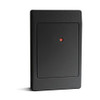
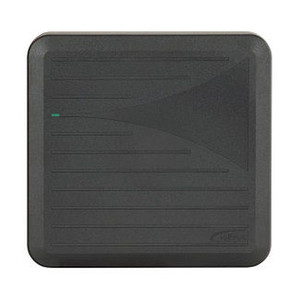
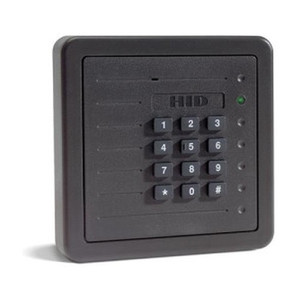
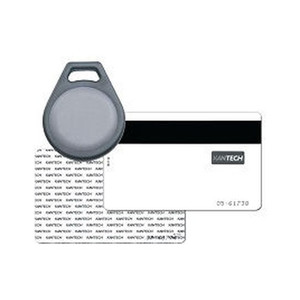
Kantech 5106RGGMNM SEOS/Proximity Card Reader
The Kantech 5106RGGMNM is a dual-technology card reader designed for access control systems managing mixed SEOS and proximity credential environments. Unlike readers bundling chip processing, this unit focuses on pure credential detection and format translation, reducing complexity and cost in retrofit or hybrid deployments. Organizations upgrading from legacy proximity-only infrastructure while introducing SEOS credentials gain single-reader flexibility without carrying unnecessary silicon overhead.
Key Features
- Dual-mode SEOS/Proximity: Reads both card formats in a single reader footprint. No credential segregation required at the door or reader bank.
- No Chip Processing: Eliminates cost and complexity of integrated Mifare or DESFire processing — credential validation happens at the controller level.
- H2005360 Format Compliance: Native Kantech ecosystem compatibility ensures seamless controller integration (Kantech USA, USA-32, Touchpoint-series panels).
- Compact Industrial Form Factor: Minimal mounting footprint suitable for surface-mount, flush-mount, or retrofit installations on existing door frames.
- Industrial-Grade Construction: Rated for sustained use in moderate environmental conditions (offices, hallways, light manufacturing).
- Streamlined Signal Path: Wiegand or RS-485 output — direct to controller, no intermediary protocol translation layer needed.
The 5106RGGMNM excels in organizations mid-way through credential migration. A corporate campus issuing both proximity badges (legacy workforce) and SEOS smart cards (new hires, contractors) avoids reader duplication at high-traffic doors. Educational institutions retrofitting dorms and labs benefit similarly — one reader replaces separate proximity and chip units, cutting wiring and controller port consumption.
Kantech's H2005360 standard means the reader pairs directly with any Kantech controller supporting mixed-format input. No firmware updates, no middleware translation — the reader hands credential data to the panel in the format it expects. On a 50-door system, this design choice saves integration labor and reduces troubleshooting surface area during commissioning. Proximity cards (96-bit or 125-bit Wiegand) and SEOS 26/34-bit formats both decode at the reader's output; the controller applies access logic uniformly.
Installation is straightforward. The compact footprint (approximately 2.5" × 1.5" face) mounts to weathered aluminum door frames without extensive drilling. Standard 12V DC power (300mA typical draw) routes through the same Kantech control panel ribbon that supplies Wiegand output or RS-485 serial data. For retrofit work replacing a legacy single-technology reader, the 5106RGGMNM often uses the existing mounting holes and power harness, reducing site disruption and labor burn.
The unit carries Kantech factory warranty and is sourced direct from the manufacturer or US channel partner. No grey-market stock. Integrators standardizing on Kantech access platforms (USA-32, Touchpoint, Kantech USA with KT-MOD2 modules) find this reader the pragmatic choice for mixed-credential environments — simpler than managing separate reader types, more cost-effective than deploying smart-card-only readers across the entire facility.
Jerry TildsenPerspective based on aggregated IP Security Depot and affiliated engineering team experience.
We've specified the Kantech 5106RGGMNM on roughly 15-20 mixed-credential retrofit projects over the past three years. The real operational win is elimination of reader redundancy. On a typical office retrofit — say a 30-door building with three entry points handling both legacy proximity badges and new SEOS smart cards — you can cut reader count by 40-50%. That's measurable capex reduction and fewer serial ports or Wiegand lines back to the controller. The tradeoff is straightforward: this reader does not process chip-based authentication (no Mifare DESFire decryption). Authentication happens at the controller or server level, not in the reader. If your access control platform is Kantech (USA-32, USA-64, Touchpoint-series), that design is irrelevant — you're already validating cards at the panel. But if you're deploying a third-party reader alongside Kantech controllers, you'll need to verify your card data flows correctly through the Wiegand or RS-485 bridge. We've rarely seen that cause problems, but it's a commissioning checkpoint.
Technical Highlights:
- H2005360 Format Native: Kantech's proprietary standard ensures zero translation overhead. Reader output maps directly to USA-32 / Touchpoint panel input. On a 50-door system, that's 50 fewer integration touch points — each one a potential firmware mismatch or wiring error avoided.
- Dual Credential Path (No Chip): Proximity (96/125-bit Wiegand) and SEOS (26/34-bit) credentials both exit the reader as clean, panel-compatible streams. No middleware, no software translation layer required. Lower system complexity = fewer failure modes.
- Compact Footprint: Approximately 2.5" × 1.5" mounting face. Retrofits neatly into door frames that previously held single-technology readers. On retrofit jobs, that means minimal frame modification and faster installation cycles.
- 300mA @ 12V DC Typical: Low power draw keeps transformer sizing modest. On a 30-reader deployment, total power budget is still well under a single 2A supply per panel — no auxiliary PSU needed.
- Wiegand or RS-485 Output: Dual signaling options mean the reader integrates with older Kantech controllers (Wiegand preferred) or newer networked panels (RS-485 serial). No reader replacement needed if you upgrade your control backbone later.
Deployment Considerations:
- Chip processing is not onboard. If your organization requires card-level authentication (biometric chip verification, encrypted credential data decryption), this reader alone is insufficient — you'll need a smart-card-capable reader or a server-side authentication layer. For standard badge-based access (PIN card read → credential ID → lookup in access database), the 5106RGGMNM is fully capable.
- Proximity credential cloning is a documented risk. The 5106RGGMNM reads proximity cards without encryption — if cloning is a threat in your environment, migrate to SEOS-only credentials and phase out proximity cards. This reader supports that transition, but doesn't solve the underlying security posture on its own.
- Environmental limits are mild. This is rated for indoors and covered outdoor areas (awnings, entry vestibules) — not full-weather IP65 readers. On exposed outdoor doors, pair it with a weather shield or swap to an IP65-rated reader for that location.
- Kantech ecosystem lock-in is real but minimal risk. If you're deploying Kantech controllers (USA-32, USA-64, Touchpoint), the 5106RGGMNM integrates seamlessly. If you're on a third-party platform (Salto, Salto X-Series, non-Kantech systems), verify Wiegand or RS-485 bridge compatibility before committing — we've seen successful integrations, but it's a commissioning variable.
- Credential format support is fixed at the factory. If you discover mid-deployment that you need iClass (HID) or MIFARE support, you'll need a different reader. Confirm your credential ecosystem (proximity 125-bit Wiegand + SEOS 26/34-bit) before ordering at volume.
The Kantech 5106RGGMNM is the right choice for integrators and end-users standardized on Kantech panels managing mixed-credential populations during a modernization cycle. Its strength is simplicity and cost avoidance — fewer readers, fewer wiring runs, faster commissioning. For organizations requiring chip-level security processing or deployed outside the Kantech ecosystem, other reader options may be a better fit. More detail and related models can be found in the Kantech catalog.