Product images are provided for reference and may not represent the exact model, configuration, or included components.

Overview

SKU: EN1249
Condition: New
Availability: Usually ships in 24 hours
Warranty Manufacturer Warranty
Write a Review 35% OFF

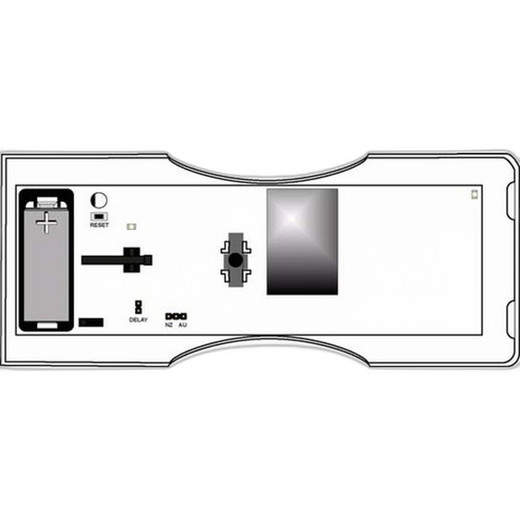
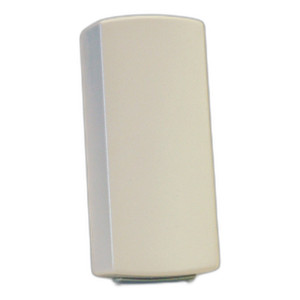
Inovonics EN1249 EchoStream Bill Trap Transmitter 915-928 MHz

Inovonics EN1249 EchoStream Wireless Panic Button Transmitter Overview The Inovonics EN1249 is a wireless panic button transmitter engineered for eme…

Add to cart for sale price
$281.00
$181.99
Ships same business day
In stock

Quantity:

Adding to cart… The item has been added
Compatibility guidance available for your deployment
Certified experts for pre and post-sales support
Authorized sourcing and documentation support
Shipping and lead-time confirmation before install

Bryan

Talk to Bryan

200+ hrs training • U.S - based

Certified Expert • 877-277-7147

Inovonics EN1249 EchoStream Bill Trap Transmitter 915-928 MHz

$281.00
$181.99

Your recommended setup

Review items below — quantities update pricing automatically.

Item Qty Status Price

Bundle Summary

Bundle Subtotal: $0.00
Optional Add-Ons: $0.00
Services: $0.00
Total: $0.00

Overview

SKU: EN1249
Condition: New
Availability: Usually ships in 24 hours
Warranty Manufacturer Warranty
Description

Inovonics EN1249 EchoStream Wireless Panic Button Transmitter

Overview

The Inovonics EN1249 is a wireless panic button transmitter engineered for emergency communication in security and facility management applications. Operating on the 915–928 MHz unlicensed ISM band, the EN1249 delivers reliable wireless signal transmission for rapid alert dispatch. This standalone transmitter integrates with EchoStream-compatible security systems and monitoring platforms, enabling integrators and facility managers to deploy emergency notification across distributed locations without hardwired infrastructure.

Key Features

  • Wireless Transmission: 915–928 MHz frequency band for unlicensed, license-free operation
  • Emergency Alert Capability: Panic button activation triggers immediate alert signal to paired receiver modules and monitoring stations
  • Operating Temperature Range: 32°F to 140°F, supporting indoor and controlled outdoor deployments
  • EchoStream Protocol: Proprietary wireless architecture for dedicated emergency communication pathways
  • Portable Design: Compact form factor suitable for personnel carrying, wall mounting, or stationary placement
  • Low Power Consumption: Battery-operated transmitter for extended field deployment without AC dependency

Integration & Compatibility

The EN1249 transmits on the Inovonics EchoStream wireless platform, a closed-protocol system designed to isolate emergency traffic from general-purpose wireless congestion. Integration requires compatible EchoStream receiver modules and a monitoring-capable control panel or gateway. Security integrators should verify receiver hardware compatibility and system configuration before deployment. The 915–928 MHz band operates within FCC Part 15 regulations for unlicensed use, requiring assessment of local RF environment and potential interference sources.

Deployment Considerations

Installation of the EN1249 should account for building materials, RF shielding, and distance to receiver equipment. Operating temperature specifications (32–140°F) define environmental limits; installations in unheated or uninsulated spaces require thermal verification. Battery life and replacement intervals depend on transmission frequency and activation patterns; integrators should establish maintenance schedules aligned with facility monitoring protocols. System testing and signal range verification are essential before live deployment to confirm coverage in critical areas.

James Everett
James Everett

I've evaluated the Inovonics EN1249 during planning cycles for distributed emergency notification in multi-building campuses and secured facilities. The EchoStream architecture isolates panic button traffic on a dedicated 915–928 MHz channel, which separates emergency alerts from WiFi interference and general RF congestion—a design choice that matters when you need deterministic response times on critical alerts.

Technical Highlights:

  • Wireless ISM Band Operation: 915–928 MHz unlicensed spectrum eliminates licensing and regulatory overhead while maintaining closed-protocol security against casual RF interference
  • Temperature Operating Envelope: 32–140°F specification confirms suitability for climate-controlled interior spaces; outdoor or thermally extreme locations require thermal assessment before deployment

Deployment Considerations:

  • RF path verification is non-negotiable before go-live—building materials, metal framing, and distance to nearest receiver module directly impact transmission reliability; site survey and range testing should precede installation
  • Battery life planning depends on activation frequency; establish replacement intervals aligned with your facility's testing and maintenance schedule to avoid silent failures in the field

The EN1249 is a straightforward, single-purpose device: it transmits a panic signal on demand. For integrators deploying in facilities where RF coverage is verified and environmental conditions align with the 32–140°F operating range, this transmitter delivers the determinism required for emergency communication systems.

Specifications
Operating Temp: 32°- 140°F
Product Type: Panic Button Transmitter
Operating Temperature: 32°- 140°F
Communication: Wireless 915-928 MHz
Q&A
Reviews
Have Questions? Ask an Expert.

RELATED PRODUCTS

System Design, Deployment & Technical Support

Support services and planning resources for commercial surveillance, access control, and infrastructure deployments.

Fixed scope • Fixed price
System Design Assistance

  • Get help validating product compatibility
  • Coverage requirements
  • Storage planning and deployment architecture before you buy.
Request Design Help

Deployment & Configuration Support

  • Access fixed-scope support for rollout planning
  • User setup guidance
  • Migration and system standardization across single-site or multi-site deployments
View Support Services

Guides, Tools & Calculators

  • PoE requirements
  • Storage retention
  • Camera selection and deployment methodology
Open Technical Resources