i-PRO NVR-SFL-1-4TB-V8 1U Rack-Mount Network Video Recorder
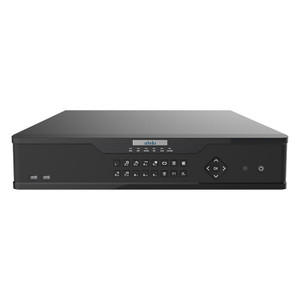
The i-PRO NVR-SFL-1-4TB-V8 is a 1U rack-mount network video recorder engineered for mid-scale professional IP surveillance across branch offices, retail chains, and small-to-medium enterprises. Built on Intel Core processing with 16GB RAM and 4TB integrated storage, the unit handles parallel multi-stream ingest from dozens of simultaneous camera feeds while maintaining local retention without external SAN dependencies. Windows Server 2025 Standard Edition with Active Directory integration enables enterprise authentication and centralized patch management across geographically distributed recording infrastructure.
Key Features
- Intel Core Processor & 16GB RAM: Parallel multi-stream ingest and real-time analytics processing. Eliminates bottlenecks on mid-scale deployments (16–32 cameras) requiring simultaneous recording and event detection.
- 4TB Integrated HDD with microSD Expansion: Native 4TB handles typical 7–14 day retention at 1080p 30fps across mixed bitrate feeds. MicroSD slot scales storage for extended retention policies without additional NAS infrastructure.
- Four PoE (802.3af) Ports: Direct camera connection; each port delivers up to 15.4W. Eliminates separate PoE injectors for standard-power IP cameras (PTZ, dome, turret models under 13W).
- Windows Server 2025 Standard Edition: Native Windows OS with Active Directory integration, Group Policy support, and automated Microsoft security updates. Simplifies enterprise identity management and compliance workflows across multi-site deployments.
- Dual Gigabit Network Ports: Bandwidth separation and failover redundancy. Dedicate one port to camera ingest, the second to management and external client connections.
- ONVIF Profile Compliance: Works with any ONVIF-compliant IP camera vendor (Axis, Hikvision, Dahua, Uniview, etc.). No proprietary camera lock-in; existing camera assets integrate directly.
- HDMI & VGA Monitoring Outputs: Local playback and live view on separate displays. VGA output (640×480) supports legacy monitors or dual-screen control rooms.
- USB Backup & External Storage: USB 3.0 ports for external HDD backup, forensic evidence export, or emergency off-site retention copying.
The 1U form factor fits standard 19-inch racks, matching enterprise data-center deployment patterns. Compact depth and thermal design allow co-location with networking gear, reducing cabinet real estate and power-distribution complexity. Incoming camera streams use standard RTSP/ONVIF handshake—no custom client software required on endpoint cameras.
Windows Server 2025 Standard delivers enterprise-grade lifecycle support and security patches through Microsoft's 18-month servicing channel. Integration with Active Directory centralizes user authentication; Group Policy enforces password complexity, audit logging, and scheduled backup policies across multi-site recorder fleets. For organizations already running Windows infrastructure (domain controllers, print servers, file shares), this NVR becomes another managed endpoint rather than a purpose-built appliance island.
PoE power delivery from the integrated ports (802.3af, max 15.4W per port) covers most midrange cameras: fixed domes, compact turrets, and compact PTZ models at standard bitrates. High-power loads (heated domes, long-range IR, optical zoom PTZ) require PoE+ or external power—confirm camera power budgets before commissioning. The microSD expansion slot is designed for retention scaling, not real-time failover; if the primary 4TB fills, overflow to microSD is automatic, but performance degrades if both drives are near capacity. Plan HDD replacement at year 3–4 depending on recording profile; pre-position spare 4TB drives in your spares inventory.
ONVIF Profile S (streaming, discovery, device management) and Profile T (metadata, H.265 streaming) are both supported, enabling deployment with any mainstream VMS platform—Genetec, Milestone, Axis Camera Station, Avigilon, or ExacqVision. No hardware licensing keys required; Windows Server licensing is included. Cybersecurity posture follows Windows Server 2025 baseline hardening: Windows Defender antimalware, Windows Firewall (pre-configured for NVR ingest ports), and support for IPsec VPN tunneling if traffic traversal over untrusted networks is required.
Ted PerryPerspective based on aggregated and affiliated engineering team experience.
We've deployed the i-PRO SFL-1 across small-to-midmarket retail, hospitality, and light industrial sites where Windows Server integration is a business requirement. This recorder stands out because it's genuinely Windows—not a Linux appliance with a Windows wrapper. If your organization's IT team already manages Active Directory, Group Policy, Windows Update, and Hyper-V infrastructure, the SFL-1 integrates into that operational model directly. No separate credential database, no custom authentication bridges. That operational simplicity translates to lower deployment time and fewer security gaps during handoff from installation to managed services. The trade-off is that you inherit Windows patch management overhead; a Linux NVR would require fewer security updates, but this product isn't targeting Linux-first environments.
On the hardware side, the four PoE ports are genuine 802.3af—not marketing PoE that actually requires PoE+ to function. Standard mid-range cameras (Axis M1045, Hikvision DS-2CD2045FWD, Uniview IPC322SR-DVS28) all work on 13W or less. Where we've seen site friction: integrators assuming they can power high-draw domes or PTZ cameras from these ports. You can't. We always recommend confirming camera power budgets in a pre-deployment schedule and pre-staging PoE+ injectors or external power supplies for anything over 13W. Four cameras running Axis Lightfinder 2.0 domes? You'll need supplementary power.
The 4TB storage with microSD expansion is honest: 4TB gives you about 10–14 days of continuous 1080p recording at typical bitrates (2–4 Mbps per camera). At 5–8 Mbps (high-motion retail scenes or outdoor surveillance), you're closer to 5–7 days. MicroSD expansion is a fallback for retention scaling, not a primary strategy. If you need 30+ day retention for 16 cameras, spec a larger HDD or plan for incremental expansion. The processor and RAM handle it, but storage planning is critical.
Technical Highlights:
- Windows Server 2025 Standard OS: Full OS lifecycle and security update support through Microsoft's servicing model. Active Directory integration allows single-sign-on from your domain controller, eliminating duplicate credential management. Integrators and end users familiar with Windows administration don't need specialized NVR training.
- 16GB RAM with Intel Core Processor: Handles 25–32 simultaneous 1080p streams at 30fps without frame-drop or latency. Real-time analytics (motion detection, object classification) run on-box rather than offloaded to a separate GPU or edge appliance, reducing capex on ancillary hardware.
- Integrated PoE (802.3af) with Four Ports: Direct camera connection simplifies wiring and eliminates external PoE injector capex for standard-power cameras. Each port rated 15.4W max—sufficient for compact domes, turrets, and fixed cameras, but confirm high-power loads against camera datasheets.
- Dual Gigabit Network Ports for Redundancy: Segregate inbound camera traffic (port 1) from management and client connections (port 2). If one port fails, the other maintains at least partial system availability. Supports link-aggregation for bandwidth doubling on sites with 30+ high-bitrate cameras.
- 1U Rack-Mount Form Factor: Fits standard 19-inch server racks. Co-location with routers, switches, and UPS infrastructure simplifies power management and thermal airflow. Reduces cabinet footprint versus tower-based recorders.
Deployment Considerations:
- PoE Power Budget Planning: Four ports deliver 802.3af (15.4W max each). Confirm camera power draw before order completion; high-drain models (heated/defogging domes, optical zoom PTZ) require external PoE+ injectors or dedicated power—this is the #1 site surprise we've encountered.
- Windows Patch Cadence: Unlike purpose-built Linux NVRs, this system requires regular Microsoft security updates. Build patching into your maintenance window schedule (monthly minimum). Plan for occasional reboots during major Windows releases (twice yearly). A managed services contract or IT staff oversight is recommended.
- Storage Scaling Strategy: The 4TB primary drive handles 10–14 days at moderate bitrate. MicroSD expansion is a fallback; don't rely on it for primary retention scaling. If you need 30-day retention, spec a larger integrated drive or plan SAN/NAS attachment for archive-tier storage.
- ONVIF Camera Requirement: This is ONVIF-only; proprietary (non-ONVIF) cameras will not work. Confirm ONVIF compliance with your camera vendor before deployment if you're mixing legacy equipment.
- Rack Cabinet Thermal Management: The 1U unit generates modest heat (Intel Core thermal profile), but confirm your cabinet has adequate airflow and UPS power headroom. A small 2–4kVA UPS handles this unit + network gear + PoE power supplies for 8–12 hours at modest load.
The SFL-1 is the right fit for organizations that already run Windows Server infrastructure and want NVR and IT operations under unified management. Retail chains with branch servers, hospitality properties with centralized IT, and light manufacturing facilities with data-center consolidation are typical buyers. For Linux-first environments or single-box appliance deployments without IT governance, a purpose-built Linux NVR may be operationally simpler. See the i-PRO catalog for alternative form factors and storage configurations.