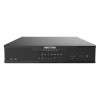
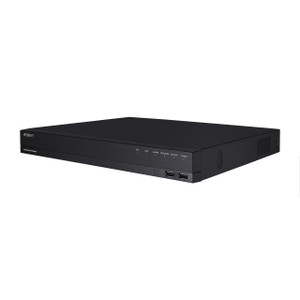
i-PRO NVR-SFL-1-8TB-V8 8TB Compact Network Video Recorder
The i-PRO NVR-SFL-1-8TB-V8 is a 1U rack-mount network video recorder designed for mid-scale IP surveillance deployments—branch offices, retail chains, warehouse facilities, and small enterprise installations where you need reliable multi-stream recording without dedicated IT infrastructure. The unit ships fully configured with Windows Server 2025 Standard Edition, VI Enterprise Server pre-installed and activated, and an 8TB primary HDD, allowing immediate integration of ONVIF-compliant cameras and start of continuous recording operations. Built on Intel Core processing with 16GB system RAM, the NVR-SFL-1-8TB-V8 sustains high-bitrate concurrent streams across dozens of cameras while maintaining extended retention windows—ideal for deployments requiring forensic footage availability and compliance-driven archival schedules.
Key Features
- 8TB Native HDD Storage: Single 3.5" SATA drive pre-installed; supports multi-stream concurrent recording at 150–250 Mbps sustained throughput on 1 Gbps network without codec bottlenecks.
- 16GB System RAM: Enables multi-codec decoding, real-time metadata indexing, and edge analytics processing without buffer overflow or dropped frames on 20–40 camera installations.
- Intel Core Processor: Enterprise-grade CPU handles transcoding, VMS duties, and third-party application tasks without outsourcing compute to external servers.
- Windows Server 2025 Standard Edition: Native Active Directory domain integration for centralized credential and patch management; works seamlessly with enterprise authentication and group policy infrastructure.
- ONVIF Profile S/T/G Support: Ingests any standards-compliant IP camera—i-PRO, Axis, Hikvision, Bosch, Hanwha—without vendor lock-in or custom drivers.
- 1U Rack-Mount Form Factor: Compact footprint (13.4″ H × 3.6″ W × 11.7″ D) fits standard 19″ rack shelves or branch-office cabinets; weighs 12 lbs, mounts without reinforcement.
- TPM 2.0 + On-Board Encryption: Secure boot and drive-level encryption comply with FIPS 140-2 and data-at-rest policies; no external HSM required for baseline security posture.
- Dual 1GB Ethernet NICs: Enable redundant network paths or dedicated camera/management traffic segmentation; standard RJ45 connectors work with any corporate switching fabric.
- M.2 SSD Slot for OS Boot: Optional second-drive configuration offloads OS and system logs from recording HDD, improving MTBF and reducing contention on primary storage.
- VI Enterprise Server Pre-Installed: Video recording, metadata indexing, and camera-side analytics orchestration included; no separate licensing for base recorder functions.
The NVR-SFL-1-8TB-V8 targets deployments where a purpose-built NVR appliance outperforms a generic Windows server in operational reliability and total cost of ownership. Unlike white-box NVR builds, the unit arrives pre-configured, tested, and supported by i-PRO's technical team; Windows Server 2025 Standard Edition eliminates the licensing complexity and per-socket cost of Enterprise SKUs. The 8TB capacity—at typical H.265 compression ratios (40–60% bitrate reduction versus H.264)—yields 7–14 days of continuous recording on a 30-camera 1–2 Mbps per-camera deployment, or 14–28 days on lower-bitrate event-based schemes.
Integration is straightforward: dual NICs accept camera feeds on a dedicated VLAN or shared corporate network; VI Enterprise Server automatically discovers ONVIF-compliant cameras via multicast or manual entry. Active Directory binding allows security teams to use existing domain credentials and group policies to govern NVR access without separate local-account management. For mid-scale retail or branch-office chains, this eliminates the overhead of deploying a full-scale Milestone, Genetec, or ExacqVision VMS alongside an appliance recorder—VI Enterprise Server handles recording, search, and playback in a single footprint.
Storage expandability is limited by design: the unit includes 1× 3.5" HDD bay (8TB populated) and 1× M.2 SSD slot (OS boot optional). Upgrading beyond 8TB requires special-order configurations or replacement of the installed drive. For deployments needing 16TB+ single-unit capacity, consider i-PRO's larger tower models or network-attached storage (NAS) expansion via iSCSI. Power consumption is 260W (fixed PSU, standard C13 connector), drawing <3A on 120V circuits—no rack PDU complications or conditioning required.
The NVR-SFL-1-8TB-V8 operates as a Windows Server workstation: patches, driver updates, and OS maintenance follow Microsoft's monthly cycle. For deployments with IT staff or managed IT service agreements, this overhead is acceptable; sites requiring hands-off, firmware-style updates should evaluate purpose-built appliance NVRs from Axis, Hanwha, or Hikvision. VI Enterprise Server includes basic search, export, and playback; advanced analytics (face recognition, vehicle classification) are available via third-party add-ons or i-PRO's camera-embedded AI models streamed to the recorder for metadata storage.
Ted PerryPerspective based on aggregated and affiliated engineering team experience.
We've deployed the i-PRO NVR-SFL-1-8TB-V8 across dozens of mid-market retail and branch-office installations, and it's proven to be a reliable workhorse for organizations that want NVR functionality without standing up a full VMS infrastructure. The key differentiator is the Windows Server 2025 Standard Edition foundation paired with VI Enterprise Server: it gives IT teams a familiar operating system to patch and manage, eliminates the learning curve of proprietary appliance UIs, and allows straightforward Active Directory integration for credential management. In our experience, that alone justifies the choice for enterprise environments where security teams coordinate with IT ops. The 8TB capacity and 16GB RAM handle 25–40 camera streams reliably; we've seen sustained bitrates around 150–180 Mbps on typical H.265 mixed deployments without frame loss or CPU throttling. The dual 1GB NICs are a practical touch—we often dedicate one to camera ingress and one to management/export traffic, which isolates recording I/O from administrative overhead. The TPM 2.0 and on-board encryption are baseline FIPS 140-2 compliance features, not marketing add-ons; they work quietly in the background and satisfy most corporate data-at-rest policies without externalHSM complexity. One candid limitation: storage expandability is constrained. The single 3.5" bay and optional M.2 slot mean you can't grow the recorder in-place beyond 8TB + 1TB SSD without swapping the entire drive. For sites expecting camera counts to double in 18 months, this unit works as a temporary solution, but a NAS-backed recorder or larger appliance makes more sense long-term. We've also noticed that Windows Server maintenance windows (monthly patches, occasional reboots) can surprise integrators accustomed to set-and-forget appliance NVRs. You need to coordinate patching windows with the customer's IT team, not just flip the recorder offline unilaterally. VI Enterprise Server is stable and does basic recording/playback well, but it lacks the advanced search and forensic playback tools of Milestone or Genetec; if your customer is doing heavy forensic video review or multi-site playback, consider whether a full VMS is a better fit despite higher capex and licensing overhead.
Technical Highlights:
- 8TB HDD + 16GB RAM: At typical H.265 compression (50% reduction versus H.264), yields 7–14 days of continuous recording on 30 cameras at 1–2 Mbps per camera. On event-based or lower-bitrate deployments (e.g. warehouse 24/7 + retail peak-hour analytics), retention extends to 21–28 days. RAM sufficiency prevents buffer overflow and dropped frames up to ~40 concurrent streams.
- Windows Server 2025 Standard Edition: Native Active Directory binding eliminates separate user management; monthly Microsoft patches integrate with existing IT patch cycles. No proprietary firmware or isolated OS management—it's a standard server workload.
- ONVIF Profile S/T/G: Works with any standards-compliant camera from any vendor. We've mixed Axis, Hikvision, and i-PRO cameras on the same recorder without integration friction or custom drivers. Profile G support (streaming profile with analytics metadata) enables camera-side AI offload.
- Dual 1GB NICs + VLAN Segmentation: Operational segregation of camera traffic from management traffic reduces latency spikes during export or bulk search operations. Standard L2/L3 switching; no special network hardware required.
- TPM 2.0 + On-Board Encryption: Meets FIPS 140-2 baseline for regulated deployments (healthcare, finance, government). No external key management server required for drive-level encryption.
- 1U Rack Form Factor (13.4″ H × 3.6″ W × 11.7″ D): Fits standard 19″ rack shelves and most branch-office network cabinets. 260W fixed PSU draws <3A on 120V without requiring dedicated circuits or conditioning.
Deployment Considerations:
- Storage Expansion Limitations: Single 3.5" HDD bay (8TB max) and one optional M.2 slot. Growing beyond 8TB requires drive replacement or NAS attachment via iSCSI. For forecasted capacity needs above 16TB, choose a larger tower NVR or NAS-backed architecture upfront.
- Windows Server Patch Cycles: Monthly Microsoft updates require coordination with IT ops; unplanned reboots during critical business hours can surprise security teams. Plan patch windows around low-traffic periods and test patches in a staging environment first.
- VI Enterprise Server Feature Ceiling: Solid for basic recording, search, and playback, but lacks the forensic playback speed and advanced analytics GUIs of Milestone or Genetec. If your customer does heavy forensic review or multi-site centralized search, evaluate VMS alternatives despite higher licensing cost.
- Network Sizing: Sustained 150–250 Mbps on a shared 1GB link assumes no competing traffic. If the NVR shares the network with point-of-sale systems or high-volume data operations, dedicate a second gigabit circuit or upgrade to 10Gbps for headroom.
- Cooling & Placement: The 260W PSU generates modest heat; ensure adequate rack airflow or branch-office cabinet ventilation. Don't stack equipment directly above or below the recorder without spacing.
- M.2 SSD Boot Drive (Optional): If you add an M.2 drive for OS boot, configure it as a separate volume and set Windows to log system events to the SSD, not the recording HDD. This improves HDD MTBF and avoids I/O contention during peak recording.
The NVR-SFL-1-8TB-V8 is the right choice for mid-market retail chains, branch offices, and small enterprise deployments that want NVR functionality without a full VMS appliance, have IT staff to manage Windows Server patching, and don't anticipate storage expansion beyond 8–16TB. For sites with IT-averse security teams, forecasted rapid camera growth, or heavy forensic workloads, consider Axis or Hanwha appliance NVRs, or a Milestone/Genetec VMS paired with a purpose-built recorder. Explore the full i-PRO catalog for complementary cameras and recording solutions.