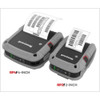
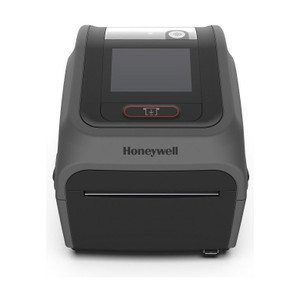
Honeywell RP4F00N0D12 Industrial Mobile Label Printer
The Honeywell RP4F00N0D12 is a handheld, battery-powered direct thermal printer built for on-demand label generation in warehouses, manufacturing floors, and field operations. Unlike stationary desktop printers tethered to dock workstations, this device moves with your operation — enabling real-time shipping label printing, asset tracking, inventory verification, and compliance labeling wherever the work happens. Built on the Qualcomm Snapdragon processor running Android OS, the RP4F00N0D12 delivers 203 DPI resolution across a maximum print width of 104 mm, enough clarity for GS1-128, Code 128, and QR code scanning at typical retail and logistics distances.
Key Features
- Direct Thermal Printing at 203 DPI: Produces sharp, high-contrast barcodes and text without ribbons or ink cartridges — a cost advantage in high-volume mobile printing where consumable management matters. 203 DPI is standard for 1D and 2D codes at typical warehouse scanning distances (12–24 inches); if your workflow requires fine graphics or dense label detail, a stationary printer with 300+ DPI may be more suitable.
- 104 mm (4.1 in) Maximum Print Width: Handles standard 4×6 shipping labels, GS1 compliance labels, and product ID tags. Larger format labels require a different platform.
- Qualcomm Snapdragon Processor with Android OS: Native label formatting and third-party app support reduce dependency on backend print servers. You can design and send jobs from the device itself, cutting latency in time-sensitive dock or yard operations.
- Bluetooth 5.0 and Wi-Fi ac (802.11 a/b/g/n/ac) Connectivity: Choose your network architecture. Bluetooth suits short-range dock printing without Wi-Fi infrastructure; Wi-Fi scales across large facilities or when integrating with warehouse management systems. Dual support provides deployment flexibility.
- 4900 mAh Li-Ion Battery with All-Day Runtime: Typical use yields 8–12 hours per charge, eliminating the need to return to a charging dock mid-shift. Battery management is critical for mobile workflows — plan charging windows around shift patterns to avoid downtime.
- IP54 Rating for Dust and Splash Resistance: Dust and water splashes from dock hoses won't compromise the device, but IP54 does not provide full submersion protection. Extended high-humidity or wet-environment exposure may warrant a protective case.
- 2-Meter Drop Rating for Impact Tolerance: Reflects rugged field duty expectations. A 2 m drop from waist height onto concrete is within spec; higher drops or repeated drops may cause damage.
- Operating Temperature Range -20°C to 55°C (-4°F to 131°F): Supports outdoor and cold-storage operations without thermal shutdown. Verify your environment falls within this range; freezer or extreme heat applications may require thermal conditioning.
- Ultra-Portable Form Factor at 510 g (1.59 lbs): Lightweight enough for all-shift handheld use without fatigue. Compare this to larger stationary systems if portability is secondary to throughput.
- Night Vision Capability: Enables label scanning and verification in low-light receiving areas or outdoor yard operations without external lighting infrastructure.
Integration and Deployment Context
The RP4F00N0D12 bridges mobile computing and print infrastructure. Android OS supports Zebra, Honeywell, and third-party label design apps; ONVIF or direct socket connections to warehouse management systems allow real-time job queueing from inventory or shipping software. Bluetooth integration works with mobile devices (smartphones, tablets, handheld computers) for ad-hoc printing; Wi-Fi integration connects to fixed networks for centralized job dispatch and audit logging.
Deployment considerations: Battery life varies with print volume and connectivity mode (Wi-Fi draws more power than idle Bluetooth). Plan charging docks at shift transitions. The IP54 rating suits dock and yard work but avoid prolonged submersion or high-pressure washdown. Direct thermal printing requires thermal paper stock; confirm media compatibility with your label supplier. Barcode scanner integration relies on the device's Android ecosystem — test with your specific scanners before rollout.
When to Choose a Different Model
If your operation requires higher-resolution output (300+ DPI) for micro-printing, dense label graphics, or photo-quality compliance documentation, evaluate stationary thermal printers instead. If throughput exceeds 100+ labels per hour in a fixed location, a desktop printer may offer better economics. For operations requiring RFID encoding alongside barcode printing, a specialized mobile RFID printer variant may be necessary.
Frequently Asked Questions
Q: What label media does the RP4F00N0D12 support?
A: The device uses direct thermal paper. Confirm media roll width (typically 4-inch or 6-inch) and thickness (Honeywell specifications or your label supplier) before deployment. Direct thermal stock is less expensive than ink-jet media but requires proper storage to avoid heat sensitivity.
Q: Can the RP4F00N0D12 print on-demand without a network connection?
A: Yes. The Snapdragon processor and Android OS allow local label design and print jobs even in offline mode. Once connected to Bluetooth or Wi-Fi, queued jobs can sync with your WMS or backend system.
Q: What is the typical battery life under real warehouse conditions?
A: The 4900 mAh battery delivers 8–12 hours under moderate printing loads (20–50 labels per hour). Heavy use or continuous Wi-Fi connectivity may reduce runtime. Plan charging during shift breaks or shift transitions.
Q: Does the RP4F00N0D12 integrate with Honeywell or third-party mobile computers?
A: Yes. Bluetooth 5.0 pairs with most enterprise mobile devices. Wi-Fi integration depends on your network architecture and WMS software — confirm API or driver availability with your systems team before procurement.
Q: Is the RP4F00N0D12 suitable for outdoor dock or yard use?
A: The IP54 rating and -20°C to 55°C operating range support outdoor work. However, avoid prolonged rain exposure (IP54 resists splashes but not sustained wet conditions) and ensure temperature stays within spec. A protective case is recommended for rough handling.
Q: What happens if I drop the RP4F00N0D12?
A: The 2-meter drop rating means the device should survive a fall from waist height onto a concrete floor. Repeated drops or drops exceeding 2 meters may cause internal damage. Inspect for external cracks or malfunction after any drop.
Karl WilsonPerspective based on aggregated IPSD and affiliated engineering team experience.
The RP4F00N0D12 occupies a specific niche that desktop and stationary thermal printers cannot fill: handheld, battery-powered on-demand printing for mobile warehouse and field workflows. Unlike tethered dock printers, this device eliminates the trip back to a fixed workstation, cutting transaction time for shipping label generation, asset tagging, and compliance marking. The Qualcomm Snapdragon processor and Android OS are not coincidental — they enable native label design and app integration without backend print server dependency, a meaningful advantage in high-velocity dock operations where latency matters.
Technical Highlights:
- 203 DPI Direct Thermal Output: Sufficient clarity for GS1-128, Code 128, and QR code workflows at typical scanning distances (12–24 inches). Avoid this device if your operation requires fine-detail graphics, dense label layouts, or high-resolution photo printing — a 300 DPI stationary printer is more appropriate.
- 4900 mAh Battery + 8–12 Hour Runtime: All-shift operation without returning to a charging dock. Real-world battery life depends on print volume and connectivity mode; Wi-Fi uses more power than Bluetooth idle state. Plan charging windows around shift patterns.
- Dual Connectivity (Bluetooth 5.0 + Wi-Fi ac): Network flexibility is a genuine deployment advantage. Bluetooth suits smaller dock operations without Wi-Fi infrastructure; Wi-Fi scales to large facilities and integrates with WMS systems. Pick the right connectivity based on your facility layout and integration architecture.
- IP54 Rating + 2-Meter Drop Tolerance: Reflects rugged field expectations, but understand the limits. IP54 resists splashes and light dust but not sustained wet exposure — a protective case is worth the investment in high-humidity or outdoor yard environments. The 2 m drop rating assumes single drops on concrete, not repeated impact.
Deployment Considerations:
- Direct thermal printing requires thermal paper stock — verify media roll width and thickness compatibility with your label supplier before rollout.
- Battery life varies significantly with print volume and connectivity mode. Heavy printing (100+ labels per shift) or continuous Wi-Fi use may require mid-shift charging; plan accordingly.
- Android OS app compatibility should be tested with your specific label design software and mobile devices (scanners, tablets) before deployment.
The RP4F00N0D12 is a good fit for operations where mobility and flexibility outweigh raw throughput — high-velocity receiving docks, field technician work orders, reverse logistics processing, and distributed warehouse environments where a single stationary printer would create workflow bottlenecks. If your operation is centered on a fixed receiving station and throughput exceeds 150+ labels per hour, a stationary desktop printer may offer better economics and less complexity.