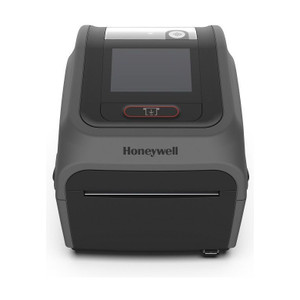
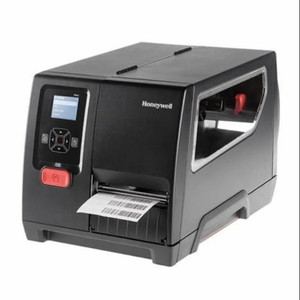
Honeywell RP2F00N0B10 Industrial Label Printer
The Honeywell RP2F00N0B10 is a compact, field-hardened label printer built for mobile warehouse, logistics, and manufacturing environments where conventional stationary printers won't work. Running Android OS with a Qualcomm Snapdragon processor, it delivers 203 DPI direct thermal output across a maximum 51.5 mm (2.0 in) print width—sufficient for standard shipping labels, product tags, inventory stickers, and compliance identifiers without the weight or power overhead of larger devices.
Key Features
- Direct Thermal printing: No ink cartridges to replace in the field. Direct thermal technology eliminates consumables, reducing per-label costs and maintenance burden on mobile routes. Critical for operations where resupply logistics are unpredictable.
- 203 DPI print resolution: Sufficient clarity for barcode scanning at standard distances (Code128, QR, EAN formats) and readable text without degradation. Balances output quality against battery drain—a meaningful tradeoff on all-day mobile jobs.
- 51.5 mm maximum print width: Handles industry-standard shipping label stock, 4x6 labels, and smaller product tags. Not a narrow-format device—this is full-width for typical warehouse labeling workflows.
- Dual wireless connectivity (Bluetooth 5.0 + Wi-Fi 802.11ac): Pairs directly to mobile devices via Bluetooth for on-the-spot label printing, or connects to enterprise networks via Wi-Fi for centralized print queue management. Eliminates the choice between convenience and control.
- 2500 mAh Li-Ion battery: Supports sustained labeling sessions typical of pick-and-pack operations. Field users should expect 4–6 hours per charge depending on label frequency and wireless range. USB connectivity available for emergency wired operation.
- IP54 rating and 2-meter drop durability: Dust and splash resistance confirmed—suitable for loading docks, rain-exposed outdoor staging areas, and rough handling. IP54 is not fully submersible, but handles wet-floor environments and incidental spillage. The 2-meter drop spec means this survives typical pallet-jack impacts and falls from waist height.
- Operating temperature range -20° to 55°C (-4° to 131°F): Handles heated distribution centers and cold seasonal storage equally. No special environmental conditioning required for most North American and European warehouses.
- 200 g (7.1 oz) weight: Handheld and pocket-portable. Workers can carry the RP2F00N0B10 all shift without fatigue, unlike larger industrial printers that require holsters or carts.
- Android OS with touchscreen: Configuration and label management via familiar mobile UI—no proprietary terminal software to learn. Reduces IT support overhead and accelerates user adoption.
Integration & Compatibility
The RP2F00N0B10 integrates with warehouse automation systems via standard wireless protocols. Bluetooth pairs with mobile computers and tablets running Android or iOS label-printing apps. Wi-Fi connectivity allows integration with centralized mobile device management platforms and WMS label servers. USB backup ensures reliability when wireless is intermittent.
Direct thermal operation means label design and thermal paper compatibility are critical. Verify stock thickness (typically 3–4 mil) and thermal coating before deployment to avoid print failures or media jams in high-volume routes.
When to Choose a Different Model
If your labeling volume exceeds 300 labels per shift and workers return to a central dispatch point, a wall-mounted or stationary thermal printer will cost less per unit and offer higher throughput. If you require print widths larger than 2.0 inches (thermal imaging labels, oversized shipping tags), consider a 4-inch industrial printer in the industrial printer category. The RP2F00N0B10 is optimized for mobile field routes with moderate-to-high frequency, not fixed-location high-volume labeling.
Frequently Asked Questions
Q: What is the battery life per charge on the RP2F00N0B10?
A: The 2500 mAh Li-Ion battery typically supports 4–6 hours of continuous operation, depending on print frequency and wireless connectivity mode. Heavy Bluetooth use or continuous Wi-Fi scanning reduces runtime; Bluetooth standby extends it. Plan for on-site charging at mid-shift for high-volume routes.
Q: Does the RP2F00N0B10 work with my existing mobile device?
A: The printer pairs via Bluetooth 5.0 with Android and iOS devices, or connects to your enterprise Wi-Fi network for app-based label submission. Confirm that your WMS or label app supports wireless thermal printing; most modern platforms do.
Q: Is the RP2F00N0B10 suitable for outdoor use?
A: IP54 rating handles rain exposure, dust, and wet-floor environments. It is not rated for submersion or continuous outdoor weather. The -20° to 55°C operating range covers most seasonal conditions, though extreme cold may reduce battery performance temporarily.
Q: What type of labels does the RP2F00N0B10 accept?
A: Direct thermal media only—typically 3–4 mil thermal paper in 51.5 mm width. Standard 4x6 shipping labels, 2x3 product stickers, and custom label stock all work. Confirm thermal coating compatibility with your label supplier before bulk ordering.
Q: Can I use the RP2F00N0B10 without a Wi-Fi network?
A: Yes. Bluetooth pairing to a mobile device works standalone; no network required. Wi-Fi is optional for centralized queue management, but field printing operates fully via Bluetooth alone.
Q: Does the RP2F00N0B10 support label templates and barcode generation?
A: The printer itself does not generate graphics—it receives finished label images from your WMS, label app, or mobile device. Your app or WMS handles barcode format, layout, and text. Ensure your software supports wireless label submission to thermal printers.
Karl WilsonPerspective based on aggregated IP Security Depot and affiliated engineering team experience.
The RP2F00N0B10 closes a real gap in mobile labeling: it's neither a consumer label maker nor a stationary industrial behemoth. At 200 grams with an IP54 rating and 2-meter drop durability, Honeywell has built a genuinely field-hardened printer that doesn't require a dedicated carrier or environmental enclosure. The dual wireless protocol (Bluetooth for direct pairing, Wi-Fi for enterprise integration) gives you deployment flexibility—grab it and print on any device in the warehouse, or manage queues centrally through your WMS.
Technical Highlights:
- 203 DPI direct thermal output: Standard barcode scanning distances (12–18 inches) and readable label text with zero ink cartridge overhead. The resolution-to-battery-life tradeoff is genuine—higher DPI would halve your shift runtime.
- 51.5 mm print width: Full coverage for 4x6 shipping labels and 2x3 product tags—the industry standard for logistics. Not a compromise device limited to narrow thermal tape.
- 2500 mAh battery with USB fallback: 4–6 hours per charge is realistic for moderate to high print frequency. USB connectivity provides emergency tethered operation if you run out of power on a route with no charging infrastructure.
- IP54 + 2-meter drop rating: Dust and splash rated for wet-floor environments, but not full water resistance. The drop spec confirms this survives typical warehouse impacts—not a fragile consumer device repurposed for rough use.
Deployment Considerations:
- Direct thermal media is essential—verify your label supplier's thermal coating before deploying across high-volume routes. Incompatible stock causes jams and ruins shift productivity.
- Battery runtime degrades in cold below -10°C—test shift-length scenarios in your actual seasonal environment before full rollout. Warm batteries in staging areas if you operate in unheated facilities.
- Bluetooth pairing is convenient but requires workers to keep a mobile device within 20–30 meters. Wi-Fi integration scales better for large facilities with many simultaneous printers.
The RP2F00N0B10 is purpose-built for distributed logistics workflows—pick-and-pack operations, cross-dock labeling, last-mile asset tracking, and field compliance tagging. If your operation is centralized at fixed stations or requires sustained 500+ labels per shift, a larger stationary thermal printer will cost less per unit. For mobile routes with moderate frequency and variable staging locations, this Honeywell delivers real field reliability without sacrificing portability.