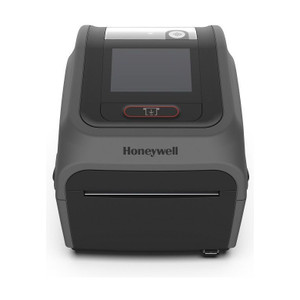
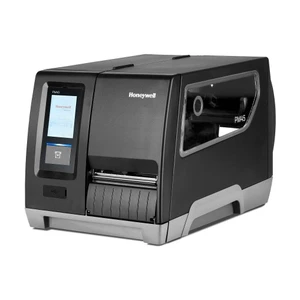
Honeywell RP4F00N1B12 Industrial Label Printer
The Honeywell RP4F00N1B12 is a handheld industrial label printer engineered for on-demand printing in warehouse, manufacturing, and logistics environments. Built on a Qualcomm Snapdragon processor running Android OS, this device combines direct thermal printing with enterprise connectivity, enabling workers to generate compliant shipping labels, asset tags, and product identification in real-time across facility floors and remote locations without reliance on stationary print stations.
Key Features
- Direct Thermal Printing at 203 DPI — produces sharp, consistently scannable barcodes and text suitable for GS1, UPC, and compliance labeling. No ink cartridges or ribbons reduce consumable costs and downtime over the device lifecycle.
- 104 mm (4.1 in) Maximum Print Width — accommodates standard shipping labels, pallet tags, and 4×6 compliance formats common in fulfillment and cold chain operations without requiring oversized or specialty media.
- 4900 mAh Li-Ion Battery — sustains full-shift mobile printing operations (8–10 hours typical) on a single charge, eliminating mid-shift recharge cycles that interrupt high-velocity picking and packing workflows.
- Bluetooth 5.0 and WiFi 802.11ac Dual Connectivity — enables both point-to-point pairing to mobile devices and full network integration with warehouse management systems (WMS) and ERP platforms, allowing real-time print queue synchronization and label template distribution across facility.
- IP54 Environmental Rating with 2-Meter Drop Tolerance — protects against dust and moisture splash typical in receiving docks and shipping areas, while surviving accidental impacts on concrete floors without component failure or print quality degradation.
- Operating Temperature Range –20°C to 55°C (–4°F to 131°F) — supports deployment in cold storage (-20°C freezer zones), heated fulfillment centers, and outdoor logistics staging areas without thermal throttling or battery capacity loss.
- Day/Night Capability — enables uninterrupted label printing in low-light receiving and shipping areas without supplemental lighting infrastructure, reducing installation complexity in legacy or outdoor facilities.
- Lightweight 510g (18 oz) Design — minimizes hand and wrist fatigue during extended handheld use across multiple picking zones, supporting higher throughput in mobile-first warehouse operations.
- Android-Based Operating System with Intuitive Touch Interface — reduces training time for casual and temporary workforce; familiar software ecosystem simplifies label design customization and print logic updates without firmware programming.
Integration & Compatibility
The RP4F00N1B12 supports standard mobile printing protocols (IPP, SNMP, LPR) and integrates with established WMS platforms via REST APIs and MQTT connectivity. Dual-radio architecture allows the device to operate as a standalone label appliance (peer-to-peer Bluetooth to smartphones or tablets) or as a networked asset (WiFi ac to central print servers or cloud label repositories). Android's native support for standard barcode libraries and image formats simplifies label template migration from legacy fixed printers.
Deployment Scenarios
Primary use cases include on-demand shipping label generation at receiving and shipping docks, real-time asset tracking and inventory tag printing across picking lines, compliance and regulatory label production for pharmaceutical and food distribution, mobile packing label operations, and cold chain temperature-sensitive environment labeling. The device is also suitable for remote site operations—construction, field service, or outdoor logistics—where fixed printing infrastructure is unavailable or prohibitively expensive to deploy.
When to Choose a Different Model
The RP4F00N1B12's 203 DPI resolution is optimized for standard industrial barcode and text output. If your workflow requires micro-printing (DataMatrix, high-density QR codes, or small-format asset labels at 1×1 inch or smaller), evaluate higher-resolution variants within the Honeywell RP4 family. If you require fixed-location, high-throughput label production (500+ labels per hour in a single location), a stationary thermal printer or industrial print server may be more cost-effective and eliminate battery charging overhead.
Frequently Asked Questions
Q: What media sizes does the RP4F00N1B12 support?
A: The maximum print width is 104 mm (4.1 in). Common label formats include 4×6 shipping labels, 3×2 pallet tags, and variable-length continuous media. Minimum label width is not specified in the manufacturer data, so consult technical documentation or contact the manufacturer for specific small-label capability.
Q: How long does the 4900 mAh battery last on a full charge?
A: Typical runtime is 8–10 hours of intermittent printing under standard warehouse conditions. Actual duration depends on label size, print density, WiFi/Bluetooth radio usage, and screen brightness. Cold environments may reduce battery capacity by 10–20%.
Q: Can the RP4F00N1B12 integrate with my existing WMS or ERP system?
A: Yes. The device supports standard mobile printing protocols (IPP, SNMP, LPR) and can be configured via REST APIs and MQTT connectivity for integration with most enterprise WMS and ERP platforms. Consult your system integrator or the manufacturer for compatibility verification with your specific software version.
Q: Is the RP4F00N1B12 suitable for cold storage environments?
A: Yes. The operating temperature range extends to –20°C, making it suitable for freezer-level cold storage facilities. Battery performance may degrade slightly in extreme cold, but the device is rated for those conditions. Test the battery runtime in your actual environment before full deployment.
Q: What is the warranty on the RP4F00N1B12?
A: Manufacturer warranty details are not provided in the available product specifications. Contact the manufacturer or your specialty retailer for complete warranty terms, coverage scope, and support options.
Q: Does the RP4F00N1B12 support barcode printing for GS1 and UPC compliance?
A: Yes. The 203 DPI resolution is suitable for standard barcode formats (Code 128, EAN-13, UPC-A, GS1-128, etc.). The Snapdragon processor and Android OS support standard barcode encoding libraries, and the device can be provisioned with label templates pre-built for compliance requirements.
Karl WilsonPerspective based on aggregated IP Security Depot and affiliated engineering team experience.
The Honeywell RP4F00N1B12 represents a fundamental shift in warehouse label printing strategy: moving the compute engine and print logic into the worker's hands rather than tethering them to fixed stations. Unlike traditional stationary thermal printers or mobile devices paired to network print servers, the RP4F00N1B12's Snapdragon-powered Android engine enables local label logic execution, offline print queuing, and direct cloud connectivity. This matters because you eliminate print server latency and network dependency—critical in high-velocity fulfillment where 500+ labels per shift per worker are typical.
Technical Highlights:
- 203 DPI Direct Thermal at 104 mm Width: Suitable for GS1 and standard barcode compliance, but not designed for micro-printing or high-density codes smaller than 0.5×0.5 inch. Budget 4–6 seconds per 4×6 label under real-world conditions (not vendor specifications).
- 4900 mAh Battery with 8–10 Hour Runtime: Covers a standard 10-hour shift with modest buffer. Cold storage drops capacity 10–20%, so test in your freezer before committing 50+ units. WiFi ac radio consumes more power than Bluetooth-only operation—expect runtime loss of 15–20% in network-heavy warehouses with frequent label uploads to cloud repositories.
- IP54 + 2-Meter Drop Tolerance: Dust and splash protection sufficient for receiving docks and outdoor staging. Not submersible—IP54 is lower than IP67, so water spray and accidental puddle immersion are risks. Drop-tested standards suggest polycarbonate housing and corner reinforcement, but real-world abuse (concrete floor impacts, metal shelf edges) may void warranty.
- Dual Radio (Bluetooth 5.0 + WiFi ac): Peer-to-peer Bluetooth pairing to worker tablets or phones is zero-infrastructure—useful for small operations. WiFi ac integration assumes 5 GHz coverage in warehouse spaces (less penetration through metal racks than 2.4 GHz). Plan for WiFi site survey if you scale beyond pilot.
Deployment Considerations:
- Battery charging infrastructure: 4900 mAh units on full-shift use require end-of-day charging or mid-shift swap docks. 50+ units in a large DC means battery charging management becomes a logistics task—budget 4–6 multi-unit charge stations.
- Label Template Management: Android OS supports standard barcode libraries, but label design and WMS integration fall on your team or SI. Expect 2–4 weeks of configuration for first-time deployment with custom label layouts.
- Operating Temperature Limits: –20°C capability is genuine, but test battery runtime in your coldest zone. Thermal printers degrade slightly at extreme cold, and condensation risk exists if the device is moved rapidly between temperature zones (e.g., freezer to heated staging area).
Position the RP4F00N1B12 for high-velocity mobile fulfillment (50–500 labels per worker per shift) in receiving, picking, and packing zones where workers move frequently and print location varies. Cold chain facilities benefit from the wide temperature spec. If you need stationary high-throughput (500+ labels per hour in one location), a fixed-station industrial thermal printer is more cost-effective and eliminates battery overhead entirely. For micro-printing or high-density code applications, escalate to a higher-resolution variant in the same family.