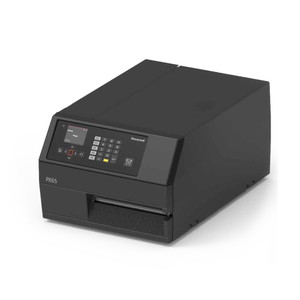
Honeywell PM45CA0000000200 Industrial Label Printer 203 DPI
The Honeywell PM45CA0000000200 is a production-grade thermal transfer printer engineered for high-volume barcode and label generation in warehouse, manufacturing, and distribution environments. At 203 DPI with sustained print speeds up to 300 mm/s (12 ips), this printer delivers consistent barcode quality and throughput required for supply chain operations where label accuracy directly impacts inventory management and compliance tracking. The 108 mm (4.25 in) maximum print width accommodates shipping labels, compliance tags, asset tracking labels, and variable-data production runs without requiring multiple printer SKUs.
Key Features
- 203 DPI thermal transfer resolution — produces sharp, consistently scannable barcodes across high-volume runs. This resolution balances barcode clarity against print speed; it's sufficient for retail and logistics standards (Code 128, UPC, QR, Data Matrix) without the throughput penalty of 300 DPI.
- Print speed up to 300 mm/s (12 ips) — maintains production-line velocity without sacrificing barcode quality. Real throughput depends on label complexity and media type, but this speed class handles batch printing and real-time on-demand labeling in warehouse picker-to-label workflows.
- 256 MB SDRAM and 512 MB Flash memory — sufficient for complex variable-data templates, multi-barcode formats, and graphics-heavy labels without requiring print server preprocessing. This onboard capacity reduces network latency and dependency on centralized print queuing, critical in environments where WMS systems push label jobs at line speed.
- Ethernet (10/100 Mbps), USB 2.0 Device/Host, and RS-232 connectivity — flexible integration with legacy parallel printing architectures, modern IP-based WMS platforms, and hybrid serial devices. Multi-port support minimizes integration risk when consolidating printers across multiple buildings or legacy system transitions.
- ZPL II, ZSim2, Direct Protocol, Fingerprint, and IPL emulation support — allows this single printer model to replace devices from competing vendors without firmware or label template rewrites. Critical when phasing out mixed printer environments or supporting contract manufacturers with proprietary label formats.
- HTTPS encryption and LPR analytics — enables secure network deployment and device visibility (job counts, error logs, supply alerts) without firmware updates. Satisfies enterprise security policies requiring encrypted printer communication and audit trails.
- Icon-based operator display — reduces training overhead for casual users (warehouse staff, contract labor) relative to menu-driven text interfaces. Supply status, error codes, and job queue are visible at a glance.
- Operating range 5–40°C (41–104°F) with humidity tolerance 10–90% non-condensing — suitable for climate-controlled warehouses and manufacturing floors. Not rated for unheated dock areas, extreme humidity, or outdoor exposure; condensation in cold-to-warm transitions will cause print quality issues.
- Fixed hanger mounting — integrates into production line or workstation brackets without requiring separate wall/ceiling hardware. Dimensions 432 × 181 × 253 mm (17.0 × 7.1 × 10.0 in) and weight 11.5 kg (25.4 lbs) fit standard industrial shelf and mounting rail configurations.
Integration & Compatibility
The PM45C is compatible with WMS platforms (Infor, Oracle, SAP, Kinaxis) and ERP systems via standard LPR protocol or direct Ethernet job submission. The multi-emulation support eliminates the need to rewrite label templates when migrating from competing thermal printers. ZPL II is the de facto standard in logistics and parcel operations, so existing template libraries port directly. Direct Protocol and IPL support legacy systems and specialized applications (pharmaceutical serialization, RFID encoding workflows) without vendor lock-in.
When to Choose a Different Model
If you require higher resolution (300 or 600 DPI) for pharmaceutical or healthcare labeling with dense graphics or small-font compliance text, evaluate the Honeywell PM45C's 300 DPI sibling variant. If print width exceeds 108 mm or you need edge-to-edge 4×6 shipping label support, consider the Honeywell PM45 series wide-format models. For portable or mobile labeling in the field, select a handheld thermal printer with integrated battery.
Frequently Asked Questions
Q: What label media does the PM45CA0000000200 support?
A: The PM45C supports roll and fanfold media in thermal transfer mode. Common stocks include coated paper, synthetic film, and textile labels. Maximum print width is 108 mm; minimum and maximum label length depend on your WMS configuration and media loader design. Consult the printer's media compatibility guide or your label supplier for specific stock recommendations.
Q: Can the PM45CA0000000200 print direct-to-media (no ribbon)?
A: No. The PM45C is a thermal transfer printer, not a direct thermal printer. It requires a ribbon (wax or wax-resin) and thermal transfer media. Direct thermal mode requires a different printer model and media type. If your application demands ribbon-free printing, evaluate direct thermal alternatives in the Honeywell industrial printer line.
Q: Does the PM45CA0000000200 support RFID encoding?
A: The base PM45C model does not include integrated RFID encoding. RFID-enabled variants exist in the Honeywell portfolio but require a separate model SKU and antenna assembly. If RFID encoding is required, consult the supplier for compatible PM45 series models with RFID module integration.
Q: What is the warranty on the PM45CA0000000200?
A: Warranty terms vary by distributor and region. Honeywell typically provides a 1-year manufacturer defect warranty on thermal printers. Extended service plans and on-site support options are available. Verify warranty details with your distributor or Honeywell sales representative before purchase.
Q: Is the PM45CA0000000200 NDAA compliant?
A: The PM45C is a thermal label printer manufactured by Honeywell (a U.S.-based company). For government procurement or NDAA Section 889 compliance verification, consult your distributor or Honeywell's government sales team. No explicit NDAA or supply-chain restriction data is documented in the product specification.
Q: What is the average cost per printed label?
A: Cost per label depends on media stock (cost/roll), ribbon type, and label size. A 4×6 shipping label on standard coated paper with wax ribbon typically costs $0.08–$0.15 in materials at production volume. The PM45C's high-speed throughput (300 mm/s) and multi-emulation support minimize operational overhead, but total cost of ownership includes maintenance, supplies, and integration labor — not shown in the base unit price.
Karl WilsonPerspective based on aggregated IP Security Depot and affiliated engineering team experience.
The Honeywell PM45CA0000000200 represents the thermal transfer standard for mid-volume industrial labeling where cost-per-label and uptime directly affect operational efficiency. The 203 DPI specification balances print quality and speed—sufficient for retail and logistics barcode standards while maintaining 300 mm/s throughput on standard label stocks. Memory configuration (256 MB SDRAM / 512 MB Flash) handles template complexity without requiring print server preprocessing, reducing network load and latency in real-time warehouse environments.
Technical Highlights:
- 203 DPI + 300 mm/s throughput: This pairing is deliberate. Higher resolution (300 DPI) drops speed to ~200 mm/s on equivalent media; lower resolution gains nothing on speed in the PM45C architecture. For logistics labeling (GS1-128, UPC, QR codes up to 21×21 modules), 203 DPI is the effective sweet spot. If you're printing pharmaceutical serialization or 2D barcodes smaller than 15×15 mm, you'll want the 300 DPI variant instead.
- Multi-emulation support (ZPL II, ZSim2, Direct Protocol, Fingerprint, IPL): This eliminates template rewrites when phasing out competing brands. ZPL II is dominant in parcel/logistics (UPS, FedEx backends use it), so most existing label libraries run unchanged. Direct Protocol and IPL are legacy cards — useful if you're consolidating proprietary label systems or supporting contract manufacturers, but not essential for greenfield deployments.
- Onboard memory (256 MB SDRAM, 512 MB Flash): This matters more than it appears. A typical 4×6 shipping label (with barcode, carrier logos, variable text) is 30–50 KB. The Flash can cache 1,000+ distinct label templates locally. In high-speed picking operations (100+ labels/minute), printing from onboard memory eliminates Ethernet round-trip latency. If your WMS sends 50-byte job tickets over a crowded network, this printer won't stall waiting for template downloads.
Deployment Considerations:
- Ribbon supply chain: The PM45C requires thermal transfer ribbon (wax or wax-resin blend). Ribbon costs scale with volume—expect $0.03–$0.06 per label in ribbon alone at 10,000 label/month volume. Plan ribbon procurement with your label supplier; cheap ribbon causes print voids and barcode read failures. Budget ribbon replacement as maintenance, not consumable variance.
- Operating temperature (5–40°C): This range excludes unheated docks, outdoor receiving areas, and cold-storage environments. If your label printer sits in a 0°C freezer, thermal transfer printing fails (ribbon won't flow properly, label adhesive becomes brittle). Heated enclosures exist, but they're expensive. Know your environment before specifying this model.
- Humidity tolerance (10–90% non-condensing): The keyword is non-condensing. Rapid temperature swings (cold media, warm environment) cause condensation on the printhead, smudging barcodes and degrading read rates. Allow 30 minutes thermal acclimation before heavy printing if media has been in cold storage.
Position this printer for parcel, ecommerce fulfillment, and retail distribution centers where label throughput and uptime are non-negotiable. The multi-protocol support is a real asset if you're consolidating legacy printer vendors; the onboard memory is a real advantage in picking-heavy operations where network latency matters. Skip this if you need sub-108 mm width, 300+ DPI resolution, or direct thermal (ribbon-free) printing.