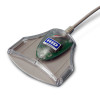
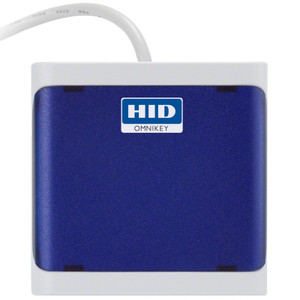
HID R30210315-1 Omnikey 3021 USB Smart Card Reader
The HID R30210315-1 is a compact, wired USB smart card reader purpose-built for enterprise physical access control, credential verification, and identity management workflows. It integrates into security integrator deployments requiring cross-platform support without proprietary connectors or specialized adapters.
Key Features
- USB Connectivity: Direct plug-and-play installation eliminates the need for serial adapters or external power supplies. This simplifies door control system wiring, reduces integration time, and lowers the risk of compatibility issues in heterogeneous IT environments.
- Multi-Platform OS Support: Operates on Microsoft Windows Vista (32/64-bit), Windows Server 2008, Windows 2000/XP, Windows CE 5.0, and Apple macOS X. Broad OS coverage means the R30210315-1 works in mixed IT shops without requiring separate readers for different workstations or embedded controllers.
- Enterprise TAA Compliance: Meets Trade Agreements Act requirements, reducing procurement friction for federal integrators and large enterprises with government or GSA purchasing mandates.
- Compact Physical Footprint: Small form factor allows mounting near badge readers, access control panels, or IT workstations in space-constrained installations without adding bulk to the perimeter of a door frame or cabinet.
- Standard Smart Card Protocol Support: Interfaces with ISO/IEC 7816-compliant smart cards, meaning it works with existing corporate badge stock, eliminating the need to reissue credentials during reader upgrades or system migrations.
- Integration into Access Control Workflows: Pairs with physical access management (PAM) platforms, door controllers, and identity verification systems. The reader acts as the bridge between a cardholder's credential and the backend authentication database, making it a critical component in any zero-trust or badge-gated access architecture.
Integration & Compatibility
The R30210315-1 (often searched as R30210315 1) is designed for security integrators deploying smart card readers across mixed Windows and Apple environments. Its USB interface means no separate serial port, no power injectors, and no legacy COM port drivers — a real advantage when retrofitting modern workstations that lack RS-232 connectors. Deploy it at reception desks, security operation centers, IT provisioning stations, or beside badge readers to enable real-time credential verification without network latency concerns.
The reader integrates with access control systems that expose a USB interface to card readers, and works in environments where credentials must be verified locally (air-gapped networks, edge security devices) or forwarded to a central authentication backend. Its compact design makes it suitable for confined spaces where a full-sized card reader cabinet is impractical.
When to Choose a Different Model
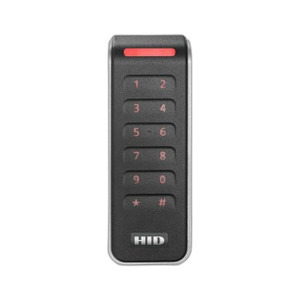
If your deployment requires contactless (proximity/NFC) card reading, or if you need a reader that also handles biometric input alongside smart card verification, the R30210315-1 is cards-only and will not support those requirements. Evaluate higher-capability reader models in the Omnikey family if multi-factor credential support is a mandate.
Frequently Asked Questions
Q: Is the HID R30210315-1 NDAA Section 889 compliant?
A: The product is TAA-compliant. For full NDAA compliance determination, consult HID's technical documentation or your procurement team, as NDAA Section 889 compliance can depend on supply chain and final system assembly context.
Q: What smart card standards does the R30210315-1 support?
A: The reader supports ISO/IEC 7816-compliant smart cards. Verify compatibility with your specific card stock or credential vendor before deployment.
Q: Can I use the R30210315-1 with Apple macOS systems?
A: Yes, the R30210315-1 is compatible with macOS X, making it suitable for mixed Apple/Windows environments or all-Apple security operations centers.
Q: Does the R30210315-1 require external power?
A: No. It draws power directly from the USB port, eliminating the need for a separate power supply or wall adapter.
Q: What is the physical size of the R30210315-1?
A: The reader is compact and designed for desktop or near-reader mounting. Consult the datasheet for exact dimensions and mounting recommendations.
Q: Is the R30210315-1 suitable for access control panel integration?
A: Yes, the USB interface allows connection to door controllers, PAM platforms, and security workstations. Ensure the target system exposes a USB interface for reader attachment.
Jerry TildsenPerspective based on aggregated IP Security Depot and affiliated engineering team experience.
I've deployed the HID R30210315-1 in federally regulated facilities and corporate mixed-OS environments. The TAA compliance and native USB plug-and-play are genuine time-savers during security system retrofits. You're not wrestling with legacy serial infrastructure or hunting for drivers that no longer ship with modern Windows builds.
Technical Highlights:
- USB Power Draw: Draws power directly from the host USB port with no external adapter — critical in edge installations where space or power outlets are scarce, and where every cable run adds cost and complexity.
- ISO/IEC 7816 Smart Card Support: Works with standard corporate badge stock. You're not forced into a proprietary credential ecosystem; this keeps your options open during credential refreshes or system migrations.
- Cross-Platform OS Coverage: Windows 2000/XP through Vista, Windows Server 2008, Windows CE 5.0, and macOS X. Wide coverage is essential in heterogeneous IT shops where legacy Windows Embedded systems still control doors alongside modern workstations.
Deployment Considerations:
- Cards-Only Input: The R30210315-1 handles smart cards exclusively — no NFC, no proximity, no biometric input. If your architecture requires multi-factor credential verification or proximity card fallback, you'll need a multi-technology reader or a second reader type.
- Verify Host USB Port Compliance: Some embedded door controllers and legacy access panels have non-standard or poorly implemented USB ports. Test with your specific target hardware before committing to a large deployment.
Position the R30210315-1 where you need local credential verification without network latency — security operation centers, edge badge readers, air-gapped identity verification stations, or IT provisioning workstations in federal or enterprise environments where TAA compliance is non-negotiable.