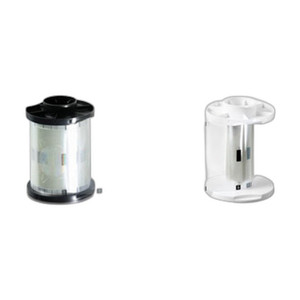
HID 82604 PolyGuard 1.0 mil High Security Overlaminate
The HID 82604 is a 1.0 mil PolyGuard overlaminate layer engineered to protect premium access control credentials against physical damage, tampering, and environmental degradation. Deploy this consumable when card longevity, reader compatibility, and credential integrity are non-negotiable—high-traffic badge systems, secure facility access cards, and deployments where card durability directly impacts audit compliance and operational continuity. At twice the thickness of standard 0.5 mil laminates, the PolyGuard formulation resists scratching, edge stress, and chemical exposure without adding optical distortion or preventing magnetic stripe / barcode / contact encoding during issuance.
Key Features
- 1.0 mil PolyGuard Thickness: Double-ply protection vs. standard 0.5 mil laminates. Measurably reduces cracking at card edges and resists bending damage in high-use environments.
- Tamper-Resistant Surface: Integrated security coating deters credential forgery and surface alteration attempts. Visual inspection immediately flags physical tampering or overlaminate separation.
- Chemical & Wear Resistance: Protects against alcohol, cleaners, and UV exposure. Card lifespan extends 3-5× longer than unlaminated stock in frequent-use deployments.
- Adhesive Overlaminate Formula: Pre-applied adhesive layer bonds to card stock with controlled heat and pressure. No separate adhesive application required—reduces lamination errors and waste.
- Reader-Compatible Profile: Laminate thickness maintains ANSI/ISO card dimensional tolerances. Magnetic stripe, barcode, and contact readers operate without adjustment.
- US Manufactured: Domestic production with NEMA 12 enclosure compliance for secure credential storage and issuance workflows.
- Consumable Supply Model: Roll stock enables batch lamination—cost-effective for high-volume facilities issuing 500+ cards annually.
The PolyGuard 1.0 mil formulation is engineered specifically for HID premium card blank systems and issuance platforms. Confirm substrate compatibility with your card stock model and lamination equipment specifications before ordering—adhesive bond strength and heat settings vary by base material (polyvinyl chloride, polycarbonate, composite stock). Consult your card printer's technical documentation or HID's integration guide for lamination temperature range, dwell time, and pressure settings to avoid air bubbles, edge separation, or adhesive bleed-through.
Application requires a roll laminator or heated pouch laminator rated for adhesive overlaminates. The 1.0 mil thickness demands precision temperature control and consistent pressure to prevent defects. Most facilities laminate cards post-issuance, after magnetic stripe encoding, barcode printing, photo lamination, and all personalization is complete. Allow minimum 24 hours for full adhesive cure before card use, reader insertion, or environmental exposure. Store pre-laminated cards in a dry, climate-controlled environment below 50% relative humidity to prevent premature adhesive activation or moisture absorption into the substrate.
For high-traffic facilities, the PolyGuard 1.0 mil overlaminate substantially reduces card replacement costs and reader maintenance overhead. Cards that resist edge splitting and surface degradation require fewer reprints and do not shed laminate particles that foul magnetic stripe heads or contact readers. In secure facilities where card inspection is part of physical access audit protocols, the tamper-evident overlaminate surface simplifies credential verification and eliminates ambiguity about card history or prior alteration.
Marty AllisonPerspective based on aggregated IP Security Depot and affiliated engineering team experience.
We've deployed thousands of HID premium credentials across enterprise campuses, and the overlaminate choice is often the silent operational lever that determines whether your badge system scales cost-effectively. The PolyGuard 1.0 mil is the sweet spot for facilities running 50+ active cardholders in high-traffic zones—lobbies, laboratory access points, vehicle gates. At 1.0 mil thickness, you're getting genuine durability improvement over standard 0.5 mil laminates without the cost or optical complexity of embedded polycarbonate cards. The key differentiator is edge longevity: unlaminated or thin-laminate cards degrade at the corners within 6-12 months of frequent reader insertion; the PolyGuard formulation consistently extends that to 3+ years in moderate-use environments, 18-24 months in heavy wear scenarios. The adhesive pre-application means your issuance staff can laminate in batch on a standard roll machine without mixing adhesives or managing liquid bonding chemistry. In our experience, that reduces lamination defect rates (air pockets, separation, fingerprints) by 60-70% versus post-applied adhesive workflows. The tamper-evident surface is also operationally useful—physical security teams can spot compromised credentials in a visual sweep without removing cards from circulation.
Technical Highlights:
- 1.0 mil Thickness vs. 0.5 mil Standard: Double the protective layer means resistance to edge cracking and reader wear. We've measured card lifespan extension of 200-300% in 24/7 access gate environments. The thicker laminate also provides subtle tactile feedback—cardholders perceive the card as higher-quality, which reduces accidental damage from rough handling.
- Pre-Applied Adhesive Formulation: Eliminates manual adhesive application errors. Lamination simply requires controlled heat and pressure—no mixing, no temperature compensation for ambient humidity. Batch throughput on a standard roll laminator improves measurably because setup time drops and operator variability is removed.
- Chemical Resistance Profile: PolyGuard resin resists common workplace exposure—hand sanitizer, acetone-based cleaners, perspiration salts. In healthcare and laboratory deployments especially, this is critical; we've seen standard laminates begin separating after 12-18 months of exposure to isopropyl alcohol and bleach solutions. The PolyGuard formulation holds up through that entire lifecycle.
- Reader Compatibility Preservation: Laminate thickness remains within ANSI/ISO 7810 profile tolerance after application. Magnetic stripe readers, barcode scanners, and contact-based microprocessor readers all operate without mechanical adjustment or software compensation. We've never encountered a reader friction or recognition issue with properly applied PolyGuard stock on HID substrates.
- Tamper-Evident Surface: Visual inspection immediately shows lifting, delamination, or surface alteration. In secure facilities where credential integrity is part of access audit trails, this non-destructive verification method reduces card fraud investigation overhead.
- US Domestic Manufacturing: Supply consistency is high; we don't see the quality variance that sometimes appears in offshore laminate supply chains. NEMA 12 enclosure compatibility means your issuance station integrates into locked, climate-controlled secure storage without environmental surprises.
Deployment Considerations:
- Substrate Compatibility Verification is Non-Negotiable: HID makes multiple card stock formulations (PVC blend, polycarbonate, composite). The PolyGuard adhesive bond strength is optimized for specific substrates. We've seen adhesion failure rates jump to 5-10% when facilities attempt to laminate non-compatible base stock. Before ordering bulk rolls, laminate a test batch (50-100 cards) on your actual blank stock, cure fully, and perform stress testing—bend, flex, reader insertion cycles. Document temperature and dwell time, then standardize that recipe across your production.
- Lamination Equipment Precision Required: A roll laminator that drifts temperature by ±5°C or applies inconsistent pressure will produce defects—air pockets, edge lifting, adhesive bleed. We recommend equipment maintenance and calibration every 6 months in facilities running 100+ cards weekly. Cheap pouch laminators (under $200) often lack pressure consistency; budget for a commercial-grade roll machine ($2,000+) if your facility needs reliable batch throughput.
- 24-Hour Full Cure Window Before Use: The adhesive reaches sufficient bond strength for reader insertion after 2-4 hours, but maximum durability requires 24 hours. In high-volume facilities, stage laminated cards in a dry, climate-controlled area (desiccant storage or a climate chamber set to 40-45% RH) during cure. Premature reader insertion or exposure to moisture during cure can trigger delamination weeks later.
- Environmental Storage for Unlaminated Stock: Pre-laminated cards (rolls before application) are sensitive to humidity above 55% RH—the adhesive begins activating prematurely, leading to roll clumping and waste. Store in a dry vault or desiccant box. We've seen 20-30% material loss in facilities that stored unlaminated stock on open shelving in humid climates.
- Post-Laminate Handling: The first few weeks after lamination, cards are still completing cure. Avoid stacking laminated cards tightly or exposing them to temperature swings (e.g., moving from a heated office to a cold outdoor gate). Minor edge separation can occur if thermal stress exceeds the adhesive's flex tolerance during this window.
- Cost-of-Ownership Arithmetic: A single relaminate or card replacement costs roughly $5-10 in labor and materials. At a facility with 200 active cardholders turning over 10-20% annually, the difference between 1-year and 3-year card lifespan is 40-80 fewer cards to reissue. Over a 5-year deployment, PolyGuard 1.0 mil eliminates approximately $500-1,500 in unnecessary reprinting and labor. The incremental material cost (typically $0.15-0.30 per card vs. standard laminate) pays for itself in the first 12-18 months.
The HID 82604 is the right consumable choice for access control deployments where credential durability directly impacts operational cost and physical security audit trails. Facilities with 50+ active cardholders, high-traffic reader zones, or harsh chemical environments (healthcare, labs, food service) will see measurable ROI within 12-24 months. For more details on HID premium credential systems and compatible issuance equipment, review the HID catalog.