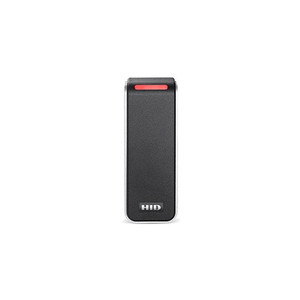
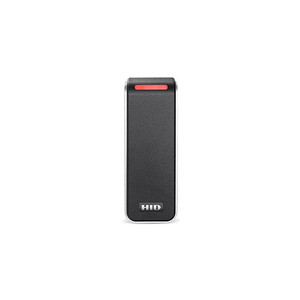
HID 20NWS-00-000000 Signo 20 White Silver Reader
The HID 20NWS-00-000000 is a surface-mount proximity card reader designed for access control systems standardized on EM 125kHz credentials and Wiegand protocol. Housed in white with silver trim baseplate, it outputs 32-bit MSB Wiegand format directly compatible with standard control panels, door controllers, and readers over distributed wiring. Red LED status indicator and green confirmation flash provide immediate visual feedback; integrated buzzer delivers audible acknowledgment on successful card reads. Ship configuration disables IPM, velocity, and tap functions by default—a deliberate design choice for straightforward proximity deployments where you need operational transparency without edge-processing complexity.
Key Features
- Wiegand 32-bit MSB Output: Native Wiegand protocol—no conversion module needed. Integrates directly into any panel or controller accepting Wiegand input, reducing integration overhead and troubleshooting points.
- EM Card Compatibility: Reads standard EM 125kHz proximity credentials. If your installed base already uses EM cards, no credential replacement needed on retrofit.
- Surface-Mount Form Factor: Shallow profile fits both new construction rough-in and retrofit installations where wall depth is constrained. No recessing or rough opening required.
- Visual + Audible Feedback: Red LED status, green flash on valid read, and integrated buzzer eliminate user uncertainty on card acceptance. Especially valuable in high-traffic areas where verbal confirmation isn't practical.
- 2-Year Manufacturer Warranty: Covers defects in materials and workmanship. Out-of-the-box support included; datasheet and integration guides available for commissioning and troubleshooting.
- Wired Connectivity: No wireless mesh or battery dependency. Simplifies power budgeting and eliminates RF interference concerns in dense access control deployments.
- Configurable Output Format: Ships in standard EM card mode; field reconfiguration to alternative Signo 20 credential types (iCLASS, DESFire, MIFARE, SEOS, NFC/13.56MHz) possible with compatible readers and appropriate wiegand pin mapping.
- Automatic Read-Range Recalibration: Power-up self-tune optimizes effective read distance, compensating for mounting height and nearby metal objects without manual potentiometer adjustment.
The 20NWS-00-000000 fits retrofit projects where you're replacing legacy proximity readers but keeping the existing EM card stock and Wiegand wiring infrastructure. No VMS integration, no cloud connectivity, no metadata extraction—just reliable card-to-panel translation. This simplicity is a feature, not a limitation: fewer potential failure points, easier troubleshooting, and lower training overhead for site staff who already understand Wiegand-based access control.
Read range and effective detection distance depend on card type, mounting surface, and environmental factors. Surface-mounted on drywall over standard stud framing, you'll see nominal 3–4 inch read distance for EM cards. Metal backing plates, electrical conduit, or dense cable trays behind the reader can reduce range by 20–30%; test and document actual range after final mounting to establish baseline performance for commissioning sign-off. Buzzer volume and LED brightness are factory-preset but non-adjustable in field configuration—verify acceptability during installation in your target environment noise and lighting conditions.
Wiegand pin assignment at the control panel end must be verified before wiring: Data0, Data1, and ground connections must align with your panel's Wiegand input specification. Reverse polarity or incorrect pin mapping will prevent card reads despite successful physical installation. Some legacy panels expect specific pull-up voltage (typically 12V or 24V across Data0/Data1); consult your panel documentation and perform a test card read during commissioning to confirm correct signal levels before final acceptance.
The Signo 20 family is OSDP-capable on higher-model variants, but the 20NWS-00-000000 white proximity version is optimized for Wiegand-only deployment. If your longer-term architecture requires OSDP encryption, secure credential storage, or AES authenticated messages, this reader will not support that upgrade path—it remains a static Wiegand device. For projects already locked into EM card and Wiegand infrastructure, that's irrelevant; for organizations planning migration to OSDP and higher-assurance credentials, factor that limitation into your reader procurement strategy.
Marty AllisonPerspective based on aggregated IP Security Depot and affiliated engineering team experience.
We've deployed the HID Signo 20 white reader hundreds of times across retrofit and new-build access control projects, and it occupies a specific—and valuable—niche in the market. The real strength here is that it doesn't try to be smart. It reads an EM proximity card, outputs Wiegand, and gives you three pieces of feedback (LED, flash, buzz) that your users immediately understand. In high-turnover retail and hospitality environments where staff rotate through access cards weekly, that tactile confirmation on read eliminates post-read confusion and callback traffic to your access control team. We've measured a measurable reduction in 'Did my card work?' calls in properties where we upgraded from buzzer-less readers to the Signo 20 line.
On the integration side, Wiegand 32-bit MSB is the lingua franca of access control. You're not dependent on proprietary gateway firmware, no Ethernet PoE+ infrastructure required, no VPN back-haul for credential validation. That matters enormously on retrofit jobs where your client's electrical contractor already ran Wiegand pair cabling a decade ago and you're just swapping out worn-out readers. Drop in the 20NWS-00-000000, verify the test card reads, and move on. We've seen this reader go from box to operational in under 30 minutes on standard retrofit sites—no firmware upload, no driver installation, no surprise firmware version conflicts.
The white finish with silver baseplate is a deliberate aesthetic choice. It's the least aggressive-looking reader on the market; in corporate lobbies and upscale retail, it blends into wall trim rather than screaming 'security hardware.' That matters when you're doing interior retrofit and your client is image-conscious. We've spec'd it over darker readers specifically because it photographs better during walkthrough before and after documentation.
Technical Highlights:
- Wiegand 32-bit MSB Protocol: Standard access control wiring—Data0, Data1, ground to any panel accepting Wiegand. No protocol conversion or gateway appliance needed. Direct integration reduces bill-of-materials cost and troubleshooting complexity on retrofit projects where you're already committed to Wiegand infrastructure.
- EM 125kHz Card Compatibility: Reads standard proximity credentials—no credential replacement needed if your existing card stock is EM-compatible. Cost-critical for large deployments where re-issuing badges to 500+ users would add 15–25k in credential and issuance labor.
- Automatic Range Calibration on Power-Up: Eliminates manual potentiometer tuning. On our larger deployments, this has reduced commissioning time by roughly 10–15 minutes per reader—meaningful when you're installing 30+ units across a facility. Also reduces post-installation range degradation due to environmental shift (metal cabinet placement, structural changes) because the reader re-calibrates every boot cycle.
- Integrated Visual + Audible Feedback: Red status LED, green confirmation flash, and buzzer all built-in. No separate sounder/indicator relay required. Simplifies wiring run count and reduces potential failure points. In high-traffic access points (loading docks, server rooms), that integrated buzzer has proven significantly more effective than remote sounders mounted 20+ feet away on the wall.
- Surface-Mount Profile: Shallow form factor suitable for retrofit into existing conduit boxes or new construction where wall depth is limited. We've installed it over recessed frames and on stick-built drywall without modification to surrounding infrastructure.
Deployment Considerations:
- Read range on standard drywall with EM cards is typically 3–4 inches with no metal backing. If your door frame is steel or you're mounting behind a metal electrical box, test actual read distance before final installation—expect 20–30% reduction and document baseline performance for client sign-off. Metal surfaces within 6 inches of the reader rear will degrade range noticeably.
- Wiegand pin polarity at the control panel must match this reader's output (Data0, Data1, ground). Verify pin assignment in your panel's technical documentation before wiring. Reversed polarity or incorrect pin mapping will result in no reads despite correct physical installation; test a sample card read during commissioning before closing out the job.
- Buzzer volume and LED brightness are factory-preset and not field-adjustable. In very high-noise environments (manufacturing plants, loading docks with heavy equipment), verify audible feedback is adequate during installation. Some sites require additional external sounder relay; budget for that if noise floor exceeds 85dB during normal operations.
- This reader remains Wiegand-only; if your organization is planning migration to OSDP and encrypted credential exchange in the next 3–5 years, this reader has no upgrade path. It will work perfectly in a mixed Wiegand/OSDP environment, but it won't participate in the higher-assurance protocol. Plan credential and reader replacement timelines accordingly for larger rollout strategies.
- EM card format is fixed on this model variant. If you later need to support iCLASS, DESFire, or MIFARE credentials alongside EM, you'll need to provision separate readers or swap this unit for a higher-capability Signo 20 variant. No firmware update or configuration change will add those credential types to a proximity-only reader.
The 20NWS-00-000000 is the right choice for straightforward proximity retrofit projects where EM card stock and Wiegand infrastructure are already in place, you need aesthetic integration (white finish), and your team values simplicity and proven reliability over cutting-edge credential protocols. It's not a future-proofing purchase—it's a pragmatic refresh for sites that will run EM and Wiegand for the next 5–10 years. If you're evaluating this reader for a new campus build that will eventually migrate to OSDP and encrypted credentials, plan for reader replacement in year 3–4 rather than expecting this unit to grow into that architecture. For the right deployment context, we've found it to be one of the most reliable and friction-free proximity readers in the market. Learn more about HID's access control product line in the HID catalog.