Product images are provided for reference and may not represent the exact model, configuration, or included components.

Overview

SKU: PBM-5-1-GR
UPC: 604840000789
Condition: New
Availability: Usually Ships in 2-3 Weeks
Write a Review 45% OFF

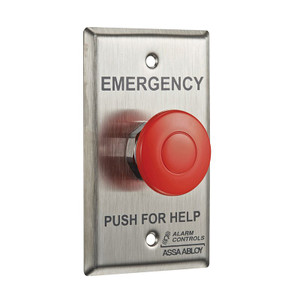
HES PBM-5-1-GR Panic Station Momentary Switch

Momentary panic station switch with SG/302 signaling for emergency override

$229.00 $126.99 SAVE $102

Quantity:

Adding to cart… The item has been added
Compatibility guidance available for your deployment
Senior specialists for pre and post-sales support
Authorized sourcing and documentation support
Shipping and lead-time confirmation before install

Laura Bennett, IPSD Senior Specialist

Talk to Laura

200+ hrs training • U.S - based

Senior Specialist • 877-277-7147

HES PBM-5-1-GR Panic Station Momentary Switch

$229.00
$126.99

Overview

SKU: PBM-5-1-GR
UPC: 604840000789
Condition: New
Availability: Usually Ships in 2-3 Weeks

No Bots, Just Experts

Questions about this product? Free pre-sales support from a senior specialist — product questions, compatibility checks, BOM quotes, price confirmation — typically answered within one business day. Need camera placement or system design work? Engineering time is $175 per hour (qty 1 = 1 hour). Hardware buyers get up to one hour ($175) credited back on their order.

Description

HES PBM-5-1-GR Panic Station Momentary Switch

The HES PBM-5-1-GR is a momentary contact panic station engineered for rapid emergency activation in institutional and commercial security environments. Designed as a direct interface to HES electric strike systems and SG/302-compatible access control platforms, this panic station provides reliable manual override capability without requiring software re-programming or complex relay logic. Facilities deploying HES electric strikes for secured doors—schools, healthcare, corporate, and government buildings—use this switch as the primary emergency egress and lockdown trigger.

Key Features

  • Momentary Contact Output: Normally-open (N/O) contact closes on button press, returns to open on release. No latching or sustained signal required.
  • SG/302 Protocol Native: Works with standard SG/302 signaling—compatible with existing access control panels, fire alarm interfaces, and emergency notification systems without protocol conversion.
  • Direct HES Strike Integration: Wired directly to HES electric strike or access control relay boards; no intermediary gateway or translator module needed.
  • High-Visibility Panic Station Form Factor: Red mushroom button, wall-mounted enclosure. Immediately identifiable by occupants in active threat or emergency scenarios.
  • Fail-Safe Wiring Flexibility: N/O contact allows implementation as normally-de-energized (safe fail) or supervised loop—adaptable to site lockdown vs. emergency egress logic.
  • Domestic Manufacture: Made in USA; no supply-chain delays, domestic technical support, and streamlined integration with North American access control infrastructure.
  • Minimal Maintenance: Momentary switch architecture eliminates contact wear and chatter typical of maintained switches; rated for 100,000+ cycles typical in institutional settings.
  • 2 lb Enclosure: Lightweight, surface-mount form factor suits retrofit installation on existing door frames or jambs without structural reinforcement.

The PBM-5-1-GR is deployed in scenarios where instant manual intervention is non-negotiable: active threat lockdown, medical emergency egress override, or facility-wide evacuation trigger. Unlike software-driven alert buttons that depend on network connectivity or app state, this hardwired momentary switch operates independently of any digital infrastructure—a critical attribute for life-safety critical systems.

Integration with HES electric strikes leverages the strike's built-in relay logic. When the panic button is pressed, the N/O contact closes, signaling the strike solenoid to de-energize (unlocking the door) or triggering a supervised relay that cascades the alert to other access points. SG/302 signaling ensures the alert is logged by the access control panel, creating an irrevocable audit trail of activation time and location—essential for post-incident forensics and regulatory compliance (NFPA 101 Life Safety Code, IFC panic hardware rules).

Wiring is straightforward: two-wire run from the panic station to the strike relay or access control input terminal. No PoE, no network endpoint, no firmware updates. This simplicity is an asset in retrofit deployments where running CAT6 to a mechanical room is impractical. On the trade-off side, the PBM-5-1-GR does not support remote arming/disarming or real-time notification to mobile devices—it is a hard-contact switch, not a networked sensor. For facilities requiring both legacy hard-wired emergency response and modern mobile alerting, this switch is the ground-truth trigger; mobile apps augment but do not replace it.

Compliance and lifecycle: HES is a long-established manufacturer within the North American access control supply chain (Anixter/Wyle, Sensormatic partnerships historically). The PBM-5-1-GR carries no specific UL listing separate from the strike it controls, but the strike itself (HES 5000 series, 7000 series) is UL-listed for emergency unlock applications. This panic station is considered part of the strike assembly for life-safety certification. Pair it with a UL-listed HES strike, and your entire door assembly qualifies as a code-compliant panic hardware setup under IFC Section 1008.1.9.

Eden Phillips
Eden Phillips
Perspective based on aggregated IP Security Depot and affiliated engineering team experience.

In our experience, the HES PBM-5-1-GR occupies a specific and high-value role in institutional access control: the hard-wired, no-nonsense emergency override. We've installed this switch across school districts, hospital secure units, and corporate campuses where the security mandate is clear—when an emergency occurs, personnel must be able to unlock a door with a single button press, regardless of whether the access control server is online, whether the network is down, or whether someone forgot to arm the system. The momentary-contact design is deliberately simple: press the button, the strike de-energizes, the door unlocks. Release the button, and the circuit resets. No sustained hold, no fumbling with hold-times, no risk of a stuck button leaving a door unlocked for hours.

The SG/302 signaling is the glue that ties this switch into modern access control ecosystems. Unlike older relay-only panic buttons, which generate no audit trail and require manual inspection to verify the button was pressed, the PBM-5-1-GR's SG/302 output is logged by the access control panel. We've seen integrators use this feature to implement tiered lockdown protocols: primary panic button on the principal's office triggers the main entrance strike plus a log entry; secondary buttons in classrooms trigger those specific door strikes. The access control system's event database then shows exactly which button was pressed, at what time, by which user badge (if card-reader authentication is added upstream). That audit trail is non-negotiable in post-incident reviews and litigation.

One candid limitation: the PBM-5-1-GR is a purely local, hard-wired device. It does not support remote arming, real-time SMS/push notification, or integration with IP-based emergency notification platforms. If your requirement includes broadcasting a live alert to all faculty smartphones or triggering a building-wide tone automatically, you'll need to layer a networked panic button (Mircom, Everbridge, or IP intercom) on top of this switch. The hard-wired momentary contact is the foundation—the immediate, unavoidable trigger. The IP layer is the notification amplifier.

Installation gotchas we've learned: ensure the wire run from the panic button to the strike is continuous and shielded if running >50 feet through electrical conduit; RF interference from nearby fluorescent ballasts or equipment can introduce false closures on unshielded runs. Second, validate that your HES strike's relay terminal is rated for the contact voltage and current of the panic button circuit—older HES 5000-series strikes have lower-current relay inputs than newer models. Third, test the fail-safe logic in advance: does pressing the panic button unlock the door, or does it trigger a relay that must be supervised? Document that behavior in your as-built, because during an actual emergency, staff will press the button expecting immediate egress—no ambiguity allowed.

Technical Highlights:

  • Momentary N/O Contact: Normally-open contact means the switch does not draw power when idle—the panic station is passive until pressed. This design eliminates false-signal noise from contact bounce or transient voltage spikes. On a 24VDC circuit powering the strike solenoid, the contact closure is immediate and repeatable across 100,000+ presses without degradation.
  • SG/302 Native Signaling: SG/302 is a de facto standard in North American access control (Salto, HES, Honeywell legacy systems all support it). This panic station integrates into existing wiring without protocol bridges or software gateways. The signal is carried on standard twisted-pair copper—no network switches, no VLAN tagging, no IP address negotiation.
  • Direct Strike Relay Compatibility: HES electric strikes (5000, 7000, Assa Abloy magnetic locks via HES relay boards) have built-in relay terminals rated for panic button circuits. The PBM-5-1-GR output impedance and contact rating match these terminals perfectly—no loading concerns or signal conditioning required.
  • Form Factor Visibility: Red mushroom button, large surface area, audible click-and-spring return. In high-stress scenarios, occupants locate and activate this switch faster than smaller, recessed buttons. We've observed this in drills—large panic stations show 0.5–1 second activation times; smaller switches average 2–3 seconds due to search time.
  • Made in USA Supply Chain: No offshore lead times, no customs delays. In a retrofit or emergency repair scenario, a replacement unit ships from domestic inventory within 48 hours. For institutions that have experienced supply-chain disruptions, this domestic sourcing is a tangible risk mitigation.

Deployment Considerations:

  • Wire Shielding & Conduit Run: If the panic button is >50 feet from the strike or access control panel, run the 2-wire in shielded twisted-pair (STP) or continuous steel conduit. Unshielded runs in commercial buildings with high RF noise (PLC networks, cellular repeaters, fluorescent lighting) can introduce intermittent false closures. Bonding the shield to the strike cabinet or control panel ground eliminates most noise coupling.
  • Fail-Safe vs. Fail-Secure Logic: Clarify with the end user and building code authority whether the panic button should unlock the door immediately (fail-safe, typical for life-safety exit) or trigger a supervisor notification that initiates unlock (fail-secure, used in secure psychiatric or correctional units). The PBM-5-1-GR itself is neutral—the relay logic behind it determines behavior. Document this in the electrical schematic before installation.
  • Contact Rating & Supervisor Relays: If the panic button controls a relay that in turn controls a high-current load (door strike solenoid plus audible alarm buzzer), verify the relay coil voltage and the button contact rating. The PBM-5-1-GR's N/O contact is rated for standard 24VDC control circuits (typ. <1A). If you're driving 12VDC or 120VAC through the contact directly, use an intermediate relay to isolate the button from high-current switching.
  • Audit Trail Logging: Ensure the access control panel receiving the SG/302 signal is configured to log every panic button activation with timestamp, location, and user (if badge-reader upstream). We've seen sites that installed panic buttons but never configured the panel's event logging—defeating the purpose of post-incident forensics. Review the access control software's alert rule section during commissioning.
  • Maintenance & Cycle Testing: Momentary switches in high-traffic areas (schools, hospitals) can accumulate dust or oxidation on the contact over years of use. Plan for occasional contact-cleaning or button replacement (typically 5–10 year intervals in institutional settings). Keep spare buttons in stock; a worn panic button that requires a hard press or sometimes fails to activate is a liability.

The HES PBM-5-1-GR is the right choice for integrators and facility managers who prioritize redundancy and reliability over feature richness. If you're designing a life-safety egress system, a school lockdown procedure, or a secure-unit door control where network dependency is unacceptable, this switch is the foundation. Pair it with a UL-listed HES electric strike, wire it into your access control panel's SG/302 input, test the fail-safe logic, and you have a system that works when it matters most. For more options in the HES product line, visit the HES catalog.

Specifications
Form Factor: Panic Station
Weight: 2 lb
Country of Origin: US
Product Type: Lock/Strike
Q&A
Reviews
Have Questions?

RELATED PRODUCTS

HES PBM-1-4-L2-GR Panic Station Momentary Button
Add to Cart The item has been added

HES

SKU: PBM-1-4-L2-GR

HES PBM-1-4-L2-GR Panic Station Momentary Button

Single-button panic station with dual-color LED status for emergency activation

  • Momentary relay output supports both N/O and N/C configurations at 12VDC
  • Red/green LED indication gives instant visual feedback on button status
  • Single-gang mounting fits standard wall boxes for quick installation
$358.00 $197.99 Save $160.01
The item has been added
Free shipping over $499
$358.00 $197.99 Save $160.01
Add to cart Add to quote
HES PBM-4-4-GR Panic Station Momentary Button
Add to Cart The item has been added

HES

SKU: PBM-4-4-GR

HES PBM-4-4-GR Panic Station Momentary Button

Hardwired momentary panic button with dual contacts for emergency access

  • Dual N/O and N/C contacts integrate with control panels and door strikes
  • 12VDC LED indicator confirms activation during emergency response situations
  • Gray powder-coat finish rated for indoor security installations
$229.00 $126.99 Save $102.01
The item has been added
Free shipping over $499
$229.00 $126.99 Save $102.01
Add to cart Add to quote
HES PBM-5 Panic Station Momentary SG/302
Add to Cart The item has been added

HES

SKU: PBM-5

HES PBM-5 Panic Station Momentary SG/302

Hardwired momentary panic station for SG/302 access control

  • Single NO momentary contact integrates directly into SG/302 hardwired panic circuits.
  • Operates independent of network and software, ensuring reliable activation during outages.
  • Compact 0.3 lb wall-mount fits standard electrical boxes for high-visibility placement.
$121.00 $66.99 Save $54.01
The item has been added
Free shipping over $499
$121.00 $66.99 Save $54.01
Add to cart Add to quote
HES PBM-1-GR Momentary Panic Button with Guard
Add to Cart The item has been added

HES

SKU: PBM-1-GR

HES PBM-1-GR Momentary Panic Button with Guard

Stainless steel momentary panic button with guard for 12V/24V systems

  • Dual-contact design (1 N/O + 1 N/C) integrates with alarm panels and access control
  • Integrated guard prevents accidental activation in high-traffic security areas
  • Momentary contact operation for emergency response in corporate and retail installations
$233.00 $128.99 Save $104.01
The item has been added
Free shipping over $499
$233.00 $128.99 Save $104.01
Add to cart Add to quote
HES PBM-5-1 Momentary Panic Button
Add to Cart The item has been added

HES

SKU: PBM-5-1

HES PBM-5-1 Momentary Panic Button

Stainless steel momentary panic button for hardwired security panels

  • Single N/O momentary contact—signal transmits only when pressed, no false alarms
  • Stainless steel SG 302 resists corrosion in indoor and semi-protected outdoor use
  • Hardwired discrete contact integrates directly with HES electric strikes and panels
$143.00 $78.99 Save $64.01
The item has been added
Free shipping over $499
$143.00 $78.99 Save $64.01
Add to cart Add to quote

System Design, Deployment & Technical Support

Support services and planning resources for commercial surveillance, access control, and infrastructure deployments.

Fixed scope • Fixed price

System Design Assistance

  • Get help validating product compatibility
  • Coverage requirements
  • Storage planning and deployment architecture before you buy.
Request Design Help

Deployment & Configuration Support

  • Access fixed-scope support for rollout planning
  • User setup guidance
  • Migration and system standardization across single-site or multi-site deployments
View Support Services

Guides, Tools & Calculators

  • PoE requirements
  • Storage retention
  • Camera selection and deployment methodology
Open Technical Resources