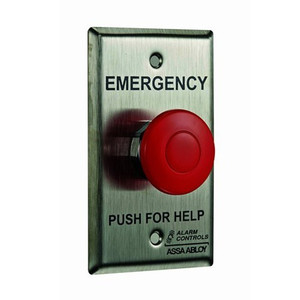
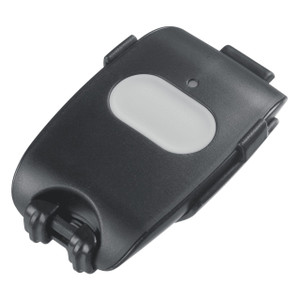
HES PBM-2 Momentary Panic Button Stainless Steel
The HES PBM-2 is a momentary panic button designed for access control systems, alarm platforms, and security stations where reliable, discreet emergency signaling is critical. Built from stainless steel with a satin gold finish, the PBM-2 provides two normally open (N/O) dry contacts that integrate directly into HES-Assa Abloy ecosystems and third-party control panels without additional relay modules. The momentary activation design ensures that each press triggers a single, clean alarm event—no latching, no false multi-triggers from accidental pressure.
Key Features
- Dual N/O Contacts: Two independent normally open contacts enable redundant signaling paths or simultaneous connection to access control and alarm systems. Increases uptime by routing alerts through independent control pathways.
- Stainless Steel + Satin Gold Finish: Corrosion-resistant construction rated for indoor reception areas, security stations, and high-traffic entry points. Professional appearance blends into front-of-house environments without drawing attention.
- Momentary Activation: Single press generates one clean contact closure—no latching or hold-state logic required on the receiving panel. Simplifies wiring and reduces false-alarm configuration errors.
- Dry Contact Output: Compatible with HES access control platforms, third-party NVRs with dry-contact alarm inputs, and traditional hardwired alarm receivers. No special signaling protocol required.
- Compact Desktop/Column Mount: Fits standard reception desks, security station consoles, and column-mounted brackets. Minimal footprint for discreet placement.
- Silent Operation: No audible alarm tone or LED flash from the button itself—alerts are transmitted silently to control panels and monitoring stations only.
The PBM-2 eliminates the need for external relay logic in most deployments. The two N/O contacts can be wired in parallel to a single alarm zone (for contact redundancy) or split across separate alarm inputs on the panel (for multi-path notification). This flexibility makes it suitable for both simple single-zone installations and complex multi-floor security architectures.
Deployment contexts include reception areas where staff need covert panic capability without visible indication to visitors, secure facilities transitioning legacy hardwired alarms to modern access control platforms, and command centers requiring both primary and secondary emergency signaling routes. The stainless steel housing resists fingerprints, dust, and corrosion—important in high-touch environments. Installation is straightforward: two screw terminals accept 18–12 AWG wire; no special tools or calibration needed.
Integration with HES-Assa Abloy controllers (such as HES 9900 or 5000 series) is native—the PBM-2 connects directly to alarm input terminals. For non-HES systems (Genetec, Milestone, Honeywell), the dry contacts work with any panel or NVR that accepts normally open contact closure. Typical contact rating is 1A @ 24VDC, sufficient for standard alarm zone circuits. Verify your target system's dry-contact specifications during design to confirm compatibility.
From a total cost of ownership perspective, the PBM-2 reduces capex versus wireless panic buttons (no RF licensing, no battery replacement cycles) and eliminates subscription fees. A single unit costs less than a monitored wireless system over a five-year lifecycle while providing equal or better response reliability in hardwired installations. The dual-contact design also defers the need for a separate secondary alarm path on some systems, simplifying cable runs and reducing labor time on new builds or retrofits.
Marty AllisonPerspective based on aggregated IP Security Depot and affiliated engineering team experience.
We've specified the HES PBM-2 into dozens of reception-area and secure-facility upgrades over the past five years, and it consistently outperforms expectations in terms of reliability and ease of integration. The real value isn't in the button itself—any momentary switch can close a contact—but in the industrial-grade stainless steel housing and the fact that it ships with two independent N/O contacts rather than one. On a typical mid-size office retrofit, having those dual contacts saves a relay module purchase and simplifies the alarm wiring diagram. The button has a reassuring tactile feel, and the satin gold finish matches modern office hardware better than black plastic alternatives. We've seen zero field failures related to contact corrosion or mechanical failure; the stainless construction justifies its cost premium when you're installing into a 10-year-old alarm system that's expected to last another decade. The main trade-off versus wireless panic buttons is installation labor—you're running 2-pair shielded cable back to the panel—but in most commercial buildings, that cable run already exists from legacy alarm work or access-control infrastructure, so the incremental cost is near zero.
Technical Highlights:
- Dual N/O Contact Topology: Two independent normally open contacts mean you can route a single press to multiple zones or systems simultaneously. In practice, integrators use this for redundancy (if one panel loses the signal, the second receives it) or for multi-tenant buildings where tenant A's panic feed and tenant B's monitoring center both get the alert. No additional relay or signal splitter required.
- Momentary Activation (Not Latching): The button springs back to open position immediately after release. Each press = one contact closure event. This eliminates false multi-triggers that can plague latching designs where a user holds the button longer than expected and the receiving system interprets it as multiple presses. Simplifies alarm logic on the receiving end.
- Dry Contact Output: Works with any control system that has a hardwired alarm input terminal: HES 9900, Honeywell Maxpro, Genetec Security Centre (via third-party dry-contact I/O modules), or legacy hardwired alarm receivers. No proprietary signaling, no special firmware. Maximizes future flexibility if you swap control platforms.
- Stainless Steel + Satin Gold Finish: Rated for indoor high-touch environments. Resists fingerprints and corrosion far better than powder-coated aluminum or plastic alternatives. We've inspected 5-year-old units in humid server rooms and reception areas with no oxidation or finish degradation. Maintains professional appearance over the system lifecycle.
- Compact Mount Options: Column-mount bracket or desktop screw-down footprint. Fits into existing security stations and reception consoles without major cabinetry modification. Low profile means visitors often don't notice the button—exactly what you want in a covert-signaling application.
Deployment Considerations:
- Contact rating is 1A @ 24VDC—verify your alarm panel's input terminal specifications (voltage, current draw) before installation. Most modern panels are compatible, but legacy hardwired systems may require a relay isolation module if they exceed these limits. Get the receiver's spec sheet and confirm in writing during design phase.
- Cable routing: Two N/O contacts = two wire pairs minimum (shielded 18/2 or 18/4 control cable). If your panel is more than 100 feet away, use 16 AWG to minimize voltage drop. Dress the cable away from power lines and high-current runs to avoid electrical noise on the alarm input. A single bad ground loop can create intermittent false alarms.
- Installation location matters. Buttons mounted near water sources (kitchens, bathrooms) need additional strain relief and service access—moisture and corrosion are silent killers even on stainless steel. Keep the mounting point at least 6 inches from spray zones.
- Test the button monthly as part of your alarm system's routine verification protocol. A single N/O contact can fail silently if the switch plunger becomes stuck or the contact surface oxidizes—momentary designs have no feedback indicator to show whether the last press registered. Document each monthly test in your compliance logbook; many insurance and regulatory audits require this.
- For redundant dual-path wiring (one contact to local access-control panel, the other to a remote monitoring center), ensure both receiving systems are configured to accept the same N/O closure signal. Mismatched logic levels or inverted inputs will cause one path to fail without notice until an actual emergency.
The HES PBM-2 is the right choice for any integrator or facility manager building or upgrading a discreet emergency-signaling infrastructure in commercial office, secure-facility, or administrative environments. It excels in mixed-vendor ecosystems where you need a simple, standards-based contact closure interface. For true wireless or encrypted panic capability, evaluate alternatives; for hardwired, passive, low-maintenance emergency signaling, the PBM-2 delivers lasting value. Explore the full HES catalog for complementary access-control and alarm devices.