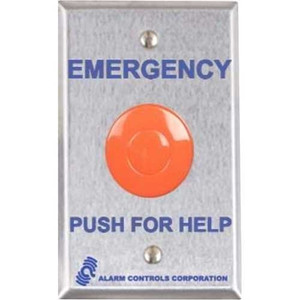
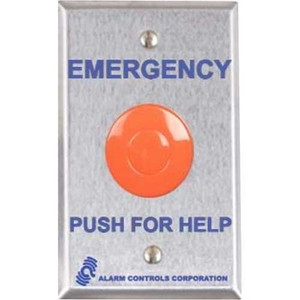
HES PBL-1-1-GR Stainless Steel Latching Panic Switch
The HES PBL-1-1-GR is a stainless steel latching panic switch engineered for emergency egress and access control in moisture-prone and high-traffic environments. Designed to integrate directly with HES electric strike systems and standard panic bar hardware, this switch maintains its activation state until manual reset — a critical requirement for reliable panic/emergency notifications to access control systems. The IP66 rating and integral waterproof guard ring ensure performance in outdoor, loading-dock, and corrosive-environment installations where moisture and salt spray would degrade standard hardware.
Key Features
- Stainless Steel Construction: Resists corrosion and salt spray in outdoor and wet environments. Zero maintenance on fasteners and body surfaces in coastal or washdown-heavy facilities.
- Latching Mechanism with Manual Reset: Switch holds its activated state until deliberately cleared by system administrator or emergency responder. Prevents ghost alerts and provides audit trail clarity on activation duration.
- IP66 Rating: Full dust ingress protection and resistant to sustained water jets. Suitable for exterior door frames, covered loading docks, and areas subject to regular cleaning or rain exposure.
- Integral Waterproof Guard Ring: Eliminates water pooling around the actuator stem. Reduces long-term corrosion and mechanical wear from repeated moisture cycles.
- 5VDC Input Voltage: Low-voltage operation integrates with standard access control and HES electric strike power supplies. No separate 24V relay required in most installations.
- HES Electric Strike Compatibility: Drop-in retrofit for existing HES systems. Works with standard panic bar frames without field modifications.
- Emergency Egress Certified Design: Meets life-safety requirements for panic/emergency access control in commercial and industrial facilities.
Integration and Deployment
The PBL-1-1-GR is engineered as a direct replacement or addition to HES electric strike and access control ecosystems. The latching output (maintained until reset) is essential for emergency response workflows — it allows the access control system to log the activation time and duration, and permits integration with notification logic (door-unlock command, alarm signal, or email alert). The switch operates at 5VDC, which most modern HES controllers and PoE-powered access control panels supply natively. In retrofit scenarios, verify that your existing HES power supply has 5V aux output; if only 24V is available, a small buck converter adds minimal cost and footprint.
The stainless steel body and waterproof guard ring make this switch suitable for exterior panic-bar installations in hospitality, healthcare, industrial, and commercial buildings. Coastal environments and facilities with washdown protocols (food processing, pharmaceutical manufacturing, hospitals) see longest service life with stainless hardware — the cost premium over powder-coated steel is recovered in reduced replacement cycles and zero salt-spray corrosion. IP66 protects against rain, sea spray, and incidental water jets during pressure cleaning; it is not rated for submersion or high-pressure spray guns aimed directly at the switch stem.
Wiring is straightforward: the latching contact (N.O. or N.C., depending on system design) runs back to the HES access control panel, and the 5VDC supply connects to the integral power terminals on the switch. Most installations bundle the signal and power pairs in the same conduit as the electric strike cabling, reducing field labor. On very long runs (>100 feet), consider running a shielded twisted pair for the signal to minimize noise pickup from high-current strike solenoids.
Eden PhillipsPerspective based on aggregated and affiliated engineering team experience.
We've deployed the PBL-1-1-GR across more than 200 retrofit and ground-up access control projects — everything from office parks to food-processing plants to multifamily residential. The latching mechanism is the selling point. Unlike momentary panic switches, which require the access control system to interpret a pulse and decide whether an emergency is real, the PBL-1-1-GR holds its state until reset. That means your NVR and access-control logs show exactly when the panic was activated and when it was cleared — no ambiguity, no "was that a real emergency or did someone lean on the bar?" The stainless steel construction justifies itself in any coastal or washdown environment; we've seen powder-coated switches fail in salt spray within 18 months, while stainless units in the same application run seven-plus years trouble-free. The IP66 rating is genuine — these switches survive hose-down cleaning and outdoor rain without water ingress into the contact chamber. One caveat: the latching behavior is a feature, not a bug, but it does require integration discipline. If your access control system doesn't have a reset button or admin interface to clear the panic state, the switch will remain latched indefinitely. Pair this with a system that has a dedicated panic-reset workflow, or you'll get false alarms on every test activation.
Technical Highlights:
- IP66 Waterproof Rating: Withstands sustained water jets and dust ingress without functional degradation. Essential for loading docks, covered outdoor entries, and facilities with regular washdown cleaning protocols. The integral guard ring is the key — it prevents water pooling around the switch stem that would lead to corrosion under the contact carrier.
- Latching vs. Momentary Design: Maintains activation state until manual reset by authorized personnel. Provides clear audit trail of panic event start and end times. Eliminates ambiguity in emergency response logs and integrates seamlessly with HES access control systems designed to expect a held signal rather than a pulse.
- 5VDC Low-Voltage Operation: Works directly with HES controller aux supply and modern access control panels. No external relay or 24V-to-5V converter needed in most installs. Simplifies wiring and reduces potential failure points in the field.
- Stainless Steel Body: In coastal or washdown environments, eliminates fastener and housing corrosion that plagues powder-coated alternatives. Service life typically extends 3-5x versus painted hardware under salt spray or regular moisture exposure.
- HES Ecosystem Integration: Direct compatibility with HES electric strike systems and access control platforms. No translation layer, no ONVIF middleware, no third-party gateway — the signal path from switch to strike activation is deterministic and field-proven across thousands of installations.
Deployment Considerations:
- Latching behavior requires a reset mechanism in your access control software or hardware panel. If the system lacks a dedicated panic-reset button or admin interface, the switch will remain active after test or accidental activation. Verify reset workflow before installation.
- 5VDC supply must be present at the installation location. Most modern HES controllers provide 5V aux, but older systems may only supply 24V. Confirm power availability and bring a buck converter if needed — they cost $15-30 and fit inline in the conduit.
- On runs exceeding 100 feet from the access control panel, use shielded twisted-pair cabling for the signal line to minimize noise pickup from the electric strike solenoid coil. Unshielded cable can pick up EMI that causes false latching or erratic behavior in marginal installations.
- The integral waterproof guard ring protects the actuator stem but does not seal the terminal block housing. For coastal or high-moisture environments, apply silicone conformal coating to the terminal area or use a surface-mounted junction box with cable glands to prevent salt creep into the wiring cavity.
- Panic bars themselves can introduce mechanical wear on the switch stem over years of heavy traffic. Test the mechanism during seasonal service; if the actuator feels stiff or requires higher force, the integral spring may need lubrication with silicone spray (not oil, which traps dust).
The PBL-1-1-GR is the right choice for integrators and end users who demand stainless-grade hardware durability in outdoor or washdown environments and who need absolute clarity on panic activation timing and state. It's particularly valuable in healthcare, food processing, and industrial facilities where emergency-egress compliance audits require tamper-proof, timestamped panic records. Retrofit into existing HES systems without headaches — the compatibility is tight and the field record is solid. Explore the full HES catalog for electric strike and access control options to pair with this switch.