HES NTS-3 Contactless No Touch Switch
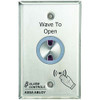
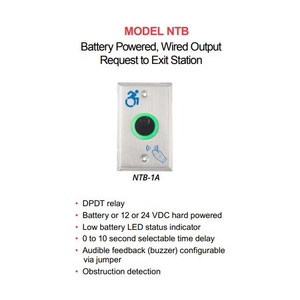
The HES NTS-3 is a contactless switching solution designed for secure access control environments where hygiene, durability, and reliability are non-negotiable. Unlike traditional mechanical push buttons, the NTS-3 eliminates physical touchpoints entirely, reducing cross-contamination risk and removing a major wear point from high-traffic door cycles. This hands-free activation device operates at 12 VDC and integrates directly with standard electromagnetic locks and access control systems, making it suitable for healthcare facilities, secure corridors, emergency egress routes, and any installation requiring sanitation without operational compromise.
Key Features
- Contactless Sensor Activation: Hands-free operation eliminates touchpoints and mechanical wear from repeated use. Single-failure mode is elimination of contact surfaces—not spring fatigue or button sticking.
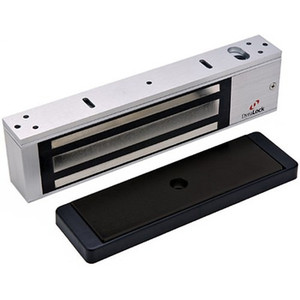
- 12 VDC Output Compatibility: Direct integration with electromagnetic locks, door strikes, and access control relay inputs. Standard connector ensures retrofit fit into existing installations.
- Optimized Detection Range: Calibrated activation distance prevents false triggers from foot traffic while ensuring response to intentional approach. Response time optimized for typical door passage scenarios.
- Vandal-Resistant Housing: Impact-rated construction for semi-public and public-facing installations. Withstands environmental stress in high-traffic corridors and emergency egress routes.
- Compact Wall-Mount Form Factor: Minimal profile fits existing door frames, ADA-compliant mounting heights, and narrow jambs without structural modification.
- Low Power Draw: Efficient standby and active power consumption suitable for battery-backed systems, UPS integration, and continuous-duty operation in facilities without dedicated 24 VDC backbone.
- US Manufacturing: Domestic sourcing, no international supply-chain dependencies.
The NTS-3 operates as a standalone switching device with no software, cloud dependency, or commissioning overhead. Power input is 12 VDC; output is a standard dry contact suitable for electromagnetic lock coils, access control relay modules, and door strike circuits. Detection range and response characteristics are factory-calibrated and field-adjustable within typical operating envelope.
Deployment contexts where the NTS-3 excels: healthcare facilities (patient wings, surgical suites, pharmacy access) where hand-hygiene protocols mandate touchless entry; secure corridors and server rooms where mechanical button wear accelerates maintenance burden; emergency egress routes where hands-free operation supports evacuation flow; and high-traffic public facilities (government offices, transit stations) where sanitation and durability are concurrent demands. In facilities already equipped with 12 VDC electromagnetic lock infrastructure, the NTS-3 requires no power distribution redesign—retrofit cost is labor + device only.
Integration is straightforward: the NTS-3 wires directly to lock coil circuits or access control relay inputs. No ONVIF, no network dependency, no management platform. Facilities running Salto, Honeywell ProWatch, Genetec Security Center, or other access control VMS can wire the NTS-3 output as a standalone trigger without platform-specific drivers. The device's lack of network connectivity also eliminates cybersecurity audit overhead in facilities required to segregate physical access from IT networks.
From a total cost of ownership perspective, the mechanical durability payoff emerges in years 2–5. A standard push button in a high-traffic egress route can require replacement every 18–24 months due to contact wear and spring degradation. The NTS-3, with no moving parts and no mechanical contacts, eliminates that replacement cycle for the contact activation mechanism itself. Power consumption is negligible (typical <500mW standby), so running the device continuously on a UPS or battery-backed 12 VDC circuit does not materially impact facility backup power sizing.
Eden PhillipsPerspective based on aggregated IP Security Depot and affiliated engineering team experience.
We've installed the HES NTS-3 across hospital wings, secure data centers, and transit facilities where both hygiene protocols and mechanical reliability drive purchasing decisions. The real win is elimination of the push-button replacement cycle in high-traffic environments. In our experience, a mechanical button in a 24/7 egress route sees 500–1,000 actuations per day; switch contacts degrade within 18–24 months, requiring field replacement and downtime. The NTS-3, with zero moving contacts, eliminates that failure mode entirely. The second operational benefit is detectability from a distance—you don't need to reach out and touch the unit, which matters in contamination-sensitive environments and facilities where gloved operation is standard. From an integration standpoint, the device's simplicity is its strength: it's a 12 VDC relay replacement, not a platform. That means zero commissioning complexity, no firmware updates, no API calls. It wires into an existing electromagnetic lock circuit or access control relay input and works. We've seen single-unit retrofits on doors and full-facility deployments in healthcare networks—no architectural changes required.
Technical Highlights:
- Contactless Sensor Design: No moving mechanical contacts means no switch wear, no debounce chatter, and no replacement cycle in high-traffic cycles. Field-proven in healthcare and transit environments with 500+ daily actuations.
- 12 VDC Output: Standard voltage matches most electromagnetic lock coils and access control relay inputs. No power supply redesign needed for retrofit into existing 12 VDC installations.
- Optimized Detection Range: Factory-calibrated to prevent false triggers from nearby foot traffic while ensuring reliable response to deliberate approach. Response time engineered for typical door-passage scenarios (2–4 seconds average dwell time).
- Vandal-Resistant Housing: Impact-rated construction withstands public-facing environments and semi-secure corridors. Proven in high-traffic transit and government facilities.
- Minimal Power Consumption: Battery-backup-friendly operation suitable for UPS-integrated 12 VDC circuits. Standby draw is negligible; active draw is proportional to output load (lock coil current).
- Compact Profile: Fits existing door frames, ADA-compliant mounting heights, and retrofit scenarios without structural modification. Wall-mounted installation is labor-straightforward.
Deployment Considerations:
- Detection range is optimized for typical approach distances (roughly 6–12 inches); site-specific calibration or supplementary motion sensors may be needed if deployment context involves longer approach distances or unusual entry geometry (e.g., wheelchair-accessible corridors with extended dwell times).
- The NTS-3 is a standalone switch—it does not integrate with access control management software. If audit trails, occupancy logging, or per-user access history are required, wire the output to an access control system that supports relay inputs, not directly to the lock.
- 12 VDC power must be continuous or battery-backed; temporary outages will prevent hands-free activation. Confirm UPS coverage for any battery-dependent installations before deployment.
- In facilities with existing ONVIF camera or networked access control infrastructure, the NTS-3's air-gapped operation means no integration with those systems. That's a feature (cybersecurity isolation) or a limitation (no centralized event logging), depending on your architecture.
- Retrofit compatibility with older electromagnetic locks and door strikes should be verified—ensure the 12 VDC output can drive the coil impedance and current draw of your existing hardware before field installation.
The NTS-3 is built for facilities where durability, hygiene, and mechanical simplicity outweigh the need for networked analytics. Healthcare networks, secure corridors, high-traffic egress routes, and government buildings are the primary buyers. For more options from this category, browse the HES catalog.