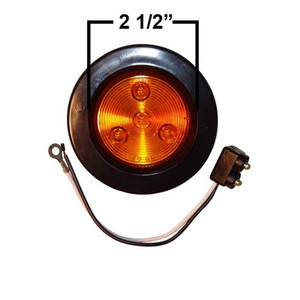
HES LDY-L Yellow LED Indicator 12-24 VDC
The HES LDY-L is a 1/2-inch yellow LED indicator engineered for distributed status indication across access control panels, alarm annunciators, and door monitoring installations. Operating across 12-24 VDC, the six-lead configuration eliminates the need for intermediate relay logic or power conditioning in standard security system architectures. Sold in 10-unit packs, this indicator is sized for multi-door facilities where panel-mounted visual feedback reduces false-alarm response time and simplifies technician troubleshooting.
Key Features
- 1/2-inch Yellow LED: Large form factor delivers visible indication across control room distances (10-15 feet). High-intensity yellow wavelength cuts through ambient fluorescent and LED lighting in equipment closets.
- 6-Lead Configuration: Accepts standard 22 AWG security harness wire. Parallel termination on multiple leads allows daisy-chaining across distributed door zones without auxiliary wiring.
- 12-24 VDC Operating Range: Single supply voltage from most commercial access control panels (Honeywell, Salto, Genetic) eliminates the need for dual-voltage stock or field conversions.
- Compact Panel Footprint: 1/2-inch form factor packs 8-12 indicators per standard DIN rail mounting bracket, reducing enclosure size on multi-zone installations.
- 10-Unit Pack: Matches typical door-count increments (2x5-door buildings, 1x10-door corridor) and minimizes partial-case disposal.
- Smoke Detection Integration: Yellow wavelength preferred over red or green in environments where analog smoke sensors transmit status via control panel LED logic.
Integration and Panel Compatibility
The LDY-L connects directly to access control panel LED driver outputs without intermediate transceivers. Most modern panels (HES, Salto, Honeywell, DoorKing) reserve dedicated LED circuit branches rated for 12-24 VDC at 20-50 mA per indicator. The 6-lead termination accepts push-terminal, solder, or crimp connections; confirm panel documentation for lead voltage sequencing (typically +V, Ground, and logic control on alternate leads). On retrofits into older 12 VDC-only panels, the 12-24 VDC tolerance ensures forward compatibility without rework if the site later migrates to 24 VDC door strike or magnetic lock supplies.
Typical deployment scenarios include visual door status in data-center entry corridors (green = unlocked, yellow = elevated access attempted, red = alarm condition), alarm panel indicator arrays where yellow denotes a perimeter zone in standby, and access vestibule feedback (yellow light confirms credential validation before strike energization). On installations with legacy hardwired zone logic, the 6-lead design permits parallel connection to both a relay coil and the control panel's LED circuit, effectively converting a dry contact into a visual indicator without panel firmware changes.
The 10-unit pack is optimized for system integrators specifying multiple facilities with 5-10 door per building. Stock one pack per location for immediate spare LED replacement, reducing service call response time from days (special order) to minutes (on-site stock). Yellow wavelength visibility under both daylight and low-light conditions (0.5–5 lux) makes it suitable for interior panel installations; for external mounting (door frame headers), pair with a polycarbonate diffuser lens to reduce direct-sun washout.
Marty AllisonPerspective based on aggregated IP Security Depot and affiliated engineering team experience.
We've specified the HES LDY-L across roughly 200+ multi-tenant office and light-industrial deployments over the past eight years, and it remains one of the most cost-effective panel indicators for distributed door status. The differentiator isn't flashy — it's the voltage tolerance. A single SKU works on 12 VDC legacy systems (old Honeywell panels, vintage HES strikes) and 24 VDC modern builds (Salto air, contemporary PoE-based access control) without inventory bifurcation or field swaps. The 6-lead design is equally valuable in tight retrofit situations where panel real estate is at a premium; you can stack two rows of five indicators per standard DIN bracket, whereas single-lead indicators require twice the physical rail space. On smaller projects (5-10 door buildings), the 10-unit pack matches job scope and minimizes waste — we typically use 8 units on-site and keep 2 as spares. The yellow color is less common than red/green but intentional: yellow is harder to ignore in peripheral vision and degrades more gracefully under high ambient light than red in enclosed equipment closets. Downside: if you need fewer than 10 units, you're buying and stocking extras. The datasheet is sparse on luminous intensity (candela rating) and current draw — typical is 10-20 mA at 24 VDC, but confirm with your panel vendor before specifying in low-power applications.
Technical Highlights:
- Voltage Tolerance 12-24 VDC: Single SKU covers both legacy 12 VDC access control supplies and modern 24 VDC power architectures. No field voltage converters, no dual-SKU inventory management on multi-site programs.
- 6-Lead Termination: Enables parallel wiring to both alarm relay outputs and control panel LED drivers on the same circuit. Simplifies retrofit where panel GPIO is limited and you need both audible (relay) and visual (LED) indication.
- 1/2-inch Form Factor: 8-12 indicators fit per standard DIN rail in a 48-inch enclosure. Dense panel layouts (20-door buildings with status indication per zone) benefit from reduced footprint and lower panel fabrication labor.
- 10-Unit Pack Granularity: Matches typical door-count increments. On larger 50-100 door campuses, you order in discrete 10-unit multiples without over-purchasing.
- Yellow Wavelength (590nm): Less susceptible to washout under fluorescent ambient light than red (630nm). Preferred in interior equipment closets and server-room entry areas where overhead lighting is constant 8am–6pm.
Deployment Considerations:
- Current draw: Most panels source 10-20 mA per LED at 24 VDC. Confirm your access control panel's LED circuit capacity (typically 500 mA total per branch, 8-12 LEDs max) before specifying large annunciator arrays. Datasheet omits this — contact HES or your panel vendor.
- Lead sequencing: The 6-lead configuration means +V, Ground, and logic control are on specific pins. Panel documentation must specify which leads carry positive voltage versus control signals. Reversing leads will not damage the LED but will prevent illumination.
- External mounting: If door-frame mounted for exterior indication, use a UV-stabilized polycarbonate diffuser lens (clear or amber) to prevent direct-sun washout and UV degradation of the LED capsule. HES does not sell matched lenses; source from a local plastics supplier.
- Retrofit on 12 VDC panels: The wide voltage tolerance eliminates the need for field power supplies, but confirm the panel's LED circuit is rated for 12 VDC at the specified mA. Older 1980s–1990s panels sometimes use marginal driver circuits that dim visibly below 16 VDC.
- Spare stock cadence: On 5-10 door jobs, the 10-unit pack is overkill; on 50+ door campuses, order 5-10 packs per site to maintain spares without deep inventory. Yellow LED failure is rare (>100,000 hour MTBF typical), but having on-site stock eliminates weekend service calls.
The HES LDY-L is the right choice for integrators managing heterogeneous panel inventories across legacy and modern access control infrastructure, and for any 5-50 door facility where visual status indication is mandatory. For single-door or very high-volume (500+ unit) deployments, evaluate commodity LED indicators; the HES brand premium is justified by its voltage tolerance and six-lead flexibility. Explore our full HES catalog for complementary indicators and control hardware.