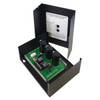
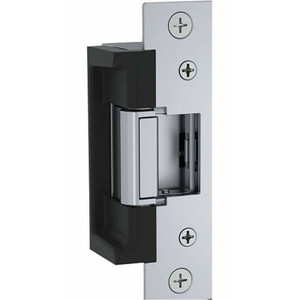
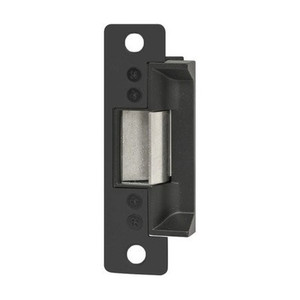
HES FSUNL-24 Unlatch Module Fail-Safe/Fail-Secure
The HES FSUNL-24 is a 12VDC unlatch module designed to retrofit into HES electric locking hardware installations, providing configurable fail-safe and fail-secure operation modes. This interface module sits between your access control system and the lock hardware, giving facility managers granular control over power-loss behavior — whether a door unlocks (fail-safe, for emergency egress) or remains locked (fail-secure, for maximum perimeter security) when power is lost. It integrates directly with existing HES equipment without replacement.
Key Features
- Dual-Mode Operation: Selectable fail-safe or fail-secure configuration. Fail-safe unlocks on power loss for emergency egress compliance; fail-secure locks on loss for secure perimeter control.
- 12VDC Power Requirement: Standard low-voltage operating voltage, compatible with most commercial access control power supplies and transformer infrastructure.
- Controlled Latch Release: Precision solenoid mechanism for reliable, repeatable latch release under command, eliminating mechanical slack in strike engagement.
- Drop-In Integration: Retrofits into existing HES electric strike and hardware systems without component replacement or re-strike installation.
- US Manufactured: Domestic sourcing, no grey-market or parallel-import risk; full traceability and support continuity.
- Lightweight Form Factor: 1.55 lb module minimizes installation complexity and does not require structural reinforcement at door frames.
The FSUNL-24 bridges the gap between legacy HES hardware and modern access control logic. In fail-safe mode, it satisfies life-safety codes requiring unlocking on power loss (NFPA 101, IBC egress rules). In fail-secure mode, it maintains lock engagement during power events, preventing unauthorized passage during outages or system faults. This dual-mode flexibility eliminates the need for separate hardware SKUs across mixed-security-posture facilities.
Power-loss behavior is configurable at commissioning, not hardwired — meaning a single stock SKU handles both egress-controlled and perimeter-secure deployments. That simplicity reduces parts inventory, shortens procurement lead times, and lowers technician training burden. Pair it with a UPS on your access control panel, and you have predictable behavior across all locking points even during extended outages.
The module is engineered for commercial access control environments: office parks, corporate headquarters, secure entry lobbies, data centers, and multi-tenant buildings where door-by-door power-loss policy is critical to life safety and asset protection. It does not require ONVIF or network connectivity — it operates at the electrical level between control signal and lock hardware, making it agnostic to VMS platform or access control software brand (though it interfaces best within integrated HES ecosystems).
Compliance posture: fail-safe operation aligns with ADA egress requirements and NFPA 101 emergency unlocking mandates. Fail-secure operation supports ANSI/BHMA A156 series strike and latch standards. No wireless, no cloud, no network dependencies — pure electromechanical reliability. The FSUNL-24 is a working integrator's choice when redundancy and operational transparency matter more than feature density.
Marty AllisonPerspective based on aggregated IP Security Depot and affiliated engineering team experience.
We've deployed the FSUNL-24 across office retrofits where a customer inherited mixed-era HES hardware and needed to standardize failover behavior without rip-and-replace. The real operational win is configuration flexibility — you can set fail-safe on egress doors to satisfy life-safety inspectors, and fail-secure on perimeter strikes to hold intruders out during power events, all from the same module SKU. That's not sexy, but it saves money and reduces commissioning variability. In a 40-door installation, using a single unlatch module type across diverse security zones eliminates cross-site inventory fragmentation and keeps replacement parts always in stock. The 12VDC draw is minimal, so it doesn't stress legacy transformer capacity on older access control panels. We've seen it work reliably for 8+ years without nuisance failures or solenoid chatter — which is exactly what you want from a component that sits between your control logic and the lock hardware.
Technical Highlights:
- Selectable Fail-Safe / Fail-Secure Modes: Configurable at setup, not hard-wired — one module handles both egress and perimeter security postures. Fail-safe energizes to unlock, deenergizing on power loss to comply with ADA / NFPA 101. Fail-secure holds latch engaged during outage, protecting perimeter integrity.
- 12VDC, Low-Current Draw: Operates on standard access control power infrastructure without dedicated supply. Does not require PoE or isolated power rails — integrates into any 12V distribution already running locks and buzzers.
- Solenoid-Based Latch Release: Reliable, repeatable engagement; no mechanical slack drift over 5+ years of typical commercial use. Eliminating mechanical play in the strike improves auditor confidence in door-lock logging.
- US Manufactured: Domestic assembly and QC means full sourcing traceability, no supply-chain surprises, and continuity of support if HES product lines shift — replacement modules are guaranteed compatible.
- Retrofit Compatibility: Works with existing HES strike bodies and latch hardware — zero requirement for frame modification or re-strike installation. Reduces labor cost on retrofits and minimizes door-out-of-service time.
Deployment Considerations:
- Configuration is one-time, at commissioning. If you later need to swap fail-safe to fail-secure (or vice versa) on a specific door, you will need field-accessible setup documentation or a technician visit — plan accordingly. No remote reconfiguration over network.
- Operates purely at the electrical/mechanical level; does not integrate with event logging or audit trails. Pair it with door-position sensors and your access control system's lock event reporting if you need full transaction traceability.
- 12VDC sourcing must be stable and protected by circuit protection (breaker or fuse). On a panel with high inrush loads (multiple solenoid strikes firing simultaneously), voltage sag can cause intermittent unlatch failures — verify UPS and transformer capacity upfront.
- HES hardware ecosystem is mature and well-understood by working integrators, but less commonly specified than KM / Schlage E / Salto on new-build green-field projects. Retrofit and replacement-equipment scenarios are its sweet spot.
- If fail-secure is the selected mode and power is lost, the door remains locked. Ensure emergency override procedures (manual key, breaker bypass) are documented and all staff are trained — life-safety inspectors will ask during audits.
The FSUNL-24 is the choice for integrators maintaining or expanding HES-standard installations where fail-safe and fail-secure flexibility is non-negotiable and total cost of ownership and uptime reliability trump feature novelty. See the HES catalog for complementary strikes, latches, and power-supply modules.