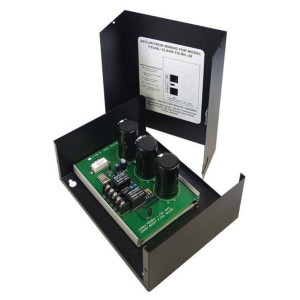
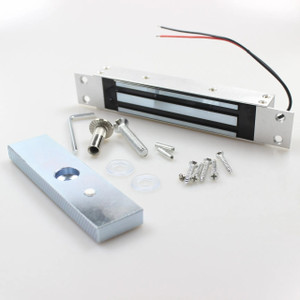
HES FSUNL-12 12V DC Unlatch Module Fail-Safe Control
The HES FSUNL-12 is a dedicated unlatch module designed to manage fail-safe and fail-secure operation on electric strike installations. It operates at 12V DC and integrates directly with HES electric strikes and standard access control panels to enforce predictable locking behavior during power loss, system faults, or maintenance events. The module is built for security-critical entry points—emergency exits, high-security perimeters, healthcare facilities, and life-safety-code-regulated doors—where the consequences of unpredictable strike behavior during a power event carry operational or compliance risk.
Key Features
- Dual-Mode Operation: Switches between fail-safe (door unlocks on power loss) and fail-secure (door locks on power loss) per deployment scenario. Single module handles both operational profiles without hardware swaps.
- 12V DC Power Supply: Standard 12V DC input integrates with existing access control power systems, conventional wiring infrastructure, and off-the-shelf uninterruptible power supplies (UPS).
- Manual Override: Emergency access capability independent of electronic control—critical during power loss or system outage. Mechanical override ensures occupants can exit during fire alarm or emergency evacuation.
- Direct HES Strike Compatibility: Engineered for HES electric strike product line; works with standard access control panels using conventional relay outputs or 12V DC control signals.
- Predictable Power-Loss Behavior: Eliminates operational ambiguity by defining exactly what the strike does (locked or unlocked) the moment power fails. No guesswork on life-safety compliance or occupant egress.
- 4 lb Compact Form Factor: Lightweight unlatch module mounts directly in or near strike housing; minimal installation footprint on standard door frames.
In high-occupancy facilities, the choice between fail-safe and fail-secure determines whether life safety or asset protection takes priority during an outage. Fail-safe mode allows emergency egress—critical for emergency exits, stairwells, and occupied spaces. Fail-secure mode locks the door, preventing unauthorized entry—appropriate for server rooms, evidence storage, and unoccupied secure areas. The FSUNL-12 lets you define that behavior at the module level, then enforce it consistently across multiple strike points without changing hardware or reprogramming the access control panel.
Integration is straightforward: the module wires to standard 12V DC output from your access control panel or relay module. If your panel supports fail-safe/fail-secure mode switching via programmable output (common on enterprise systems), the FSUNL-12 responds to that control signal. For simpler installations or retrofits, mode can be set at the module using onboard jumpers or configuration—no panel-level logic needed. Existing conventional door wiring remains unchanged; this module sits between the panel and the strike, translating the control signal into the electrical behavior that the strike requires.
Power-loss redundancy is critical: pair the FSUNL-12 with a 12V DC UPS or battery backup to maintain strike control during a building outage. Since the module draws minimal current and operates at low voltage, 12V standby battery backup is affordable and reliable. Emergency lighting UPS systems often have spare 12V DC output—tap that instead of adding dedicated hardware. During planned maintenance (power-supply swap, panel firmware update), the manual override lets occupants exit without waiting for power restoration, reducing site disruption.
Compliance with NFPA 101 (Life Safety Code), IBC (International Building Code), and local AHJ fire codes requires that emergency exits never depend on power. The FSUNL-12 in fail-safe mode with manual override satisfies that requirement without adding a separate mechanical latch. Healthcare environments (hospitals, long-term care) often mandate fail-safe egress on patient-area doors; the FSUNL-12 enforces that at the strike level, decoupling the requirement from whatever access control software is running on the workstations upstairs.
Marty AllisonPerspective based on aggregated IP Security Depot and affiliated engineering team experience.
In our experience deploying access control across mixed environments—corporate offices, healthcare, light manufacturing, and life-safety-regulated buildings—the single biggest source of callbacks and site drama is the power-loss behavior of electric strikes. A fail-secure strike that locks during an outage with no manual override creates an emergency egress violation; a fail-safe strike that unlocks during an outage leaves a secure door open to unauthorized entry. The FSUNL-12 solves this by making that choice explicit and hardware-enforced, not firmware-dependent. We've installed it in retrofit situations where the access control panel doesn't support fail-safe mode, and in new builds where it serves as a redundant safety layer below the application logic. The module is small, draws negligible power, and integrates with any 12V DC strike control infrastructure. Its real value emerges at 2 a.m. on a Sunday when the power goes out, or during fire drill when you need to prove to the AHJ that emergency egress works without IT involvement.
Technical Highlights:
- Fail-Safe / Fail-Secure Switching: Unlike strikes that have one fixed power-loss behavior, the FSUNL-12 lets you pick which mode per door. Emergency exits get fail-safe (unlock on loss); secure areas get fail-secure (lock on loss). Single module, two operational profiles—no SKU multiplication.
- 12V DC Standard Voltage: 12V DC is ubiquitous in access control infrastructure. Off-the-shelf 12V UPS, battery backup, and power supplies work without custom engineering. Panel-level 24V systems can step down through a standard regulator; no exotic power requirements.
- Manual Override Mechanical Path: The override works independently of the electronic control circuit. Even if the module fails (unlikely), or if someone disables power intentionally, the mechanical override path remains open for emergency egress. Regulators love this—it's defense in depth.
- Lightweight and Mountable: At 4 lb, the module mounts directly into or adjacent to strike hardware on a standard door frame. No separate enclosure, no additional support structure. Installation time is measured in minutes on retrofit jobs.
- HES Strike Ecosystem: HES electric strikes are installed in millions of buildings globally. The FSUNL-12 is optimized for that hardware lineage, but also works with generic 12V DC solenoid strikes as long as wiring is conventional (no exotic feedback or current-sensing logic).
Deployment Considerations:
- Power Supply Redundancy is Non-Negotiable: Without backup power, fail-safe mode and the module's capability don't matter—the strike will lose power and default regardless. Always pair the FSUNL-12 with 12V battery backup or UPS, even on low-risk doors. Budget $300–$600 per entry point for 12V standby backup.
- Mode Configuration Method Varies by Installation: Some sites use panel-level relay outputs to control mode switching; others set it once via jumpers and leave it static. Confirm your access control panel's capability before ordering—if your panel is dumb (relay-only, no programmable logic), you'll set the mode once and live with it.
- Manual Override Must Be Accessible and Obvious: The override is useless if it's buried behind cable, hidden in a conduit, or unknown to occupants and responders. Physical override lever or button should be within 48 inches of the door, labeled, and validated during fire drills.
- Integration with Retrofit Wiring: If you're retrofitting an older building with conventional (non-networked) door control, the FSUNL-12 drops in between the existing panel and strike. No new wiring runs needed; minimal labor. Contrast this with replacing the panel or adding network-based strikes (weeks of lead time, tens of thousands in wiring).
- Compliance Validation During Commissioning: Test the module's fail-safe and fail-secure modes during punch-list. Kill power, confirm the strike behaves as configured. Test the manual override under load. Get written sign-off from the AHJ or fire marshal if the building is code-critical. This takes 30 minutes and prevents callbacks.
The FSUNL-12 is the right choice when you need to retrofit fail-safe capability onto an existing electric strike infrastructure without replacing the entire access control system, or when you're deploying multiple strikes and want to enforce different power-loss behaviors on different doors. It's also the right choice for any life-safety-regulated door where the consequence of unexpected locking during power loss is a code violation or occupant safety risk. For integrators and facility managers deploying access control in healthcare, education, hospitality, and public buildings, the FSUNL-12 is a low-cost, high-confidence way to decouple strike behavior from software—making compliance provable and fire drills reliable. See the HES catalog for compatible strikes and related components.