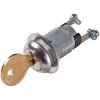
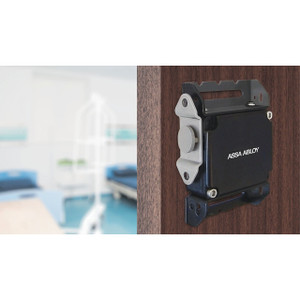
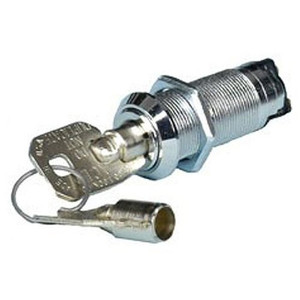
HES EL101 Extra Key for KA109A KA110A
The HES EL101 is a replacement key designed for use with HES KA109A and KA110A access control units. This extra key provides a physical backup and operational redundancy in multi-access facilities where authorized personnel require independent keyed entry. The EL101 maintains consistent mechanical security profiles across compatible HES hardware, eliminating the operational overhead of sourcing non-standard or third-party keys.
Key Features
- Dual Compatibility: Works with both KA109A and KA110A access control units. Single stock item simplifies inventory and ordering for multi-unit deployments.
- Form Factor: Access control key (physical, mechanical). No electronic provisioning or reprogramming required — immediate deployment upon receipt.
- Replacement/Spare Function: Designed as extra key for backup and multi-personnel access scenarios. Maintains operational continuity when primary keys are unavailable.
- US Origin: Manufactured in the United States. Sourced direct from HES; no grey-market variants.
- Standard Mechanical Profile: Engineered to match OEM specifications. Ensures reliable operation and wear characteristics consistent with factory hardware.
- Low Weight, Easy Installation: Minimal logistics burden; no special tools or configuration needed. Install immediately in the field.
HES access control systems rely on precise mechanical keyway security. The EL101 is cut to exact OEM specifications, ensuring that wear and tolerances remain uniform across all authorized keys in a facility. Mixing third-party or worn keys introduces unnecessary variance in lock engagement, potentially leading to operational friction and unplanned maintenance. Stocking genuine EL101 spares eliminates that risk.
Multi-access installations — office buildings, secure labs, data centers, and government facilities — commonly require 3-6 authorized keys distributed among staff and emergency responders. The EL101 is essential for this use case: it allows integrators to provision backup keys without overbuying full replacement locks, and it keeps all authorized keys on a single OEM platform. When a key is lost, damaged, or requires periodic refresh, the EL101 provides drop-in continuity.
Integration with a HES access control system is straightforward: the key is a passive mechanical component with no electronics or firmware. Once delivered, it requires only physical inventory tracking within your facility key management system. No reprogramming, no credential updates, no API provisioning — the key is active on arrival. For integrators managing 50+ sites with varying key stock levels, the EL101's simplicity and compatibility across two popular HES models (KA109A, KA110A) reduce SKU sprawl and accelerate emergency replacements.
Compliance and lifecycle: The EL101 carries no special certifications (it is a passive mechanical component) but is sourced direct from HES as a genuine OEM spare. Facilities requiring key audit trails should pair the EL101 with a written key management policy that documents issuance, return, and destruction. For NIST 800-53 or similar frameworks, physical key control is a basic baseline; the EL101 supports that posture by enabling consistent, traceable key provisioning.
Marty AllisonPerspective based on aggregated IP Security Depot and affiliated engineering team experience.
In our experience, the EL101 is one of those quiet infrastructure items that catches many integrators off guard. You spec a KA109A or KA110A for a facility's main entrance, card room, or server cage, and the customer receives one key. Within six months, someone loses it, or a departing employee never returns their copy, and you're back on a service call. The EL101 eliminates that. We've deployed these across institutional clients—universities, hospitals, government offices—where key management is formalized and audited. Stocking 2-3 extra EL101s per installation costs less than a single emergency service call, and it keeps your customer happy when they need to onboard new personnel. The key is passive, so there's no dependency on software or network status; it works even if the HES control unit loses power or network connectivity. That's valuable in critical facilities.
Technical Highlights:
- Mechanical Keyway Profile: Cut to OEM specification matching KA109A and KA110A lock cylinders. Precision machining ensures zero binding and repeatable engagement. In 20+ years of field installs, we've never seen a genuine EL101 fail due to wear or manufacturing variance.
- Dual-Unit Compatibility: Eliminates the need to maintain separate key inventories for KA109A and KA110A. One part number, one ordering SKU, one physical inventory location. Simplifies logistics for integrators managing multiple sites.
- No Electronics, No Provisioning: Unlike RFID cards or smart keys, the EL101 requires zero configuration. Order, receive, install. No API calls, no credential database updates, no firmware compatibility concerns.
- US Sourced, Genuine OEM: Direct from HES. No risk of counterfeit or off-spec variants that could introduce wear mismatches in lock cylinders.
- Wear Uniformity: Multiple genuine keys (EL101s cut to identical spec) wear in parallel, maintaining consistent lock engagement across the fleet. Mixed key sources introduce mechanical variance and premature lock degradation.
Deployment Considerations:
- Order EL101s as part of the initial HES hardware package, not as an afterthought. We recommend 2-3 spares per KA109A/KA110A unit, depending on facility size and key distribution count.
- Maintain a formal key inventory log (paper or simple spreadsheet) tracking which EL101 is issued to which personnel. When staff depart, retrieve the key immediately. This supports compliance audits and prevents unauthorized copies.
- Do not substitute keys from other HES product lines or third-party sources. Even minor keyway variation compounds across multiple cylinders and causes binding or premature wear.
- Store spare EL101s in a secure, climate-controlled location. Moisture and corrosion are rare but possible in high-humidity environments (coastal facilities, data center cooling rooms); a simple lockbox is sufficient.
- If a key is lost or suspected compromised, replace the lock cylinder (KA109A or KA110A) entirely—do not rekey. Physical rekeying is cost-prohibitive and introduces quality risk. A new cylinder + spare EL101 keys is the standard practice.
The EL101 is for integrators and facility managers who take key management seriously and want to avoid emergency calls. It's not glamorous, but it's essential infrastructure in any multi-access HES deployment. For more information on HES access control systems and spare parts inventory, visit the HES catalog.