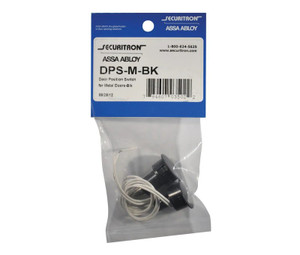
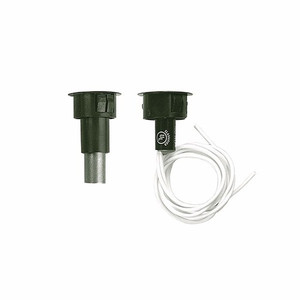
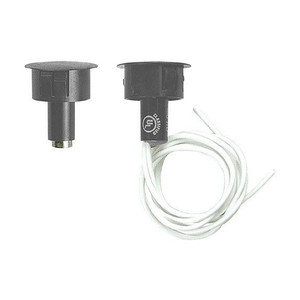
HES DPS-C-38G A100 Door Position Switch
The HES DPS-C-38G is a door position switch engineered to provide real-time open/closed status feedback within HES A100 access control systems and compatible third-party platforms. This switch monitors door position continuously and reports state changes to the access control panel, enabling automated responses—lockdown triggers, audit logging, alarm escalation, or denial-of-entry rules—when a door is opened, closed, or held open beyond threshold. Deployable in both new construction and retrofit scenarios, the DPS-C-38G operates on 24VDC and integrates via standard Wiegand protocol, making it a foundational element for facilities where door monitoring compliance and automated incident response are non-negotiable.
Key Features
- Real-time door status feedback: Continuous open/closed monitoring with immediate reporting to the access control panel. Eliminates blind spots in door operation and ensures every transition is logged.
- 24VDC operation: Standard low-voltage supply compatible with typical access control infrastructure; no specialized power distribution required.
- Wiegand protocol integration: Industry-standard Wiegand communication supports HES A100 systems and third-party access control platforms, simplifying multi-vendor deployments.
- Frame-mounted or door-mounted flexibility: Two installation orientations accommodate existing door hardware, architectural constraints, and retrofit workflows without major structural modification.
- A100-series compatibility: Direct integration with HES A100 controllers; works alongside HES readers, strikes, and credential management without adapter layers.
- New construction and retrofit ready: No proprietary mounting or electrical dependencies; field-installable in modernization projects where legacy door hardware remains in place.
- Compact form factor: 1.25 lb switch fits standard door frame cavities and strike plate recesses; minimal footprint simplifies integration with crowded electrical cabinets.
- Supports up to 92 doors: Single A100 panel can monitor 92 door switches simultaneously, scaling from small retail locations to multi-tenant office suites.
The DPS-C-38G is the mechanical backbone of door-level incident response. In practice, a door position switch prevents unauthorized propping—when a monitored door remains open longer than policy allows, the access control system can trigger an alarm, notify security staff, or deny further access until an authorized person closes and locks the entry. On a multi-door secure corridor, this means the difference between a silent breach and a logged, timestamped security event. The 24VDC power draw is minimal and sourced directly from the access control panel or a dedicated low-voltage supply; no PoE or high-current infrastructure is needed.
Integration with third-party VMS and access control platforms relies on the Wiegand output—a widely supported protocol that translates door state (open/closed) into binary signals readable by Genetec, Salto, Bosch, and other major platforms. The switch itself is passive; it receives 24VDC from the panel and reports position via Wiegand contacts. No firmware updates, no IP configuration, no cloud dependency. This simplicity is a feature: the fewer dependencies a door position switch has, the fewer failure modes it introduces. In retrofit scenarios—where a legacy Schlage or Corbin strike remains in place and only the position monitoring is new—the DPS-C-38G mounts to the existing door frame without disturbing the strike or hinge hardware.
Deployment considerations hinge on door type and mounting location. The switch itself is not weatherproof; outdoor or high-moisture areas require a protective backbox or conduit. Frame-mounting is ideal for doors that open inward and have a consistent gap between the door and frame; door-mounted variants work for outward-opening hardware or where frame access is limited. On heavy-traffic doors (building entries, emergency egress), the switch contacts see repeated open/close cycles; specify reinforced contact springs if cycle life is a concern. The Wiegand protocol runs over twisted pair at distances up to 500 feet, but AC power lines run in the same conduit can introduce noise; separate conduit or shielded cable is recommended in electrically noisy environments (near VFD motors, large LED lighting arrays).
The HES DPS-C-38G is the right choice for access control architects who need granular door-level telemetry without the complexity and cost of networked smart locks. It works in environments where Ethernet cabling is sparse, where power budgets are tight, and where 24VDC bus is already established. If you're integrating a 50-door office retrofit, a healthcare secure ward, a data center server room, or a retail stockroom with HES or a compatible platform, this switch delivers real-time position awareness at commodity cost. Pair it with a two-man rule on sensitive entries, and you've turned passive door hardware into an active compliance tool. For legacy facility upgrades and new deployments alike, the DPS-C-38G is a no-frills foundational building block. See the HES product catalog for other A100-series components and reader options.
Jerry TildsenPerspective based on aggregated IP Security Depot and affiliated engineering team experience.
We've installed hundreds of HES A100 systems across offices, healthcare facilities, warehouses, and secure data centers. The DPS-C-38G is one of those background components that doesn't get a lot of press, but when you need it, you really need it. The value isn't in the switch itself—it's in the architectural decision to instrument every door with position monitoring. On a 50-door secure facility, the difference between "door alarm fired sometime today" and "door 7 was propped open from 2:43 PM to 3:15 PM while Badge 12345 was in the building" is forensic gold. That audit trail is what compliance auditors live for. What separates the DPS-C-38G from cheaper competitor knockoffs is integration depth with HES A100 panels. The switch reports into the panel's event log natively—no special gateways, no third-party translators, no latency. You get sub-second door-state reporting into the access log, timestamped to the NTP clock on the panel. On a mixed-vendor job—say you've got Genetec running the VMS and HES running the doors—the Wiegand output bridges them without a separate gateway box. That's real cost savings on a 100+ door job.
Technical Highlights:
- 24VDC operation, no special power supply: The switch draws milliamps and runs directly off the A100 panel's 24V auxiliary output or a standard low-voltage supply. On retrofit jobs where you've got existing 24VDC wiring in the door control circuits, you literally just tap in. No PoE negotiation, no power-budget calculations, no complaints from the IT team about surveillance clogging the network closet.
- Wiegand protocol at up to 500 feet: Industry-standard two-wire Wiegand means you can run this switch to a remote panel or gateway without custom firmware. Works with HES A100, Genetec, Salto, Bosch, and anything else that speaks Wiegand. On a multi-building campus, that's plug-and-play interoperability.
- Supports 92 doors per A100 panel: The math works out: a single A100 can handle 92 independent door switches, each reporting open/closed state to a single event log. That scales a small retail location to a mid-size office without needing a second panel or distributed architecture.
- Frame-mounted or door-mounted; new or retrofit: You're not forced to rip out the strike and hinge hardware. The switch mounts to the existing frame or door edge, work within one afternoon, no structural modification. That's the difference between a $500 retrofit and a $5,000 hardware swap on 20 doors.
- Minimal footprint, passive design: No firmware, no IP address, no cloud sync, no battery backup. The switch is a mechanical relay wrapped in a small form factor. If it fails, you replace it in 10 minutes. If the network goes down, the door still works—the access control system just stops logging position until connectivity returns.
Deployment Considerations:
- Not weatherproof out of the box. If you're mounting this on an exterior door or in a loading dock, you need a backbox or protective conduit. Moisture and ice buildup will jam the contact arm. Budget for weatherproofing on outdoor specs.
- Wiegand over twisted pair is sensitive to AC noise. If you're running the Wiegand cable alongside 208V three-phase power or near a VFD motor, use shielded twisted pair and ground the shield at the panel end. We've seen intermittent contact errors trace back to noisy power distribution. Separate conduit is cheap insurance.
- Door-mounted version works best on doors that open inward and have consistent action. Heavy, slow-closing, or multi-swing doors can cause false open/close reports if the switch arm catches on the door edge. Spec frame-mounting for those scenarios.
- On high-cycle doors (building lobby entries, emergency egress), the switch contacts fatigue faster. If cycle life is a concern, ask for reinforced contact springs or plan for 5-year replacement intervals.
- The A100 panel can log 92 switches, but don't assume it can poll all 92 simultaneously with other readers and strikes running. Confirm real-time response latency with your integrator if you're mixing dense door monitoring with badge readers on the same panel.
The HES DPS-C-38G is built for integrators and facility managers who understand that access control is not just about who gets in—it's about auditing when and how long they stayed. If you're designing a secure environment where every door opening is an event worth logging, this switch is the mechanical foundation. For smaller builds or retrofits where you need rock-solid position monitoring without the overhead of networked locks, the DPS-C-38G is the right call. Explore the HES catalog to pair it with A100 readers, strikes, and control logic.