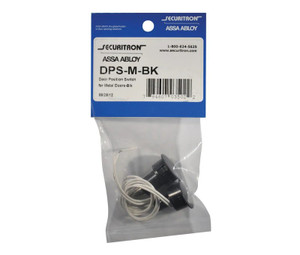
HES DL-2 Door Loop 18 Long .375 ID Metal End Caps
The HES DL-2 is an 18-inch door loop designed to provide a reliable mechanical interface between door-mounted hardware and HES electric strike systems. This component delivers the durability and precision required for professional-grade access control installations in commercial and institutional environments where pin-based strike coupling is the mechanical standard.
Key Features
- 18-inch length: Fits standard commercial door frame applications without requiring custom fabrication or adapter plates.
- .375-inch inner diameter: Universal pin compatibility with HES strikes and approved access control hardware ecosystems.
- Metal end caps: Reinforced construction withstands repeated strike actuations and high-traffic door cycles without cap deformation.
- HES electric strike compatibility: Direct fit with HES strike systems across institutional and commercial door frame standards.
- Indoor commercial-rated design: Engineered for office buildings, institutional facilities, and controlled-environment access points.
- Standard pin interface: No proprietary tooling required — installation uses existing access control integration workflows and strike-mounting practices.
The DL-2 door loop is a mechanical passthrough component — it transfers the latch retraction force from an HES electric strike to the door frame hardware without amplification or signal conditioning. The 18-inch length accommodates the typical spacing between door-mounted strike hardware and frame-mounted mechanical linkage on commercial hollow-metal and wood composite door assemblies. Metal end caps eliminate the binding and wear that plastic or unreinforced caps experience under repeated cycling in high-traffic entry points.
Compatibility with HES strike systems means the DL-2 integrates directly into existing access control installations using standard 12VDC or 24VAC strike power supplies and conventional door-access controllers. No additional wiring, relay modules, or VMS integration is required — the loop is purely mechanical. Verify that your specific HES strike model accepts .375-inch diameter pins before ordering; while .375 is the dominant standard in HES product lines, some institutional variations exist.
Installation follows conventional door hardware practices: position the loop to align the pin ends with the strike latch hole and the door frame receiving socket, secure end caps with supplied or standard fasteners, and confirm free movement through a full strike cycle before final release. Metal end caps can be field-drilled for custom mounting if frame geometry deviates from standard specifications.
The DL-2 is a non-electronic component with no warranty expiration — it is subject to manufacturer defect coverage only. Replacement is straightforward: measure the existing loop length and inner diameter to confirm sizing, and swap in the new assembly without re-provisioning the strike or access control system.
Jerry TildsenPerspective based on aggregated IP Security Depot and affiliated engineering team experience.
In our experience, the DL-2 is a straightforward replacement and maintenance component that rarely gets highlighted in security proposals but becomes critical when you're troubleshooting a door that won't latch after strike replacement or aging-out. We've seen integrators spec the wrong loop length (16-inch vs. 18-inch) on retrofit projects, then discover mid-installation that the frame geometry doesn't allow repositioning. The 18-inch standard is the workhorse for new commercial construction and most institutional retrofits — it bridges the distance between a standard HES strike mounted in the door frame and the latch receiver hardware on the frame itself. Metal end caps matter more than they appear on paper: plastic caps fatigue and split under thermal cycling (hot Arizona sun on glass doors, cold loading dock environments), and a failed cap means the loop spins loose and the strike stops functioning until you re-tighten or replace. We've field-upgraded a lot of plastic-capped loops on 5-10 year old installations to the metal version, and callback rates drop noticeably.
Technical Highlights:
- .375-inch ID pin compatibility: Aligns with HES product family standards — do not assume universal 0.375-inch pin dimensions across all manufacturers. Verify against your strike datasheet before ordering replacement loops for third-party hardware.
- 18-inch length: Standard for door frame cavity depths of 1.5–2 inches and typical strike-to-latch-receiver distances. Confirm actual frame dimension before committing to bulk orders on retrofit projects.
- Metal end cap durability: Eliminates the need for reinforcement gaskets or secondary bracing — direct fastening to strike mount and frame receiver without shimming for most standard door frame profiles.
- No active components: The DL-2 is a passive mechanical loop. It imposes zero additional load on strike power supplies and requires no configuration, commissioning, or access control system integration — it simply transfers force from strike to door latch.
Deployment Considerations:
- Confirm HES strike model compatibility before order placement. Some institutional or specialty strike variants use 0.375-inch inner diameter but have non-standard latch-pin geometry — field-fit testing on a single door before fleet ordering prevents costly mistakes.
- Measure the actual cavity depth and strike-to-receiver distance on at least two doors before assuming 18-inch is correct. Frame variations due to door construction (hollow-metal vs. composite) or prior hardware replacements can result in undersized or oversized loop requirements.
- Metal end caps are fixed — no field adjustment for loose or tight pin fit. If the loop rotates excessively, the issue is typically worn pin sockets on the strike or receiver hardware, not the loop itself; replacement alone won't fix play caused by worn hardware.
- On high-traffic entry points (main lobby, emergency egress), replace DL-2 loops during regular strike maintenance cycles (18–24 months in heavy-use environments) even if not yet failed — preventive swap avoids mid-cycle failures that strand a door in manual-only mode.
- Metal end caps can rust if exposed to salt air (coastal facilities) or wet loading dock conditions without protective coating. Specify stainless-steel end cap variants if environment risk is high, or plan for more frequent replacement cycles.
The DL-2 is the right spec for integrators maintaining HES electric strike systems across institutional and commercial multi-door environments where standard mechanical coupling is the norm. For replacement planning and bulk facility upgrades, consult the HES catalog to cross-reference compatible strike models and identify any environment-specific end-cap material upgrades needed for your deployment.