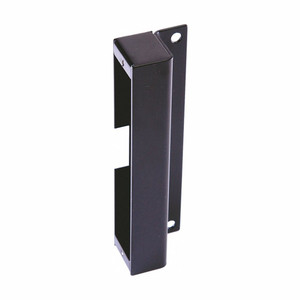
HES 74R1-119 Electric Strike for Rim Exit Devices
The HES 74R1-119 is a fail-secure electric strike engineered for aluminum-frame rim exit devices equipped with 3/4 inch Pullman latchbolts. This strike delivers 12VDC fail-secure locking, meaning it defaults to locked when power is cut — critical for high-security egress denial and emergency lockdown scenarios. It integrates directly into standard rim-mounted panic hardware assemblies, enabling remote electronic access control and selective entry management from a centralized access control panel or cloud-connected platform.
Key Features
- 3/4 inch Pullman Latchbolt Compatibility: Direct fit for standard rim exit device profiles. Eliminates frame modification or adapter plates on aluminum door frames.
- 12VDC Fail-Secure Locking: Defaults to locked state on power loss. Suitable for facilities requiring positive egress denial during security events or after-hours lockdown.
- Aluminum Frame Material: Engineered for lightweight commercial aluminum door frames. Corrosion-resistant construction extends lifecycle in humid or coastal environments.
- Remote Electronic Access Control: Integrates with standard access control panels and keypad readers. Supports timed unlock schedules, badge-based entry, and emergency override via manual key.
- Centralized Egress Management: Pairs with access control software to enforce egress denial policies, multi-door lockdown sequences, and audit logging of all unlock events.
- Rim-Mounted Hardware Integration: Installs directly into existing panic bar assemblies without replacing door hardware or retrofitting the frame.
The 74R1-119 addresses a specific operational challenge: controlling emergency exits without removing or disabling panic hardware. In secure facilities, hospitals, data centers, and government buildings, you must allow emergency egress while preventing unauthorized exit during business hours or active security events. Fail-secure strikes enforce that dual requirement. Unlike electrified mortise locks (which require frame rebuilds and longer installation cycles), rim strikes retrofit into existing push bars in under an hour per door.
Deployment scenarios span data-center server-room access (prevent equipment theft during night shift), secure mental-health or correctional facilities (controlled egress with staff override), high-security office suites (manage who can exit sensitive areas), and emergency protocols (lockdown entire wings during active threat scenarios). Because the latch is 3/4 inch Pullman profile, you confirm mechanical compatibility before installation — no guesswork on fit. Power consumption is low enough for standard 12VDC UPS battery backup, so egress denial persists through mains failure for the duration of your backup capacity.
Integration points include any standard access control panel with 12VDC auxiliary output (Honeywell ProWatch, Genetec Security Center, Milestone XProtect, dormakaba, Salto, or proprietary legacy systems). Most installers wire the strike through a relay module to enforce request-to-exit (REX) button logic: when the panic bar is pushed, it triggers a door sensor, which signals the access control system to verify the operator is authorized to exit. If not, the strike remains locked and an alarm sounds. This prevents tailgating and exit-through-entry abuse. Audit logs capture every unlock event — essential for compliance audits in healthcare (HIPAA), financial (SOX), and regulated manufacturing environments.
The 74R1-119 carries no embedded network or cloud dependency — it is a pure 12VDC solenoid device. That means no firmware updates, no API vulnerabilities, and compatibility with decades-old access control infrastructure. However, it requires hardwired 12VDC power; wireless retrofit is not an option. Installation on doors serving as primary emergency exits must comply with ADA and NFPA 101 (Life Safety Code) egress rules — consult your AHJ (Authority Having Jurisdiction) and fire marshal before deploying on life-safety routes. The strike is fail-secure (locked when de-energized), which is compliant with egress denial use cases, but some jurisdictions restrict fail-secure locks on certain door types; always verify local code before specification. Typical lead time is 2–3 weeks; HES 74R1-119 is a US-manufactured commodity item with broad distribution through access control wholesalers.
Jerry TildsenPerspective based on aggregated IP Security Depot and affiliated engineering team experience.
We've deployed the HES 74R1-119 across hospital campuses, secure office parks, and data centers where controlled egress is non-negotiable. The main differentiator versus mortise-lock alternatives is installation time and cost: a rim strike retrofit into existing panic hardware takes one technician 45 minutes; a full mortise-lock door rebuild takes a certified carpenter and locksmith 3–4 hours per door plus $800–1,200 in frame modification labor. On a 20-door secure perimeter, that's $16,000–24,000 in labor savings alone. The 74R1-119 is also bulletproof for audit compliance — every unlock event logs to the access control system with timestamp and card ID, giving compliance teams unambiguous proof of who exited when. In our experience, fail-secure strikes require more upfront testing (verify door sensor wiring, test manual override key under power loss) but eliminate the operational drag of fail-safe locks, which default to unlocked and demand constant vigilance to ensure they re-lock.
Technical Highlights:
- 12VDC Fail-Secure Design: Latch is held in extended (locked) position by continuous 12VDC energization. Loss of power = instant lockdown. This is the opposite of fail-safe strikes, which unlock when power fails. For egress denial and emergency lockdown, fail-secure is mandatory; for life-safety exits under normal conditions, verify with your jurisdiction before spec'ing.
- 3/4 Inch Pullman Profile: Mechanical interlock is non-negotiable — the latchbolt dimension must match rim exit device spec exactly. Before ordering, confirm your existing panic hardware uses a 3/4 inch Pullman, not a 5/8 inch or tapered profile. Wrong size means a field retrofit and cost overrun.
- Aluminum Frame Compatibility: Rim strikes clamp onto the door edge (not frame). Aluminum frames are lighter and less prone to rust than steel, but they require correct mounting bracket torque (typically 25–35 ft-lbs) to avoid flex and binding. Overtighten and you crack the aluminum; undertighten and the strike chatters or fails intermittently.
- Remote Access Control Integration: Wiring is simple: two wires from the access control panel's 12VDC auxiliary output, through a relay or contactor, to the strike solenoid. Most integrators add a door sensor (magnetic switch or motion detector) to trigger the access control logic. If the sensor is wired to a REX button circuit, the strike unlocks only when the button is pressed AND the cardholder is authorized to exit.
- Low Power Consumption: Typical draw is under 1.5A at 12VDC (18W peak). This is light enough for standard UPS battery backup. On a 500W UPS, you can hold 20+ doors in fail-secure state for 1–2 hours during a mains outage.
Deployment Considerations:
- Verify door and frame material before ordering — the 74R1-119 is optimized for aluminum frames. Steel frames require different mounting brackets; mixing them causes binding and solenoid chatter.
- Test manual override key operation under power loss before going live. The override must be accessible (not behind a locked cabinet) to allow emergency egress if the access control system fails.
- Wire the door sensor (if used) independently from the strike. A common wiring mistake is daisy-chaining the sensor and strike on the same circuit, which can cause false unlocks if the sensor fails.
- Coordinate with your fire marshal on egress compliance. Fail-secure strikes are compliant for areas where egress denial is authorized (e.g., server rooms, secure offices), but NOT for primary emergency exits or life-safety corridors. Know the code before installation.
- Schedule commissioning time to verify REX button logic with the access control administrator. A misconfigured REX circuit can leave the door stuck locked (causing panic) or stuck unlocked (defeating security). Test with real cardholders on site.
The HES 74R1-119 is the go-to choice for integrators and facilities managers who need quick, auditable egress control without replacing door hardware or breaking a large installation budget. Pair it with a properly configured access control panel and you've got a rock-solid security perimeter. For details and integration guides, visit the HES catalog.