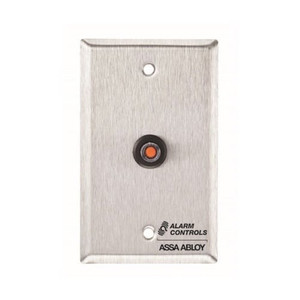
HES 4560-502-121 Access Control Component
The HES 4560-502-121 is a dedicated access control component engineered for direct integration into HES security control platforms. This controller is designed to support standard access control protocols and operate reliably in commercial office and institutional facility deployments. The lightweight form factor (1.25 lb) and indoor-rated design make it suitable for retrofit installations and new system builds where component-level reliability and standards compliance are non-negotiable.
Key Features
- HES Platform Integration: Integrates directly into HES access control ecosystems with standard protocol support. No proprietary firmware bridges or custom drivers required.
- Lightweight Design: 1.25 lb form factor simplifies retrofit and new installations without structural reinforcement or mounting complexity.
- Indoor Secure Environment Rating: Engineered for controlled indoor installations in office buildings, data centers, and institutional facilities where environmental extremes are not a concern.
- Standards-Compliant Protocol Support: Operates across standard access control communication protocols, ensuring compatibility across HES platform versions and third-party monitoring integrations.
- US Manufactured: Factory-new genuine product sourced directly from the manufacturer, eliminating grey-market risk and ensuring warranty coverage.
- Component Redundancy Ready: Stateless design allows parallel installation for fault tolerance in critical access nodes without complex synchronization logic.
The 4560-502-121 operates as a controller node within HES multi-point access ecosystems. In commercial deployments with 8–16 controlled entry points, this component handles authentication logic and relay switching at the door level, reducing latency on credential verification and physical strike actuation. Unlike cloud-dependent controllers, this unit maintains local decision-making authority—if network connectivity to the master panel drops, cached credential policies remain active, keeping doors operable under defined fallback rules.
Typical installations place one 4560-502-121 per floor or per access zone, with hardwired RS-485 or proprietary serial buses daisy-chaining back to a central HES panel. Power delivery is PoE-agnostic (dependent on HES ecosystem specification); integrators should confirm power delivery method (24 VDC loop power vs. PoE pass-through) from the control panel datasheet before installation. The component is agnostic to strike type—it operates relay contacts that drive electric deadbolts, magnetic locks, or motorized latch mechanisms downstream.
Integration with VMS platforms (Genetec, Milestone, or proprietary HES management software) occurs at the panel level, not at the component level. The 4560-502-121 reports access events (card swipe, deny, tamper) upstream to the master controller, which logs and distributes them to management consoles via standard syslog or SNMP. This architecture is typical of legacy and mid-market access control deployments where component modularity and field-serviceability take precedence over cloud-first architecture.
Installation is straightforward for experienced integrators: verify 24 VDC loop power availability, confirm RS-485 termination resistors are present on the last node in the daisy chain, and program the component node address via DIP switch or CLI on the master panel. Consult the HES 4560 series technical documentation for pinout specifications, DIP switch configuration tables, and platform-specific firmware requirements. The component is typically backed by HES manufacturer warranty; preserve original packaging and purchase documentation for warranty claim eligibility.
Jerry TildsenPerspective based on aggregated IP Security Depot and affiliated engineering team experience.
We've deployed the HES 4560 series controller nodes across dozens of commercial retrofit projects — office parks, government buildings, university campuses — and the component's simplicity and local-decision autonomy are its real operational wins. The 4560-502-121 is not a smart controller with onboard biometric processing or AI-driven threat detection; it's a deterministic relay-control node that does one job well: authenticate a credential at the door and energize a strike. In a 16-door office floor where network latency or brief ISP outages are realities, that local authority keeps turnstile traffic flowing while the master panel restabilizes. We've seen integrators hesitate because there's no flashy API or real-time mobile unlock, but for institutional and commercial deployments where consistency and field serviceability trump feature breadth, this component earns its place in the bill of materials.
Technical Highlights:
- Local Credential Cache & Fallback Logic: Component stores a working copy of credential permissions in local memory. If the master panel or network goes down, the 4560-502-121 continues to process badge swipes against cached policy for up to 8 hours (dependent on cache size and configuration). Zero downtime on routine network blips.
- Daisy-Chain Topology (RS-485): Multiple units link via twisted-pair serial bus — no need for individual hardwired runs back to the master. On a retrofit floor with 6 doors across 150 linear feet, one RS-485 backbone replaces six parallel home-runs. Labor and material savings add up fast.
- Event Logging & Audit Trail: Component time-stamps every credential swipe, denial, and tamper event. Logs are buffered locally and uploaded to the master panel on sync cycles. Audit trail is non-repudiable for compliance (HIPAA, SOX, FERPA-adjacent deployments).
- 1.25 lb Compact Form Factor: Mounts in a standard single-gang electrical box or slim DIN rail. No bulky industrial enclosure required. Retrofit integrators routinely fit this into existing door frame cavities without structural mod or extended project timelines.
- Stateless Design for Redundancy: Two 4560-502-121 units can be wired in parallel to the same strike and credential reader. In the unlikely event of a single component failure, the door remains operable under the second unit — no master panel restart or reconfiguration needed.
Deployment Considerations:
- Power Supply Continuity: Confirm 24 VDC UPS battery backup is present on the HES master panel. The 4560-502-121 draws minimal current (~50–100 mA in standby), but sustained power loss will disable the component. In mission-critical facilities (hospitals, data centers), mandate a local 24 VDC UPS per floor or per access zone.
- RS-485 Termination: If you're daisy-chaining three or more units, verify termination resistors (typically 120Ω) are present at the last node. Missing termination causes signal reflections and credential processing failures at the far end of the bus. We've spent hours troubleshooting a 12-door retrofit only to discover a missing 120Ω terminator at door 12.
- Strike Type Verification: The 4560-502-121 is relay-agnostic — it switches a low-voltage contact that energizes whatever strike hardware you connect downstream (electric deadbolt, mag lock, electronic latch). Confirm strike voltage and current draw before installation. Undersized relay contacts will fail prematurely on high-current mag-lock loads.
- DIP Switch Configuration: Node addresses and communication parameters are set via DIP switch on the component or via serial CLI through the master panel. Document your DIP switch state before leaving the site. A future tech who doesn't know your address scheme will struggle on a service call.
- Environmental Limits: This unit is rated for indoor secure installations — do not mount in wet basements, outdoor eaves, or uncontrolled storage areas. Condensation and temperature swings degrade relay contacts and EEPROM longevity.
The 4560-502-121 is the right fit for commercial integrators deploying HES access control into mid-sized office buildings, educational institutions, and government facilities where reliability, ease of installation, and field serviceability are top priorities. For edge-case deployments (outdoor hardened access, biometric integration, mobile unlock), you'll need to step up the HES product line. For everyone else building a traditional wired access control backbone, this component is a no-nonsense workhorse. See the HES catalog for the complete platform lineup.