




Hanwha
SKU: SPE-1630-B2
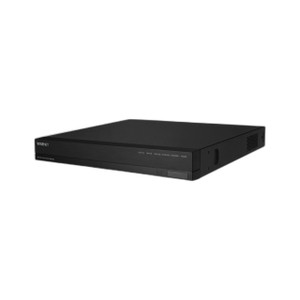
Hanwha SPE-1630 B2 16-Channel Video Encoder
$321.99
$315.99
Save $6.00

Overview

16-channel analog-to-IP encoder; migrate CVBS/AHD/CVI/TVI to H.265
Review items below — quantities update pricing automatically.
Overview
Questions about this product? Free pre-sales support from a senior specialist — product questions, compatibility checks, BOM quotes, price confirmation — typically answered within one business day. Need camera placement or system design work? Engineering time is $175 per hour (qty 1 = 1 hour). Hardware buyers get up to one hour ($175) credited back on their order.

The SPE-1630 is a professional 16-channel video encoder that solves a critical infrastructure challenge: migrating analog camera systems to IP-based networks without replacing working cameras. If you have coaxial cabling and composite video cameras deployed across facilities, the SPE-1630 converts those signals to network video in real time, eliminating costly camera overhauls and preserving your existing investment.
This encoder accepts analog video from NTSC/PAL sources and outputs standard IP streams compatible with major network video recorders and management software. It supports multiple analog standards—CVBS, AHD, CVI, TVI—with automatic format detection, so you don't need to manually configure each input.
The SPE-1630 handles resolutions from 352×240 up to 2560×1920. Frame rates are resolution-dependent: 30 fps at 1080p/720p, 15 fps at 4MP, and 12 fps at 5MP maximum input resolution. This tiering reflects the practical trade-off between image quality and network throughput. For moving-subject forensics (retail, transportation), 30 fps at 1080p is sufficient; for fixed-scene monitoring (warehouses, parking), 12–15 fps often meets compliance requirements. Adaptive de-interlacing smooths playback from interlaced analog sources, reducing motion artifacts common in legacy surveillance tape-style footage.
The encoder supports ONVIF Profile S, ensuring compatibility with third-party NVRs and VMS platforms. It handles TCP/IP, UDP, RTP, RTSP, HTTP/HTTPS, SMTP, FTP, DHCP, DNS, DDNS, and SNMP—a complete protocol suite for centralized deployment and remote diagnostics. Supports up to 48 concurrent RTP/RTSP users (4 per channel) and 32 HTTP users, adequate for security operations centers with multiple simultaneous workstations and mobile clients.
Multicast and unicast streaming modes let you optimize for local network efficiency (multicast reduces redundant bandwidth on high-user-count deployments) or public internet resilience (unicast works reliably across firewalls).
The SPE-1630 measures 370 × 44 × 320 mm and weighs 2.32 kg—compact enough to mount in equipment racks or control room cabinets. Power consumption peaks at 20W via 12V DC 5A supply, enabling integration into standard UPS-backed facility power. Operating temperature range is −10°C to +50°C, suitable for climate-controlled indoor data centers and telecom closets; outdoor or non-temperature-controlled enclosures may require external thermal management.
Plugin-free web viewer works on Windows 10+, macOS 10.13+, Chrome 80+, Firefox 72+, Safari 11+, and MS Edge 83+. No Java or proprietary client installation required—lowers administrative overhead on enterprise networks with strict software policies. Localized interfaces in 16 languages (English, Chinese, Japanese, Korean, and European variants) suit multinational organizations.
Compatible with Hanwha NVR series (P, X, Q, L models) and SmartViewer software, enabling seamless integration if you standardize on Hanwha infrastructure.
If your facility requires encoding of IP cameras (rather than analog sources), you do not need an encoder—deploy an NVR directly. If you need fewer than 4 channels and cost is a concern, look for lower-channel-count variants in the same family. The SPE-1630 is sized for mid-to-large facilities with 16+ camera sites; smaller operations may find a 4- or 8-channel encoder more economical.
Q: Does the SPE-1630 support ONVIF Profile S?
A: Yes. ONVIF Profile S compliance ensures interoperability with major third-party NVRs and VMS platforms, giving you flexibility in system architecture without vendor lock-in.
Q: What is the maximum number of concurrent users the SPE-1630 can handle?
A: Up to 48 concurrent RTP/RTSP users (4 per channel) and 32 HTTP users. This capacity supports large security operations centers with multiple simultaneous workstations and mobile clients.
Q: Can the SPE-1630 work with existing PTZ camera control systems?
A: Yes. The encoder supports RS-485 half-duplex (SAMSUNG-T, PELCO-P/D protocols) and coaxial PTZ control, preserving your existing PTZ wiring and command infrastructure without replacement.
Q: What codecs does the SPE-1630 support, and which should I use?
A: H.265, H.264, and MJPEG. H.265 cuts bandwidth and storage roughly in half versus H.264 for the same image quality—use it if network capacity is limited. H.264 offers broader third-party compatibility; MJPEG works well for archive or low-bandwidth scenarios.
Q: Is the SPE-1630 suitable for outdoor deployment?
A: The operating temperature range is −10°C to +50°C, suitable for climate-controlled indoor locations. Outdoor or non-temperature-controlled enclosures require external thermal management (e.g., equipment cabinet heating or cooling).
Q: What is the maximum resolution and frame rate the SPE-1630 can encode per channel?
A: Up to 5MP (2560 × 1920) at 12 fps, 4MP at 15 fps, and 1080p/720p at 30 fps. Frame rate depends on input resolution. Multi-profile streaming allows you to encode the same input at multiple resolutions and frame rates simultaneously.

The SPE-1630 directly addresses a widespread infrastructure gap: organizations with substantial analog camera investments facing pressure to migrate to IP systems. Its auto-detection capability across CVBS, AHD, CVI, and TVI formats eliminates manual per-channel configuration complexity, a real time-saver on 16-input deployments. H.265 codec support is the key differentiator—cutting bandwidth and storage requirements roughly 40–60% compared to H.264 makes this encoder essential for facilities with limited network capacity or high 24/7 recording retention demands.
Technical Highlights:
Deployment Considerations:
The SPE-1630 is optimized for mid-to-large retail chains, transportation hubs, and municipal deployments with coaxial infrastructure and 24/7 recording—scenarios where bandwidth and storage costs directly impact operational budgets. Pair it with an ONVIF-compatible NVR and expect a straightforward installation with minimal configuration overhead.
Review items below — quantities update pricing automatically.
Hanwha
SKU: SPE-1630-B2
Hanwha
SKU: SPE-1630-RB

Hanwha
SKU: SPE-1630/KUS
16-channel analog-to-IP encoder with H.265 and multi-format support

Hanwha
SKU: SPE-420
4-channel analog-to-IP encoder with H.265 and auto-detection for legacy camera integration

Hanwha
SKU: SPE-1610
16-channel analog-to-IP encoder with H.264/MJPEG and PoE power
Support services and planning resources for commercial surveillance, access control, and infrastructure deployments.
Fixed scope • Fixed price