Geovision 84-AS16200-0100 GV-AS1620 Door Control Panel
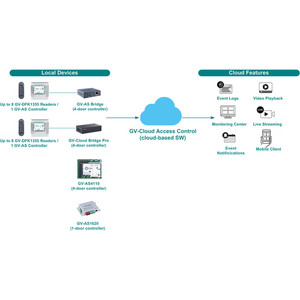
The Geovision GV-AS1620 is a networked access control panel designed for managing door locks, electric strikes, and entry-point monitoring across Geovision surveillance deployments. Operating on standard PoE 802.3af power, the panel eliminates dedicated power infrastructure and centralizes door access logic within your IP security network. This architecture simplifies installation, reduces cabling footprint, and integrates access events into your existing camera and NVR timeline for unified forensics.
Key Features
- PoE 802.3af Powered: Standard PoE injection — no separate 12V supply required. Typical draw under 13W, compatible with any 802.3af PoE switch or injector.
- Network-Based Connectivity: RJ45 connection integrates directly into your IP surveillance backbone. Reduces panel-to-control-station wiring complexity in multi-door deployments.
- Compact Form Factor: Wall-mountable enclosure fits standard electrical boxes and conduit runs without custom framing. Ideal for retrofit installations where space is constrained.
- Door Lock Management: Supports control of electric strikes, magnetic locks, and relay-driven entry hardware. Analog and digital input/output architecture accommodates standard door hardware.
- Event Integration: Access attempts, lock state changes, and door-open duration logging sync with Geovision NVR event timelines for investigative playback correlation.
- Centralized Monitoring: Single pane-of-glass access to all controlled doors from Geovision management software. Real-time lock status and audit trail without separate access-control appliance.
The GV-AS1620 bridges access control and video surveillance by consolidating door state data within your Geovision ecosystem. Rather than running parallel access-control cabling and a separate server, this panel leverages your existing network infrastructure and NVR platform. For small- to medium-sized facilities with 4–12 controlled doors, the consolidation eliminates a second platform, second support contract, and second set of integration headaches.
Deployment scenarios include office entrance vestibules, server-room cages, loading-dock barriers, and multi-tenant suites where video and access events must correlate. The PoE power model is particularly valuable in retrofit builds where AC power drops are expensive or unavailable near the door frame. Installation typically involves mounting the panel near the door, running a single PoE drop from your switch, and terminating lock control wiring into the panel's relay outputs — total site time under one hour per door.
Integration is native to Geovision's GV-Center management software and compatible IP-based VMS platforms supporting ONVIF or Geovision SDK. Access credentials and door schedules are defined within the NVR interface; no separate access-control software license is required if you're already running Geovision recording infrastructure. Lock state synchronization occurs at network latency speeds, so real-time door monitoring and audit-trail correlation are seamless.
The panel operates within standard commercial temperature ranges (0–50°C) and is rated for typical indoor environments (offices, corridors, secure rooms). For outdoor or high-moisture installations, site-level environmental hardening (IP54 cabinet, surge protection) may be necessary. Geovision provides standard manufacturer warranty coverage and technical support through authorized service channels.
Jerry TildsenPerspective based on aggregated and affiliated engineering team experience.
We've deployed the Geovision GV-AS1620 across dozens of SMB facilities where budget and space constrain a dedicated access-control server. The real value isn't the panel itself — it's the elimination of a second appliance, second networking domain, and second support headache. You're already running Geovision recording infrastructure; this panel lets you extend that single ecosystem to door locks without buying a separate access-control system. On a 6-door retrofit job, that's the difference between a $3K access-control stack plus integration fees versus $1.2K in hardware and two hours of wiring. The trade-off is flexibility: if you need advanced scheduling, multi-tenant credential isolation, or integration with a large PACS ecosystem (HID, Salto, etc.), this panel isn't the answer. It's purpose-built for Geovision shops. But for a cohesive video-and-access narrative in a single NVR, it's operationally elegant and financially sensible.
Technical Highlights:
- PoE 802.3af Power Model: Eliminates a dedicated 12V supply and reduces panel footprint on the electrical distribution. In retrofit buildings where AC capacity near the door is unavailable, PoE injection from a nearby switch saves thousands in conduit and panel upgrades. Standard draw ensures no PoE budget overruns on existing infrastructure.
- Relay Output Architecture: Supports both normally-open and normally-closed lock configurations. Two-state relay control is foolproof: no firmware bugs can trap a door open or closed. Direct wiring to strike solenoids or maglock power circuits keeps the control path simple and maintainable.
- Event Logging and Sync: Every lock state change (open attempt, unlock command, forced-open detection) is timestamped and recorded alongside video. Investigators can pull footage and access audit trail in one timeline — no context switching between two systems.
- Native Geovision Integration: Configuration happens in GV-Center UI, not a separate access software license. No LDAP sync, no third-party middleware, no vendor interop delays. Credential and schedule updates push to the panel in real time.
- Compact IP67-Ready Enclosure: Small enough to flush-mount or surface-mount on door frames. Some integrators upgrade the enclosure to IP67-rated metal for outdoor or wet-area installs — standard practice, minimal added cost.
Deployment Considerations:
- PoE latency is negligible (<5ms) for lock control, but always test door-open timeout logic on-site. If a network segment flaps, ensure your failsafe mode (locked or unlocked?) matches your security posture — there's no secondary hardwired lock backup on this unit.
- Geovision's access-control feature set is lean compared to enterprise PACS platforms (HID Command Center, Salto KNX, Avigilon ACC). Single-badge type, basic credential management, no multi-tenant isolation — verify this matches your deployment scope before spec'ing.
- Panel wiring to door hardware (strike, maglock, status sensors) must be run in separate conduit or shielded cable if running alongside high-voltage circuits. Electromagnetic noise from door-strike coils can couple into signal lines; good practice to isolate them.
- PoE injection point matters: use a managed PoE switch or injector with sufficient budget. A small 8-port PoE switch can handle 4–6 panels + cameras comfortably; verify cumulative draw before committing.
- Door-open sensor (magnetic switch or push-button) is external — not included. Budget for reed switch + wire at each controlled door. Standard $8–15 per door, negligible in the install scope but easy to overlook in RFP.
The GV-AS1620 is the right choice for Geovision-centric shops managing small access footprints (single building, under 20 doors) where simplicity and tight hardware integration outweigh feature breadth. If you're already standardized on Geovision cameras and NVRs and need to add basic door control without a separate platform, this panel pays for itself in reduced vendor management. For larger, multi-facility access deployments or mixed-manufacturer environments, you'll want a dedicated PACS. Check out the Geovision catalog for complementary surveillance and network components.