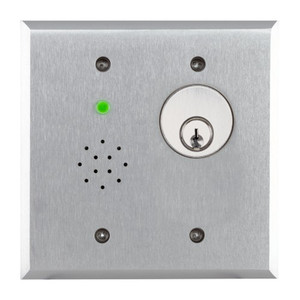
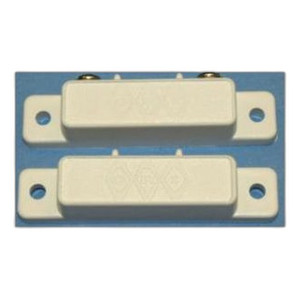
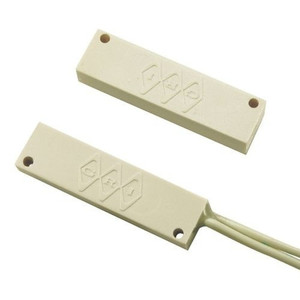
GRI DPARM Closed Loop Pool Access Alarm
Overview
The GRI DPARM is a closed loop pool access alarm system that combines perimeter monitoring with access control for aquatic facilities. This integrated approach eliminates the need for separate alarm and access control deployments, reducing installation complexity and ongoing maintenance overhead at pool sites. The DPARM monitors entry points around pool perimeters and generates real-time alerts when unauthorized access is detected.
Key Features
- Closed Loop Architecture: Continuous circuit self-monitoring detects tampering, line cuts, or component failures immediately—no silent system failures. This is critical in pool environments where undetected unauthorized access creates both security and liability exposure.
- Dual-Function Integration: Combines alarm monitoring and access control in a single system. Alarm functionality operates independently of credential validation, providing layered security—two reasons to block unwanted access instead of one.
- Real-Time Alert Generation: When an unauthorized access attempt is registered at a monitored door or gate, the system immediately notifies security personnel. Response time matters when preventing pool area intrusion during off-hours.
- Access Schedule Enforcement: Configure time-based restrictions on entry. During non-operational hours, the DPARM enforces restrictions and logs all access attempts—useful for post-incident review and regulatory compliance documentation.
- Multi-Zone Coverage: Supports multiple monitoring zones around pool perimeters, enabling protection of all primary access points from a single system rather than multiple distributed devices.
- Fault Detection & Reporting: The closed loop design continuously validates system operation, providing facility managers confidence that perimeter monitoring remains active and functional. Open-circuit systems cannot detect their own failures.
Integration & Compatibility
The DPARM integrates into existing security infrastructure through standard access control interfaces. Configuration and credential management use familiar access control workflows, so technicians already trained on access control systems can deploy the DPARM without specialized alarm training. The system supports integration with facility management platforms, enabling centralized monitoring across multiple pool locations or facilities with multiple perimeter zones.
The closed loop circuit provides inherent security advantages. Any attempt to disable or bypass the alarm circuit is immediately detected and reported as a fault condition—a significant advantage over open-circuit alarms, which fail silently when cut. This architecture is particularly valuable in pool environments where liability exposure from undetected unauthorized access is substantial.
Deployment Considerations
Installation requires integration with pool facility perimeter infrastructure: door frames, gate mechanisms, and signaling devices. The system monitors all primary access points and reports status through standard security integration interfaces. Facility operators configure access schedules to restrict entry during closed periods, with the alarm system enforcing those restrictions and alerting personnel to violations.
When evaluating this system for your facility, consider the number of monitored entry points, the complexity of your access schedule (different restrictions by time of day or user type), and whether you need integration with an existing access control platform. The DPARM consolidates alarm and access functions, which simplifies the security architecture but requires coordination between alarm response and access management protocols during commissioning.
Frequently Asked Questions
Q: How does the closed loop design prevent tampering?
A: The closed loop circuit continuously monitors itself for electrical continuity. Any interruption—whether from a cut wire, disconnected component, or intentional bypass—is detected immediately and reported as a fault. Open-circuit alarms cannot detect when they have been disabled.
Q: Can the DPARM operate as a standalone alarm without access control?
A: The alarm functionality operates independently of access control credentials. You can deploy the DPARM as a perimeter alarm alone, with access control as an optional secondary layer.
Q: What happens if someone tries to cut the alarm circuit?
A: The closed loop immediately detects the break in continuity and reports a fault condition. This prevents silent compromise of the alarm system and triggers an alert to facility operators.
Q: Can I manage access schedules for different user groups?
A: Yes. The DPARM supports credential-based access control with time-based restrictions. You can assign different schedules to different user groups or facility areas.
Q: Is the DPARM suitable for outdoor pool environments?
A: The DPARM is designed for outdoor pool facility environments. Confirm environmental ratings (IP rating, operating temperature range) for your specific climate zone with the manufacturer datasheet.
Q: Does the DPARM integrate with existing facility management software?
A: The DPARM supports integration with standard security integration platforms and facility management systems. During planning, verify that your VMS or facility platform supports the DPARM's integration protocol.
Ted PerryPerspective based on aggregated IP Security Depot and affiliated engineering team experience.
The GRI DPARM represents a practical engineering decision for aquatic facilities: consolidate alarm and access control into a single integrated system rather than deploying two separate devices. The closed loop architecture is the standout feature here—it eliminates the silent-failure risk that plagues open-circuit alarms. If you install an open-circuit perimeter alarm and someone cuts the wire, you won't know. The DPARM tells you immediately, which is the difference between detecting an intrusion attempt and discovering a breach after the fact.
Technical Highlights:
- Closed Loop Circuit Monitoring: Continuous self-check for tampering and faults means no silent failures. On a 24/7 pool facility, you want to know the alarm is working—not guess.
- Integrated Dual-Function Operation: Alarm and access control in one system reduces wiring, power supply infrastructure, and configuration overhead. Fewer devices also means fewer points of failure during commissioning.
- Real-Time Alert Generation: Unauthorized access attempts trigger immediate notification. Response time matters; delays cost liability.
- Multi-Zone Coverage: Single system monitors all primary entry points around the pool perimeter. Eliminates need for distributed alarms at each gate or door.
Deployment Considerations:
- Installation requires careful integration with existing door frames, gate locks, and signaling infrastructure. Don't underestimate the wiring complexity—closed loop circuits demand proper grounding and circuit design.
- Credential and schedule management must align with your facility's operational hours and user access patterns. Misalignment during commissioning is a common source of false alarms.
- The DPARM expects integration with a facility management platform for centralized logging and alerting. If you're running disconnected systems, you'll lose the consolidation benefit.
The DPARM is well-suited to municipalities, private clubs, and commercial aquatic facilities where liability exposure is high and the operational window is clearly defined (e.g., summer season hours). If your facility runs 24/7 with unpredictable access patterns or if you need compliance with specific regulatory frameworks (e.g., Title 5 drowning prevention rules in certain states), validate DPARM compatibility with those requirements before committing to deployment.