QNAP TNS-H1083X-E2236-16G NAS Node with Intel Xeon E and Dual 10GbE SFP+
Overview
The QNAP TNS-H1083X-E2236-16G is a purpose-built NAS node designed for integration into the GM-1000 shared storage system — an architecture that separates compute from storage so each can scale independently. Shipping with an Intel® Xeon® E processor and 16 GB of UDIMM DDR4, this node is built for environments where storage performance, network throughput, and expansion flexibility matter more than a self-contained appliance form factor. If your deployment calls for centralized, high-availability shared storage across multiple compute heads, the TNS-H1083X-E2236-16G is the node that anchors that architecture. See the full QNAP storage line for related platforms and accessories.
Key Features
- Intel Xeon E Processor: Xeon E class silicon brings ECC memory support and the reliability characteristics enterprise storage nodes require — not a consumer Core chip that treats memory errors silently. For a node running persistent shared storage, that matters on multi-day continuous workloads.
- 16 GB UDIMM DDR4 / 128 GB Maximum: Ships with 16 GB across 4 DIMM slots, expandable to 128 GB (4 x 32 GB). If your workload involves large metadata caches, ZFS ARC, or in-memory deduplication, that 128 GB ceiling gives you room to grow without replacing the node. Budget the memory upgrade at deployment time rather than after the fact.
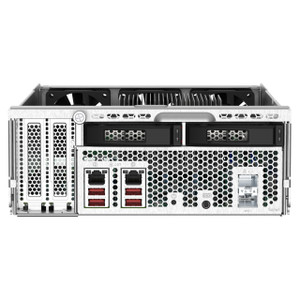
- Dual 10GbE SFP+ Ports: Two 10GbE SFP+ uplinks mean this network-attached storage node can sustain multi-gigabit throughput to your switching fabric — essential when multiple compute nodes are reading from shared storage simultaneously. SFP+ also lets you run DAC cables for low-latency direct connects or fiber for longer runs.
- Dual 2.5GbE LAN Ports: Two 2.5GbE copper ports complement the SFP+ connectivity — useful for dedicated management traffic, iSCSI on a separate VLAN, or bonded fallback paths. Keeping management plane traffic off your 10GbE data ports is a clean architectural practice this node physically supports.
- 2x PCIe Expansion Slots: Two PCIe slots let you add network cards, additional 10GbE or 25GbE adapters, or storage controllers. For network infrastructure buildouts requiring higher throughput or protocol flexibility (NVMe-oF, FC), this is where you customize the node without swapping the entire platform.
- 2x U.2 Ports: Native U.2 connectivity supports high-performance NVMe SSDs in the enterprise U.2 form factor — the same drives used in data center all-flash arrays. This is the right interface when you need NVMe-class random IOPS for hot-tier workloads without the thermal and density trade-offs of M.2.
- 2x M.2 SSD Slots: Dual M.2 slots can host NVMe cache drives or additional fast-tier storage. Pairing M.2 cache with spinning media in the node's bay configuration is a standard approach for mixed-workload environments where sequential throughput and random latency need to coexist.
- 4x USB 3.2 Gen 2 Type-A Ports: USB 3.2 Gen 2 delivers up to 10 Gbps per port — fast enough to treat USB-attached storage as a real backup or staging target rather than an afterthought. Four ports means you can attach multiple external drives simultaneously for backup rotation or data migration workflows without a hub.
- 5 GB Flash with Dual Boot OS: The dual-boot OS flash means you have a fallback firmware partition — if an OS update causes issues, the node can boot from the secondary partition. For a storage node in production, that redundancy removes a common failure mode during maintenance windows.
- Smart Cooling Architecture: QNAP's smart cooling design on this node manages thermal load across the Xeon processor and high-density drive bays — relevant when the node is loaded with U.2 NVMe drives running sustained write workloads that generate significant heat.
Integration and Compatibility
The TNS-H1083X-E2236-16G is designed as a node component within the QNAP GM-1000 shared storage system. This architecture suits virtualization hosts, video surveillance storage backends, and rendering or media production environments where multiple compute systems need concurrent access to the same storage pool. The dual SFP+ 10GbE ports integrate directly with standard data center switching — no proprietary fabric required. PCIe expansion accommodates protocol adapters for environments already standardized on Fibre Channel or NVMe-over-Fabrics. For surveillance storage deployments, the node's connectivity profile supports high-channel-count VMS platforms that require sustained sequential write throughput across dozens of camera streams. Pair with a compatible PoE switch infrastructure when the GM-1000 system anchors a camera network requiring both storage and switch-layer connectivity in the same rack.
Frequently Asked Questions
Q: What is the maximum memory the TNS-H1083X-E2236-16G supports?
A: The node supports up to 128 GB using 4 x 32 GB UDIMM DDR4 modules across its four memory slots. It ships with 16 GB installed.
Q: Does the TNS-H1083X-E2236-16G support NVMe storage?
A: Yes. The node includes 2x U.2 ports for enterprise NVMe SSDs and 2x M.2 slots, giving you multiple NVMe attachment options depending on drive form factor.
Q: What network connectivity does the TNS-H1083X-E2236-16G provide?
A: The node ships with 2x 10GbE SFP+ ports and 2x 2.5GbE copper LAN ports. Additional network adapters can be installed in the 2x PCIe expansion slots.
Q: Can the PCIe slots in the TNS-H1083X-E2236-16G be used for network expansion?
A: Yes. The two PCIe expansion slots support compatible network adapters, storage controllers, or other PCIe cards to extend the node's connectivity and performance profile.
Q: What is the role of the TNS-H1083X-E2236-16G in the GM-1000 system?
A: It functions as the NAS node within QNAP's GM-1000 shared storage architecture, providing compute (Xeon E processor), memory, and connectivity resources that attach to the shared drive enclosure, separating compute from storage for independent scaling.
Q: What USB standard do the ports on the TNS-H1083X-E2236-16G use?
A: All four USB ports are USB 3.2 Gen 2 Type-A, supporting up to 10 Gbps per port for fast external storage attachment or data migration tasks.
The TNS-H1083X-E2236-16G is one of those nodes that makes more sense the closer you look at the connectivity spec — two 10GbE SFP+ ports plus two PCIe slots on a Xeon E platform means you're not just buying NAS storage, you're buying a node you can actually grow into 25GbE or NVMe-oF without replacing the chassis. That matters for teams who know their throughput requirements will change before their hardware budget does.
Technical Highlights:
- 128 GB DDR4 ceiling: Ships at 16 GB but the four UDIMM slots support up to 128 GB — critical for ZFS ARC tuning on large pools. Ordering a node without budgeting the memory upgrade path is a common oversight that bites when ZFS cache misses start showing up in latency.
- U.2 + M.2 dual NVMe paths: Having both U.2 and M.2 NVMe interfaces on the same node lets you run enterprise U.2 drives for primary hot-tier storage and M.2 for write-intent logs or L2ARC — a legitimate tiering configuration without additional hardware.
- Dual-boot 5 GB OS flash: The dual-boot partition is underrated for production environments. When you're patching firmware on a node that has 20+ cameras or VMs depending on it, the ability to roll back without physical intervention is the difference between a maintenance window and an incident.
Deployment Considerations:
- The two 2.5GbE copper ports alongside the SFP+ uplinks give you a clean path to separate management and iSCSI traffic from primary data — plan your VLAN tagging strategy before you rack the node, not after your switch config is already live.
- This is a legacy SKU (TNS-H1083X-E2236-16G is listed as Legacy on the QNAP spec page) — confirm current availability and factor in any GM-1000 ecosystem compatibility requirements with your storage platform before committing to quantity orders.
This node is the right fit for a GM-1000 shared storage deployment anchoring a high-channel surveillance VMS or a small virtualization cluster where you need NVMe-tier responsiveness and 10GbE fabric throughput without purchasing an all-flash array.