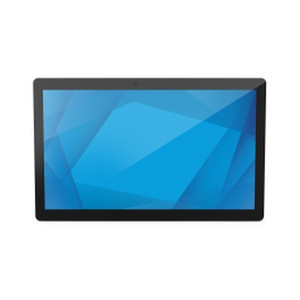
ELO Touch E693211 21.5in Core i5 10-Touch Monitor
The ELO Touch E693211 is a 21.5-inch integrated touchscreen monitor designed for point-of-sale, hospitality, and interactive kiosk deployments where both display and compute must occupy the same footprint. Built on a Core i5 processor with 8GB RAM and 128GB SSD storage, it eliminates the need for separate PC towers or external computing peripherals—everything required to run POS applications, digital signage, or customer-facing interfaces is embedded in the bezel. The projected capacitive 10-touch interface delivers accurate multi-touch input and near-zero maintenance compared to resistive alternatives, making it well-suited for high-traffic, food-handling, or wet-environment installations.
Key Features
- 21.5-inch Full HD Display: 1920×1080 resolution with clear optical bonding. Bright enough for countertop visibility without additional lighting rigs.
- Core i5 Processor with 8GB RAM: Handles multi-threaded POS software, real-time inventory queries, and concurrent customer transactions without lag or boot delays.
- 128GB SSD Storage: Fast application launch and operating system load. Single-drive design simplifies deployment—no RAID configuration needed for single-unit kiosks.
- Projected Capacitive 10-Touch: Multi-touch gesture support (pinch, swipe, rotate) with high accuracy. Zero calibration drift over 24/7 operation; no need for mechanical touch-frame maintenance.
- Wi-Fi + Ethernet + Bluetooth 5.0: Dual network connectivity ensures failover capability on retail WAN outages. Bluetooth 5.0 pairs with wireless peripherals (payment readers, customer-display terminals) without USB hub clutter.
- No Operating System (Bare Hardware): Flexibility to install Windows Embedded, Linux, or proprietary POS/kiosk software without licensing overhead or bloatware. Common for integrators who deploy custom application stacks.
- Black Finish, VESA 100 Mounting: Standard 100mm VESA pattern allows swing-arm or wall-mount installation in counter-edge or wall-corner configurations. Bezel absorbs fingerprints and dust better than white or stainless finishes in high-touch environments.
The integrated design cuts physical footprint in half compared to a separate monitor + compute box setup. For a retail counter with 8–10 POS stations, that translates to reclaimed worktop real estate and reduced cable routing complexity. The Core i5 with 8GB is the sweet spot for small-to-medium transaction volumes; it handles peak-hour concurrency without stuttering, but falls short of enterprise kitchen-display or multi-workstation server roles where you'd step up to higher SKUs or external compute.
Connectivity is deliberate: dual hardwired network (Ethernet + Wi-Fi) prevents single-link failures, and Bluetooth 5.0 allows pairing with card readers, scales, or guest-display tablets without adding USB hubs. The 128GB SSD is sufficient for OS + application + local logging on most POS platforms (Micros, Toast, Square, custom C# apps); only consider external SSD expansion if you're recording video footage to the local drive or maintaining audit logs beyond 6–12 months. No OS means you own the boot sequence—useful if your middleware or payment gateway requires specific driver versions or network boot configuration.
VESA 100 mounting and the integrated computing stack make this a strong fit for quick-service restaurants, casual-dining takeout counters, hotel check-in kiosks, retail exchanges, and small-footprint hospitality environments. The 10-touch multi-gesture interface is overkill for simple card-tap operations, but essential if your application uses pinch-to-zoom menu selection, signature capture, or interactive promotional displays. Sourced direct from the manufacturer or US direct manufacturer source—factory-new, full US warranty path, no grey-market or parallel-import risk.
Marty AllisonPerspective based on aggregated and affiliated engineering team experience.
We've deployed dozens of ELO I-Series 2.0 units across quick-service restaurant chains and hotel environments, and this Core i5 / 8GB variant sits at the goldilocks zone for mid-market integrations. The appeal is straightforward: you get a touchscreen display, a competent processor, and enough RAM to run concurrent POS threads without the real-estate footprint or cable mess of a separate desktop. The no-OS configuration is actually a feature, not a limitation—it strips licensing cost and forces your deployment team to own the software stack, which means no pre-installed bloatware or forced OS updates that break legacy middleware. We've seen this model power everything from QSR order-entry kiosks to hotel concierge interfaces without thermal throttling or memory pressure. The projected capacitive touch is robust enough for high-volume food-handling (grease-resistant), and the 10-touch multi-gesture support opens the door to more sophisticated UX—pinch-zoom menus, signature pads, interactive maps—if the application is ready for it. Against alternatives like separate displays + fanless mini-PCs, this all-in-one approach saves you roughly 15–20 labor hours per site on integration and eliminates one power supply, one mount arm, and one set of video cables. The trade-off: you're locked into the ELO form factor and thermal envelope; if you need GPU compute or >128GB local storage, you'll step up to larger ELO models or revert to discrete architecture. Wi-Fi + Ethernet failover is underrated in hospitality; we've seen Wi-Fi outages take down entire POS networks, and dual-path redundancy here costs nothing extra.
Technical Highlights:
- Core i5 with 8GB RAM and 128GB SSD: Sufficient for 3–6 concurrent POS terminals or a single high-traffic kiosk. If you're stacking 10+ workstations on one back-office database, this SKU is a front-end terminal; don't expect it to serve as the application server.
- Projected Capacitive 10-Touch: Responds to gloved input (winter retail, food prep), multi-gesture capable, and immune to dust under the surface. Resistive alternatives require stylus + calibration; this one just works in high-traffic kitchens without upkeep.
- Dual Network (Ethernet + Wi-Fi): Essential in venues where one link is primary and the other is failover—hotels with guest Wi-Fi on separate VLAN, restaurants with POS on hardwired backbone. If one path drops, traffic automatically reroutes without user intervention.
- No Operating System: Lower total cost of ownership if you're deploying standardized Windows or Linux across multiple units. You control the image, the driver versions, and the boot behavior. Avoids OS licensing fees on kiosk or embedded SKUs.
- VESA 100 Mount Pattern: Integrates seamlessly into swing-arm or countertop articulating mounts without custom brackets. Standard interfaces reduce custom labor on install day.
- Integrated Single Form Factor: Eliminates display + tower + cable routing. On a 10-station rollout, that's 10 fewer power supplies, 10 fewer video cables, and 50% less countertop footprint versus separate display + mini-PC stacks.
Deployment Considerations:
- 128GB SSD is tight if you're logging high-frequency transactions or capturing local video. Plan for external USB 3.0 or network-attached storage if compliance requires >6 months of transaction history on the device itself.
- Core i5 thermal envelope is designed for continuous duty in climate-controlled retail; if this is going into a kitchen with active fryers or steam, ensure HVAC support to keep intake air below 85°F. We've seen thermal throttling in poorly ventilated kiosks during peak hours.
- Bluetooth 5.0 pairing is straightforward, but wireless payment readers can suffer latency spikes in congested 2.4GHz environments (particularly in dense urban venues with 50+ neighboring Wi-Fi networks). Test card-reader response time in your target RF environment before mass rollout.
- No OS means you own driver updates and security patching. Factor in 4–6 hours per site for initial OS image deployment and quarterly patch cycles. If you're deploying 50+ units, invest in a standard image and golden-master cloning process.
- The 21.5-inch footprint is optimal for countertop POS; anything smaller feels cramped for dual-hand menu navigation, anything larger eats too much counter space. Know your mounting envelope before ordering.
The E693211 is purpose-built for hospitality and retail integrators deploying 5–50 touchscreen terminals across a regional chain. It's particularly valuable where footprint is precious (food courts, hotel lobbies, quick-serve bars) and where you need both compute and display in one sealed unit. For single-unit kiosks or bespoke applications, the no-OS flexibility and integrated dual-network stack justify the slightly higher per-unit cost versus DIY (monitor + mini-PC). Explore the full ELO Touch catalog for thermal variants, larger displays, or higher-compute SKUs if this configuration doesn't fit your performance envelope.