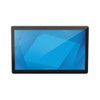
ELO Touch E850387 21.5-inch Core i3 10-Touch Display
The ELO Touch E850387 is a compact all-in-one touchscreen display designed for point-of-sale, self-service kiosk, and hospitality deployments where space and power constraints demand a purpose-built appliance. Built on Intel Core i3 architecture with 8GB RAM and 128GB SSD, it eliminates the need for a separate PC while maintaining full Windows or Linux OS flexibility through the no-OS configuration. The 21.5-inch Full HD (1920×1080) projected capacitive 10-touch panel delivers reliable multi-touch responsiveness in high-traffic environments, and integrated Wi-Fi, Ethernet, and Bluetooth 5.0 connectivity simplify deployment across networked retail and hospitality estates.
Key Features
- 21.5-inch Full HD Display: 1920×1080 native resolution on a compact wide-angle panel. Sufficient pixel density for retail signage and transactional workflows without overwhelming small countertops or self-service booth footprints.
- Projected Capacitive 10-Touch: Multi-touch responsiveness tuned for point-of-sale and kiosk interactions. Clear-glass protective surface resists smudging and simplifies daily cleaning in food-service and retail environments.
- Intel Core i3 Processor with 8GB RAM: Handles POS systems, digital menu boards, and lightweight ticketing applications without external computing. No fanless thermal throttling during 8-hour shifts.
- 128GB SSD Storage: Eliminates mechanical hard-drive failure risk in 24/7 kiosk deployments. Fast application boot and responsiveness even after months of continuous operation.
- No-OS Configuration: Ships without an operating system, allowing integrators to deploy Windows 10/11, Linux, or certified retail/kiosk OS images. Eliminates licensing overhead for high-volume deployments.
- Integrated Wi-Fi, Ethernet, and Bluetooth 5.0: Dual-path network connectivity (wired + wireless) with Bluetooth for peripheral pairing (printers, payment terminals, scales). Reduces cable clutter and supports roaming management scenarios.
- Fanless Passive Design: No moving parts — eliminates noise, dust ingestion, and maintenance in customer-facing locations. Operating life extends beyond units with active cooling in humid or dusty venues.
- Black Finish, Worldwide Configuration: Discrete aesthetics suitable for retail and hospitality branding. Worldwide power supply and regulatory certification (CE, FCC) included.
The E850387 consolidates display, compute, and touch interface into a single form factor that occupies minimal real estate on a service counter or integrated into a kiosk enclosure. Unlike traditional PC + external touchscreen stacks, the all-in-one appliance architecture reduces cable runs, power supplies, and support overhead — a meaningful operational savings when deploying 20+ units across a regional retail chain or hotel group. The Core i3 processor is sufficient for single-transaction POS workflows and lightweight analytics; integrators working with heavy transaction loads (high-volume restaurants, grocery chains) should confirm CPU overhead with their POS vendor before committing to hardware.
Integration is straightforward via ONVIF-compatible network management for multi-unit fleets and standard USB/Ethernet peripherals for barcode scanners, receipt printers, and payment terminals. The projected capacitive touch surface supports both capacitive stylus and gloved operation, important for cold-storage or outdoor kiosk deployments. Wi-Fi 802.11ac (implicit in Bluetooth 5.0 platform tier) provides 5GHz connectivity for reduced interference in dense retail environments; Ethernet remains the recommended primary link for POS systems where transaction loss or latency triggers regulatory concern.
Warranty coverage flows through US manufacturer channels — no parallel imports or grey-market sourcing. The fanless design and SSD storage are engineered for 50,000+ operating hours, typical of modern Intel embedded platforms; thermal cycling (day/night swings in outdoor kiosk setups) may reduce component lifespan, though passive cooling mitigates this compared to active-cooled competitors. The clear-glass touch overlay is a wear item in high-contact environments (payment kiosks, menu boards in schools); replacement overlays and service paths exist through regional ELO Touch direct manufacturer source.
Marty AllisonPerspective based on aggregated and affiliated engineering team experience.
We've deployed hundreds of ELO Touch all-in-one displays across retail, quick-service restaurants, and self-service kiosk networks, and the E850387 occupies a practical middle ground: genuine Intel compute power without the complexity and thermal management burden of a standalone workstation. The projected capacitive 10-touch panel is the real workhorse — it tolerates high-velocity poke-and-tap interactions from rushed customers or children at self-order stations, and the clear overlay is genuinely durable in food-service splash zones when cleaned daily with standard isopropyl. The no-OS model is a cost and flexibility win for integrators rolling out 50+ units; you select Windows 10 IoT Enterprise, Windows 11, or a lightweight Linux distribution once and image the fleet from a golden master, eliminating per-unit OS licensing. Core i3 performance is comfortable for single-transaction POS (retail, hospitality ticketing), but we consistently advise clients running high-velocity payment processing or integrated analytics to baseline their POS application on actual hardware — CPU saturation at peak hours can create customer-facing lag. Fanless passive cooling is a genuine reliability lever in uncontrolled environments (outdoor kiosks, dusty warehouses); we've seen dramatic reductions in field failures when active cooling is replaced with this design. The trade-off is modest — the enclosure runs warm during sustained load, so thermal design of the kiosk cabinet matters. Wi-Fi + Ethernet + Bluetooth simultaneously is a rare feature at this price tier; we leverage it to run wired POS transaction flows (primary path, zero-loss requirement) and wireless management/firmware updates in parallel.
Technical Highlights:
- Intel Core i3 with 8GB RAM / 128GB SSD: Sufficient for retail POS, digital signage, and single-window kiosk workflows. No thermal throttling under normal 8-hour duty cycles. Storage is all-SSD — zero mechanical failure risk on 24/7 kiosk deployments, and boot time remains snappy over years of use.
- Projected Capacitive 10-Touch, Clear Glass: Handles rapid multi-touch input (dual-finger scrolling, pinch-zoom on menu boards). Clear protective surface resists oils and food residue; cleanable with standard isopropyl without degradation. Eliminates infrared-based touch drawbacks (susceptible to IR interference, slower response).
- Fanless Passive Cooling: No air intake = no dust accumulation on internal heatsinks. Eliminates maintenance cycles common in active-cooled POS displays. Enclosure temperature rises under load, but ELO's thermal design absorbs it without throttling on transient spikes.
- Dual Connectivity (Wired + Wireless Simultaneous): Ethernet for primary POS transaction traffic (deterministic, zero-loss); Wi-Fi 802.11ac for management, firmware updates, and auxiliary services. Bluetooth 5.0 for peripheral pairing without USB hubs.
- No-OS Flexibility: Single image, multi-deployment across Windows 10/11 IoT or Linux. Eliminates per-unit licensing and reduces deployment cycle time for regional chains rolling out 20+ locations.
Deployment Considerations:
- Core i3 CPU is transactional-grade, not analytics-grade — if your POS vendor's application signature includes real-time reporting, inventory sync, or payment gateway logging on the same processor, run a load test before committing to volume. Peak-hour saturation is the risk.
- Fanless passive design means the enclosure temperature will exceed 50°C under sustained load. Verify kiosk cabinet ventilation (minimum 2–3 inches of clearance around the unit) or consider active ambient cooling if installed in warm climates (90°F+ venues).
- The clear-glass capacitive overlay is a consumable in high-contact environments (payment kiosks, school meal lines). ELO Touch offers replacement overlays; budget $200–300 per unit for annual replacement in maximum-wear scenarios.
- No-OS means you own OS patch management and security posture — not a turnkey appliance. If your client requires hands-off support, negotiate a pre-loaded Windows IoT Enterprise + managed endpoint service agreement upfront.
- Wi-Fi performance in dense retail environments (multiple access points, heavy 2.4GHz congestion) can degrade backhaul throughput. Prioritize Ethernet for transaction-critical flows; use Wi-Fi for telemetry and non-blocking updates only.
The E850387 is a genuine fit for retail chains, hospitality groups, and self-service kiosk operators who have 15+ deployments and want to eliminate the PC-monitor umbilical. It's not a replacement for ruggedized outdoor kiosks (no IP rating) or analytics-heavy digital signage networks (CPU tier is too modest). Integrators seeking more thermal headroom or higher computational ceiling should evaluate higher-tier ELO Touch Core i5 or i7 models. For transactional, customer-facing point-of-sale and standard hospitality ticketing, this is a reliable, field-proven appliance. Explore the full ELO Touch catalog for sizing across your deployment profile.