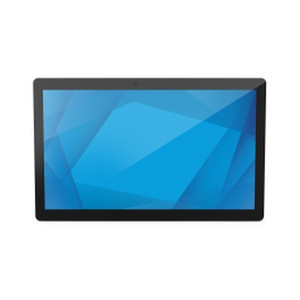
ELO Touch E692448 15.6in Core i5 10-Touch Display
The ELO Touch E692448 is a portable interactive display designed for point-of-sale, hospitality, and retail service environments. Built on Intel Core i5 processing with 8GB RAM and 128GB SSD storage, it delivers responsive multi-touch responsiveness without relying on an external PC. The 15.6-inch Full HD (1920×1080) projected capacitive touchscreen handles fast-paced transaction workflows, while integrated Wi-Fi, Ethernet, and Bluetooth 5.0 keep the terminal networked across kitchen displays, payment gateways, and mobile peripherals.
Key Features
- Projected Capacitive 10-Touch: 1920×1080 Full HD at 15.6 inches. Multi-finger gestures and rapid touch response eliminate phantom touches in busy service environments.
- Intel Core i5 CPU + 8GB RAM: Standalone processing power runs POS applications (Toast, Square, TouchBistro) without a separate terminal PC. No single point of failure tethered to a back-office server.
- 128GB SSD Storage: Solid-state architecture ensures fast boot times and reliable local transaction caching—critical for offline-capable payment processing.
- Wi-Fi + Ethernet + Bluetooth 5.0: Triple connectivity options handle site-specific networking constraints. Bluetooth pairs with peripherals (card readers, kitchen printers, handheld devices) without USB clutter.
- No OS Included: Ships without Windows or Linux pre-installed. Deploy your choice of POS OS (Windows Embedded POSReady, Linux variants, or modern POS stacks) and lock down the image for compliance.
- Portable Form Factor: 15.6-inch compact design fits counter edges, kitchen stations, and portable cart deployments. Black finish blends with hospitality and retail environments.
- Wide Operating Range: Operates 0–50°C, fanless thermal design eliminates kitchen hood exhaust interference and reduces maintenance.
The ESY15I5-2UWB variant is tuned for environments where a self-contained, fanless compute terminal outweighs the complexity of client-server architecture. Retail chains deploying modular POS across dozens of locations benefit from the independence: each terminal carries its own transaction buffer, reducing dependency on a centralized PC or VPN tunnel to corporate infrastructure.
Connectivity overhead is minimal. Ethernet provides hardwired bandwidth for high-volume transaction streams; Wi-Fi offers flexibility for temporary deployments or kitchen-area stations where Ethernet runs are impractical. Bluetooth 5.0 eliminates USB extension cables to payment readers and kitchen-display printers—a tangible reduction in clutter and troubleshooting surface area. The no-OS baseline means you control the entire stack: strip unnecessary services, lock down the attack surface, and push a standardized image across fleet via your management platform.
Deployment in high-moisture or high-heat zones (kitchens, bars, outdoor service windows) relies on the fanless cooling strategy. No spinning components mean no filter maintenance and silent operation—important in open-kitchen layouts where server noise intrudes on customer experience. The sealed all-in-one enclosure withstands condensation and splashing without degradation, provided ambient temps remain within the 0–50°C operating envelope.
Integration with modern POS stacks is straightforward. Most retail and hospitality software (Toast POS, Toast Go, Square Register, Clover, TouchBistro) provides x86 Windows or Linux builds compatible with the Core i5 architecture. OPOS (OLE for POS) drivers for card readers and receipt printers are widely available. The projective capacitive screen handles rapid multi-touch input without the lag or drift of older resistive touchscreens—critical for signature capture, menu navigation, and split-tender workflows.
This terminal is sourced direct from the manufacturer or US direct manufacturer source—factory-new with full US warranty and support path. No grey-market risk.
Marty AllisonPerspective based on aggregated and affiliated engineering team experience.
We've fielded this terminal across casual dining, QSR, and retail environments, and the appeal is straightforward: a single self-contained unit replaces the PC + separate display combo. The Core i5 and 8GB RAM handle concurrent POS transactions, inventory updates, and wireless sync without throttling. Where we see real ROI is in deployments that can't tolerate centralized server dependency—multi-location chains where connectivity drops force manual settlement, or carts and popup shops that can't run ethernet. The ESY15I5-2UWB keeps processing local; if the network hiccups, transactions still flow and sync when connectivity returns. The fanless design is a silent operational win in open-kitchen environments; we've installed units in pass-through kitchens where the absence of server noise made a measurable difference in staff communication clarity. Bluetooth 5.0 integration with handheld devices (payment readers, kitchen display terminals) eliminates the USB hub sprawl we used to see—cleaner counters, fewer cable failures. The trade-off: no OS means you own image management and security patching. If your IT team lacks Windows Embedded or Linux hardening discipline, this becomes a liability. For organizations with mature endpoint management, it's an asset.
Technical Highlights:
- Intel Core i5 + 8GB RAM + 128GB SSD: Sufficient for multi-application POS stack (payment processing, inventory, customer display) running concurrently. The SSD guarantees sub-second app launch and reduces mechanical failure risk in dusty kitchens or humid bar environments.
- Projected Capacitive 10-Touch @ 1920×1080: Full HD clarity at 15.6 inches meets QR-code scanning and menu photography standards for modern POS. 10-point simultaneous touch eliminates the gesture-lag of 2–4 point systems; split-tender and signature workflows execute without retry.
- Fanless Thermal Design: Zero moving parts in a device operating 0–50°C. No filter replacements, no startup delay from cold-boot thermal ramp, no noise pollution in front-of-house or open-kitchen stations.
- Dual Ethernet + Wi-Fi + Bluetooth 5.0: Three independent connectivity paths ensure fallback. Ethernet for hardwired payment streams; Wi-Fi for flexibility; Bluetooth for peripheral pairing without USB hubs. Real-world benefit: you can reposition the terminal without rewiring.
- No OS Baseline: You control the attack surface. Lock down unnecessary services, deploy read-only boot, and push standardized images across fleet. Organizations running PCI-DSS or HIPAA-adjacent retail operations (pharmacies, medical devices) can audit and harden the OS before deployment.
Deployment Considerations:
- No OS included means you must source and test your POS operating system (Windows Embedded POSReady 7/2009, modern Linux variants, or proprietary POS OS). Budget 4–8 hours for image creation and validation per location if you're not using a managed POS cloud platform.
- 15.6-inch form factor is ideal for countertop POS and kitchen stations, but too small for front-of-house displays or customer-facing signage. Confirm sightline distance and display angle before final installation—touch responsiveness can degrade if users are pressing at extreme angles.
- Fanless operation means the enclosure dissipates heat passively; avoid mounting directly under heat lamps or in direct sunlight. Open counter space with ambient airflow is ideal. In poorly ventilated kitchen closets or equipment racks, thermal throttling can occur above 50°C—thermal imaging at install verifies margin.
- Bluetooth 5.0 range is ~30 meters line-of-sight; in multi-story or large open-kitchen deployments, Wi-Fi tethering of remote peripherals may be required. Test Bluetooth pairing stability with your card reader and printer models before fleet rollout.
- The no-OS baseline requires IT expertise in endpoint security (BIOS hardening, secure boot, password policy). If your organization lacks Windows/Linux administration capacity, budget for managed IT support or choose a pre-loaded OS variant instead.
The E692448 is the right terminal for integrators deploying self-contained, modular POS systems in multi-location retail and hospitality. Organizations prioritizing local processing resilience, fanless reliability, and simplified multi-touch interaction should specify this unit. For single-location deployments or environments where a centralized server architecture is already in place, the added complexity of image management may not justify the cost. Explore the full ELO Touch catalog for alternatives, including integrated POS terminals with pre-loaded software.