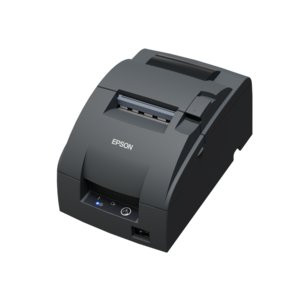
Epson C31CL27032 Two-Color Dot-Matrix Receipt Printer
Overview
The Epson C31CL27032 is a wired two-color dot-matrix receipt printer purpose-built for point-of-sale and transaction processing environments. This model delivers consistent output with dual-color ribbon capability, enabling visual differentiation of receipt types directly on printed output—a genuine operational asset in high-volume retail and hospitality locations where staff need to categorize transactions at a glance. The C31CL27032 combines industry-standard Ethernet and serial connectivity with straightforward impact-printing mechanics, making it a practical choice for locations that balance new network infrastructure with legacy terminal support.
Key Features
- Two-Color Printing: Monochrome two-color output (black + red or black + alternate color depending on ribbon configuration) for real receipt differentiation—eliminates the need for post-print labeling or visual scanning to separate transaction types during reconciliation or customer service interactions.
- Print Speed: 8.8 lines/sec at 16 cpi: Maximum output of 8.8 lines per second at 16 characters per inch handles typical transaction volume without unnecessary delay. Variable speed settings at 4.7 and 6 lines/sec allow tuning to specific receipt formats or priority workflows, reducing paper waste on shorter transactions.
- Print Resolution: 16 cpi (characters per inch): Standard dot-matrix resolution delivers legible receipt text and barcodes suitable for all common retail scanning and archival requirements—no premium paper needed.
- Impact Dot-Matrix Technology: Proven impact printing mechanism ensures reliable performance with standard receipt paper and carbonless forms, with no dependency on toner or ink cartridges beyond the ribbon cartridge.
- Dual Connectivity: Ethernet + Serial (PS): Both Ethernet and serial interfaces on a single unit eliminate the need for separate protocol converters or multiple printer models across locations. Ethernet enables centralized print queue management and remote monitoring; serial connectivity maintains backward compatibility with existing terminal hardware, allowing phased system upgrades without simultaneous replacement of all terminals.
- Standard Receipt Media Support: Designed for standard roll media in typical POS widths—no proprietary paper sizes, so consumables are commodity-priced and instantly available.
Integration & Compatibility
The C31CL27032 integrates with both legacy POS terminals and modern networked systems through its dual-protocol design. Ethernet connectivity allows the printer to function as a network-attached device in centralized POS architectures, enabling print job distribution across multiple locations and easier troubleshooting from a central management console. Serial connectivity (PS) maintains compatibility with established single-location or tethered terminal setups, meaning you can deploy the C31CL27032 in mixed-age environments—some terminals wired via serial, others networked—without requiring middleware or custom integration.
Operational Considerations
Two-color printing is particularly valuable in high-transaction environments: a simple receipt header or footer in red immediately signals transaction type (refund, loyalty redemption, promotional discount) to both customers and staff without requiring manual annotation. The dot-matrix impact mechanism does require standard ribbon cartridges and continuous or cut-sheet receipt roll media, both widely available through standard office supply channels—no exotic consumables. Wired connectivity (both Ethernet and serial) eliminates wireless interference concerns common in dense retail environments with multiple payment terminals, POS registers, and mobile devices operating simultaneously. The printer draws AC power via standard electrical integration.
When to Choose a Different Model
If your deployment demands higher print speed or thermal (non-impact) quiet operation, evaluate a thermal receipt printer in the Epson line. If you require color output beyond black and a secondary color, or if you need wireless (WiFi) connectivity, the C31CL27032 is not a fit—consult a thermal or inkjet alternative. If receipt volume is extremely low and carbon-copy forms are unnecessary, a modern thermal micro-printer may reduce consumables costs and noise.
Frequently Asked Questions
Q: What ribbon types does the C31CL27032 accept?
A: The printer uses standard two-color dot-matrix ribbons (typically nylon or cotton blend). Consult your ribbon supplier or the printer manual for specific part numbers compatible with the C31CL27032; dual-color configurations (black/red, black/blue) are common.
Q: Can I connect the C31CL27032 to both a legacy serial terminal and a modern network at the same time?
A: Yes. The C31CL27032 has both Ethernet and serial ports, allowing simultaneous connection to different systems. However, both interfaces forward to the same print queue—only one job processes at a time. Typical deployment uses either Ethernet or serial as primary; the second port serves as backup or migration path.
Q: Does the C31CL27032 support thermal paper or only impact paper?
A: Impact printers require pressure-sensitive (carbonless) or traditional receipt roll paper. Thermal paper does not function with impact mechanisms. Stick to standard receipt stock.
Q: What is the maximum receipt width the C31CL27032 can print?
A: The printer accepts standard POS receipt roll media. Consult your equipment documentation or the Epson C31CL27032 datasheet for exact media width specifications if your site uses non-standard sizes.
Q: Is there a warranty on the C31CL27032?
A: Epson printers typically include a 1-year limited manufacturer warranty. Confirm the exact terms with your vendor or the Epson authorization channels for your region.
Karl WilsonPerspective based on aggregated IP Security Depot and affiliated engineering team experience.
I have evaluated the Epson C31CL27032 during multiple point-of-sale system assessments, and it remains a solid, unglamorous workhorse for retail and hospitality environments prioritizing operational continuity and transaction clarity over print speed. The two-color output is genuinely useful—not marketing fluff—when you need visual transaction categorization in high-volume locations, and the dual Ethernet/serial interface handles both modern network integration and legacy terminal connectivity without requiring middleware or protocol converters.
Technical Highlights:
- 8.8 lines/sec at 16 cpi maximum speed: Handles standard transaction volume efficiently without excessive delay; variable speed settings (4.7, 6 lines/sec) allow tuning to receipt format and workload, reducing paper waste on short transactions.
- Two-color ribbon capability: Eliminates post-print labeling and manual visual sorting during reconciliation or customer service—a real time-saver in high-transaction retail and hospitality locations.
- Dual Ethernet + Serial connectivity: Single unit replaces the need for separate printers or protocol gateways; enables phased migration from serial terminals to networked POS without simultaneous hardware replacement across all registers.
Deployment Considerations:
- Impact printing requires standard ribbon cartridges and commodity receipt paper—consumables are widely available and inexpensive, but ribbon changes are more frequent than thermal alternatives.
- Dot-matrix printers are louder than thermal units; if your site has open floor plans or customer-facing areas with noise sensitivity, consider the acoustic footprint during site surveys.
- Wired connectivity (both Ethernet and serial) eliminates wireless interference in dense retail environments with multiple payment systems, but requires planning for cable runs or switch placement in counter-mounted or back-office setups.
The C31CL27032 is the right choice for multi-location retail networks or hospitality operations that value transaction visibility and legacy terminal compatibility. If you have existing serial terminals and need to preserve investment while adding network capability, or if two-color output directly reduces manual receipt sorting overhead, this model justifies deployment. Not a fit if you require silent operation or color output beyond dual-color.