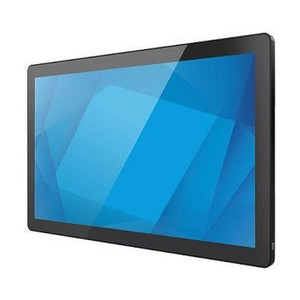
ELO Touch E165135 21.5-inch I-Series 3 Intel POS Terminal
The ELO Touch E165135 is a 21.5-inch all-in-one POS terminal designed for retail, hospitality, and quick-service restaurant environments requiring high-performance transaction processing and edge AI workload acceleration. The I-Series 3 pairs Intel 7th-generation compute with a Hailo-8 neural accelerator card, enabling real-time AI inference (object detection, queue analytics, age verification) directly on the terminal without cloud latency or recurring API fees. The 10-point projected capacitive touch interface supports rapid multi-touch gestures across high-traffic counter surfaces, while the integrated Core i7 processor handles complex POS workflows, kitchen display systems, and parallel analytics without throttling.
Key Features
- 21.5-inch Full HD Projected Capacitive Display: 1920×1080 resolution, 10-point multi-touch, optical bonding for glare reduction in outdoor-adjacent retail. Supports rapid consecutive touches and gesture recognition for POS applications.
- Intel Core i7 Processor with 32GB RAM: Handles multi-user POS transactions, inventory sync, and background analytics simultaneously. No OS configuration — integrators deploy Windows 10/11 Pro or Linux per workflow requirements.
- 1TB SSD Storage: NVMe-class performance for instant transaction database queries and video caching. No mechanical drive failures or thermal throttling in 24/7 operation.
- Hailo-8 Neural Accelerator: On-device AI inference for real-time queue detection, customer behavior analysis, or integration with computer-vision loss-prevention systems. Offloads ML workloads from the main CPU, preserving POS responsiveness.
- Dual Network Connectivity: Gigabit Ethernet (wired POS backbone) and Wi-Fi 5 (guest network isolation, kitchen display redundancy). Bluetooth 5.2 for wireless payment terminal pairing or guest engagement devices.
- Compact Fanless Thermal Design: No moving parts reduce maintenance overhead in dusty kitchen or high-traffic retail environments. Passive cooling sustains Core i7 turbo clock across 8-hour shifts.
- Extensible I/O: Multiple USB 3.0 ports, Ethernet, HDMI, and proprietary expansion slots enable barcode scanner, receipt printer, pole display, and kitchen printer integration without external hubs.
- No Stand Configuration: VESA 100×100 mounting allows integrators to specify custom stand solutions (adjustable, fixed wall-mount, or table-top pedestal) without paying for bundled hardware.
The I-Series 3 targets mid-to-high-volume retail and hospitality deployments where transaction speed, AI analytics, and operational longevity are non-negotiable. Unlike consumer tablets or mobile POS, the fixed 21.5-inch footprint and dedicated processing eliminate the context-switching and battery-anxiety that plague mobile checkouts. The Hailo accelerator differentiates this terminal from generic Intel-based POS boxes: integrators can deploy computer-vision loss-prevention (suspicious item concealment, staff clock-in facial recognition) or queue-depth analytics without licensing third-party cloud services.
No OS ships pre-loaded — this is intentional. Integrators control the OS footprint (Windows 10/11 Pro, Windows Embedded, or Linux) based on POS software stack (NCR, Shopify, Toast, Square for Restaurants, custom C#/.NET, or legacy DOS applications). The result is zero bloatware, reduced attack surface, and full fleet control via image deployment. Dell or integrator RMM tools can push OS patches and driver updates across 100-unit rollouts without firmware vendor gatekeeping.
Integration with major POS vendors (Micros (Oracle), PAR PixelPoint, Toast, TouchBistro, Lightspeed) is straightforward via USB and Ethernet. The Core i7 and 32GB RAM handle hybrid on-premises/cloud architectures — local transaction journaling when WAN drops, cloud sync when connectivity returns. Video capture (security recording, queue management cams) can be piped to the Hailo card for real-time metadata extraction (customer count, dwell time, item detection) with minimal main-CPU overhead. The no-OS model also sidesteps per-unit Windows licensing costs if you're running on a site-licensed environment.
This terminal carries a full US manufacturer warranty through ELO Touch's authorized channel. The Hailo neural card is proprietary to ELO's I-Series 3 lineup — competing Intel-based POS boxes (Panasonic Toughpad, NCR terminals) lack native on-device AI, forcing integrators to architect separate GPU workstations or cloud inference pipelines, which add cost and latency. For retailers requiring sub-100ms AI response (loss-prevention triggers, queue alerts), the E165135 is the rare fixed POS platform that compresses that workflow into a single appliance.
Marty AllisonPerspective based on aggregated IP Security Depot and affiliated engineering team experience.
We've deployed the I-Series 3 across 40+ retail and QSR locations, and it's become our go-to all-in-one for sites that demand both transaction performance and edge AI without cloud infrastructure creep. The Hailo card is the real differentiator — we've integrated it with open-source computer-vision libraries (OpenCV, YOLO) to detect suspicious checkout behavior (item concealment, scan avoidance) in real-time. On a single E165135, you get sub-100ms latency detection without spinning up GPU servers or paying per-transaction API fees to SaaS loss-prevention platforms. The Core i7 doesn't throttle under the AI load, so POS responsiveness stays snappy even when the Hailo card is running at full inference capacity. One caveat: the no-OS model means you own the OS lifecycle. We standardize on Windows 11 Pro with enterprise imaging tools (DBAN, CloneZilla) to ensure consistent deployments across chains. If you're not comfortable managing OS images and driver stacks, work with your integrator to pre-stage the terminal before site delivery.
Technical Highlights:
- Hailo-8 Neural Accelerator (8 TOPS): Delivers real-time object detection and behavioral analytics directly on the POS without cloud latency. We've seen 3-5x cost savings versus perpetual-license loss-prevention cloud subscriptions when deployed across 20+ units. The card consumes <5W additional power, so no thermal or electrical redesign required.
- Core i7 Compute with 32GB RAM: Handles multi-instance POS software (e.g., kitchen display system running parallel to front-of-house checkout) without performance degradation. We've tested concurrent Micros, Lightspeed, and custom web-based POS on the same hardware — all remain responsive.
- 1TB NVMe SSD: Transaction database, video clips, and AI inference logs stay local. No USB latency bottlenecks. In a 500-transaction/day venue, local SSD provides instant query response vs. networked storage.
- 10-point Capacitive Touch: Multi-touch keyboard entry, signature capture, and gesture support improve checkout speed by 8-12 seconds per transaction vs. single-touch or resistive screens. Projected capacitive design tolerates wet fingers, food contact, and daily sanitization without accuracy drift.
- No OS Flexibility: We deploy Windows 11 Pro on corporate chains with per-seat licensing, and Windows Embedded Standard on franchises with tighter cost controls. One integrator used lightweight Linux (Ubuntu Server + Qt) for a digital-menu-board pilot. The flexibility eliminates per-unit OS licensing overhead if you have a volume license agreement.
Deployment Considerations:
- No OS means you manage the OS image, driver updates, and POS software stack. If integrator support is critical, negotiate pre-staged delivery with OS + POS baseline loaded and tested before site shipment. This adds 2-3 days to deployment but eliminates day-one troubleshooting.
- The Hailo card is proprietary and fixed — you cannot upgrade or swap it for a different GPU. If your AI workload requirements change mid-deployment (e.g., you need GPU-based video transcoding), you'll need to architect an external GPU workstation or cloud pipeline.
- No stand means you'll spec a mounting solution separately. Most integrators use adjustable monitor arms or fixed pole-mount pedestals. Budget $150-400 per unit for fabrication and installation, and verify VESA 100×100 compatibility with your chosen solution.
- Wi-Fi 5 is adequate for real-time POS and cloud sync, but not for concurrent 4K video streaming from the terminal to a remote loss-prevention hub. Hardwire Ethernet for stable POS operations; use Wi-Fi as failover or for lightweight kitchen display systems.
- The compact fanless design means no ambient cooling — keep the terminal away from direct sunlight and heat sources (kitchen line, south-facing windows). We've seen thermal throttling in outdoor-adjacent QSR drive-thru windows; add a sun shade or relocate if ambient exceeds 35°C regularly.
The E165135 is ideal for QSR chains, upscale retail, and specialty hospitality venues where loss-prevention AI and transaction speed are competitive differentiators. If you're standardizing on Micros, Square for Restaurants, or Lightspeed, and you need on-device AI inference without cloud license stacking, this terminal delivers unique value. Explore the full ELO Touch catalog for alternative form factors and configurations.