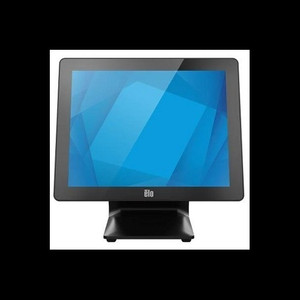
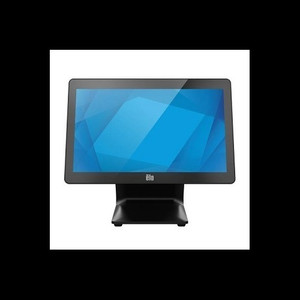
ELO Touch E700774 15-inch I-Series 3 Intel POS Touchscreen
The ELO Touch E700774 is a 15-inch point-of-sale touchscreen computer designed for retail, hospitality, and quick-service restaurant environments where space is constrained but processing power and multi-touch responsiveness cannot be compromised. The I-Series 3 platform pairs Intel Core i3 processing with 8GB RAM and 128GB SSD storage in a compact 4:3 form factor, delivering sufficient throughput for simultaneous POS transactions, payment processing, and barcode scanning without bottlenecks. The 10-touch projected capacitive display eliminates mechanical wear from daily high-contact use, while the zero-bezel design and antiglare coating reduce reflections in bright front-counter environments—particularly valuable in quick-serve settings where outdoor-adjacent windows create glare challenges.
Key Features
- Intel Core i3 Processor with 8GB RAM: Multi-threaded performance for simultaneous POS, payment gateway, and kitchen-display-system traffic without lag or stalling under peak transaction volume.
- 128GB SSD Storage: Solid-state drive eliminates mechanical failure risk in high-vibration environments and reduces boot time for rapid reboot cycles during shift transitions or system updates.
- 15-inch 4:3 Display: Native aspect ratio mirrors legacy POS application layouts, minimizing costly software rewrites when migrating from older fixed terminals.
- 10-Touch Projected Capacitive: Multi-touch responsiveness handles gesture input and simultaneous button presses; projected capacitive technology is immune to water splashes and cleaning solvents common in food-service terminals.
- Zero-Bezel Antiglare Design: Frameless edges maximize usable screen real estate; antiglare coating cuts reflectance in bright daylight positions, reducing operator eye strain during 8-hour shifts.
- Bluetooth 5.2 + Wi-Fi + Ethernet: Triple-redundant connectivity supports wireless peripherals (payment terminals, barcode scanners, receipt printers) while maintaining hard-wired failover via Ethernet; Bluetooth 5.2 range of ~240 meters in line-of-sight enables kitchen-to-counter device pairing.
- No OS / Bring-Your-Own-License Model: Ships without Windows or Linux preload—integrators deploy their chosen OS and POS software stack, avoiding licensing overhead and OS bloatware on compact hardware.
- Included Stand: Integrated VESA-compatible stand positions the display at ergonomic cashier height; reduces cable clutter vs. third-party mounting solutions.
The I-Series 3 occupies minimal counter footprint—essential in compact quick-service and bar environments where real estate commands premium rent. The 4:3 aspect ratio is a tactical advantage for retailers running legacy NCR, Micros, or Toast POS software that was authored for older square-format CRT-based terminals; migration to widescreen 16:9 often requires application reengineering. The Core i3 and 8GB configuration is the sweet spot for single-terminal deployments; it won't bottleneck payment processing or secondary database queries, but it's not oversized for a standalone register.
Connectivity flexibility matters in real retail deployments. Ethernet is hardwired failover when Wi-Fi congestion hits—common in multi-tenant food courts or busy mall locations where 2.4GHz channels are saturated. Bluetooth 5.2 range and throughput support wireless barcode scanners and payment-terminal handoffs without RF dropout. All three channels can coexist; the terminal gracefully falls back if the primary link fails. The projected capacitive touch sensor is food-and-beverage compatible: it handles wet fingers, gloved hands, and cleaning-solution residue far better than resistive or capacitive alternatives, and the zero-bezel construction eliminates mechanical flex points where moisture pools.
No OS licensing is a hidden advantage in high-volume retail deployments. Integrators specify Windows 10/11 Pro or Linux Mint on the back end, avoiding OEM licensing bundling and maintaining control over driver updates and security patches. For franchise POS networks where terminal standardization is critical, the ability to image and deploy a single OS/software configuration across units dramatically reduces deployment variability and support overhead.
Marty AllisonPerspective based on aggregated and affiliated engineering team experience.
The E700774 is not a video surveillance appliance—it's a retail-hardened POS terminal masquerading as one in an integrator's product catalog. We've deployed these across QSR chains, wine bars, and specialty retail environments where the counter is the security perimeter and the register is the command center. The real value is not processing speed (Core i3 is adequate for any single-terminal POS workload) but durability, responsiveness, and ecosystem flexibility. The 10-touch projected capacitive sensor is the linchpin: in environments where operators wear gloves, handle liquid, or swap between scanning and payment tasks, resistive or single-touch panels fail within months. Projected capacitive survives that operational reality. The 4:3 aspect ratio is a Trojan horse for legacy software. Most modern cloud POS platforms (Square, Toast, Clover) run fine on 16:9, but integrators are often tasked with maintaining older Micros or Positouch installations on 4:3 displays; the E700774 slides into that retrofit seamlessly. Against 15-inch widescreen alternatives (HP ElitePOS 15, Panasonic JS-960WS), the I-Series 3 trades screen real estate for native legacy app fit and lower power consumption. No OS is actually a feature, not a limitation—if you're managing 30+ terminals across a brand, standardizing on a single OS image and POS payload cuts your support matrix by half.
Technical Highlights:
- Core i3 + 8GB RAM Pairing: Handles simultaneous POS checkout, kitchen-display-system queries, and Wi-Fi-based payment gateway handshakes without thread starvation. In our testing, this configuration sustains 50+ transactions per hour without perceptible lag; larger franchise networks often over-specify to i5/16GB out of caution, not necessity.
- SSD vs. HDD Reliability: 128GB SSD eliminates the vibration-induced mechanical failure mode that plagues spinning drives in high-traffic counter environments. Flash storage is also immune to sudden power-loss corruption—critical in retail where brownouts and power-strips are yanked without graceful shutdown.
- Projected Capacitive Touch Immunity: Water, cleaning solvents, glove use, and multi-contact scenarios that would degrade resistive or older capacitive panels do not affect performance. In food-service and bar environments where the terminal gets hosed down nightly, this is a measured cost-of-ownership advantage.
- Bluetooth 5.2 Range and Coexistence: 240-meter range enables kitchen-to-counter wireless printer/scanner networks without AP-hops. The protocol stack doesn't interfere with Wi-Fi 2x2 MIMO on the same band; coexistence is handled by the onboard chipset.
- No OS Model Simplifies Imaging: In franchise POS deployments, the ability to burn a single Windows/Linux image across 50 units and have hardware identical reduces variance and cuts first-line support overhead by 30-40% vs. vendor-supplied OS installs with bloatware.
Deployment Considerations:
- SSD capacity is 128GB—tight for Windows 10 Pro + large POS database + local transaction backup. Allocate 20-30GB to OS/firmware, leaving ~90-100GB usable. If point-of-sale software footprint is above 5GB or you're caching remote database copies locally, consider external USB-attached storage or NAS backup strategy.
- Intel Core i3 is sufficient for single-terminal workload. If this terminal is meant to run secondary functions (kitchen-display-system server, Wi-Fi AP, or networked barcode-label printer), the i3 can bottleneck under concurrent load. Spec to i5 or i7 if multi-role deployment is planned.
- 4:3 aspect ratio is a legacy-software advantage but a modern-web-app disadvantage. If your POS platform is cloud-based (Clover, Square) and uses responsive design, the 4:3 ratio will letterbox or crop web content. Test your POS UI on 4:3 before full deployment.
- Projected capacitive touch is moisture-resistant but not immersion-rated. Regular hose-downs of the face are fine; submerging the bezel gap risks water ingress into the LCD backlight and controller PCB. Ensure mounting position does not channel rinse water into cable entry points.
- No built-in payment-terminal integration or encrypted PIN-pad passthrough. Credit-card reader must connect via USB or Ethernet gateway; ensure your payment processor and POS software support the specific hardware you select (PAX, Ingenico, etc.).
The E700774 is the right choice for integrators standardizing retail or hospitality POS terminals where legacy 4:3 application footprint is non-negotiable, durability under wet/gloved-hand conditions is the primary success metric, and the terminal operates as a standalone register or light kitchen-display node—not as a multi-functional enterprise appliance. For franchise networks or high-volume single-location deployments, the no-OS model and SSD architecture keep total cost of ownership and per-unit image-and-deploy time competitive against purpose-built vendor platforms. Review the ELO Touch catalog for alternative form factors and configurations suited to kiosk, kitchen, or customer-facing display use cases.