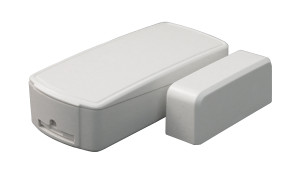
ELK Products ELK-M1Gold Hybrid Security & Automation Control Panel
The ELK-M1Gold is a hybrid security control panel built for integrators who need one board to handle intrusion, access, and automation logic instead of stitching together separate controllers. Positioned as a Security Control Panel with combined Wiegand and TCP/IP communication, the ELK-M1Gold (often searched as ELK M1Gold) is the right fit for residential and light-commercial jobs where a single rules-driven brain needs to talk to keypads, access readers, and IP-based monitoring on the same install.
Overview
At the core of the ELK-M1Gold is a rules engine built around "Whenever" events — each one can carry one or more ANDs and THENs, which means an integrator can chain conditions (door forced + after hours + zone armed) into a single automated response instead of programming redundant standalone rules. That flexibility is what separates a hybrid panel from a basic alarm board: the same hardware that arms and disarms zones can also drive lighting, locks, or notifications off the same event logic.
Key Features
- Wiegand and TCP/IP Communication: Wiegand support lets the panel drive 26-bit access control readers directly, while the (IP Only) Ethernet interface puts the panel on the network for remote programming and monitoring — useful when a site already has structured cabling and you want to skip a dedicated phone line.
- 26-Bit Wiegand Access Control, Up to 16 Points: Access control for up to 16 points on 26-bit Wiegand means the ELK-M1Gold can manage door-level credentials across a full floor or small building without adding a separate access controller — one panel, one programming interface.
- Keypad Type Reader Support: The panel accepts keypad-style readers for arm/disarm and code entry, the standard interaction point installers and end users will touch daily.
- Maximum 16 Keypads: Supporting touchscreens, LCD keypads, and arming stations up to 16 units total gives multi-entry buildings a keypad at every relevant door without hitting a wall on device count mid-project.
- Smoke Detection Analytics: Built-in smoke detection logic lets the ELK-M1Gold fold life-safety monitoring into the same rules engine as intrusion and access — one event stream instead of a separate fire panel workflow for smaller sites.
- Rules-Based Automation Engine: Because "Whenever" events support multiple ANDs and THENs, integrators can write conditional logic (e.g., a specific zone plus a specific time window) that triggers multiple outputs — this is what lets the ELK-M1Gold do double duty as an automation controller, not just an alarm brain.
Integration & Compatibility
The mixed Wiegand/TCP/IP communication path on the ELK-M1Gold is the detail to plan around during design: Wiegand handles the credential-reader side of access control, while the IP interface is what carries programming and monitoring traffic back to the network. On jobs where you're already spec'ing access control systems, the ELK-M1Gold's native 26-bit Wiegand support means you're not bridging a separate access panel into the alarm system — it's one box. For sites also running video, pair the install plan with a look at IP camera coverage and a PoE switch sized for the reader and keypad count. If you're scoping a mixed system for the first time, a access control planning guide is worth reviewing before finalizing keypad and point counts, and the broader ELK Products catalog has compatible keypads and expansion modules to round out the install.
What's in the Box
Package contents documented for the ELK-M1Gold center on the panel's compatible field devices rather than a fixed accessory kit: touchscreens, LCD keypads, and arming stations are supported (up to 16 total), sold and specified according to point count and access requirements per site.
Frequently Asked Questions
Q: How many keypads can the ELK-M1Gold support?
A: Up to 16 keypads, including touchscreens, LCD keypads, and arming stations.
Q: Does the ELK-M1Gold support access control?
A: Yes — it supports access control for up to 16 points using 26-bit Wiegand reader communication.
Q: What communication methods does the ELK-M1Gold use?
A: The panel communicates via Wiegand (for access readers) and TCP/IP (IP-only Ethernet interface for network monitoring and programming).
Q: Can the ELK-M1Gold handle automation logic, not just alarms?
A: Yes — its "Whenever" event engine supports multiple ANDs and THENs per rule, allowing conditional automation alongside standard intrusion monitoring.
Q: Does the ELK-M1Gold include smoke detection?
A: Yes — smoke detection is supported as part of its monitored analytics.
The ELK-M1Gold crosses my desk most often on jobs where the customer wants alarm, access, and automation on one board instead of three. The spec that matters most here is the 26-bit Wiegand access control for up to 16 points combined with the IP-only Ethernet interface — that's a real hybrid panel, not an alarm board with an access add-on bolted on.
Technical Highlights:
- 26-Bit Wiegand Access, 16 Points: covers a full small-to-mid building's worth of doors on native Wiegand without a separate access controller in the rack.
- Up to 16 Keypads: touchscreens, LCD keypads, and arming stations combined — enough device density for multi-entry commercial spaces, not just a single-door residential setup.
- Whenever Rules Engine (Multiple ANDs/THENs): lets you write one rule that checks several conditions before firing several outputs, instead of stacking redundant single-condition rules.
Deployment Considerations:
- Plan your network drop early — the TCP/IP interface is IP-only, so there's no legacy dial-up fallback path baked into that communication channel.
- Because access and intrusion share the same rules engine, get your ANDs/THENs mapped out on paper before programming — with 16 keypads and 16 access points in play, undocumented rule chains get hard to audit fast.
Where the ELK-M1Gold earns its spot is a small office or multi-tenant building that wants door access, intrusion monitoring, and basic automation (lighting, locks, notifications) driven off one rules engine instead of three separate systems talking to each other awkwardly.