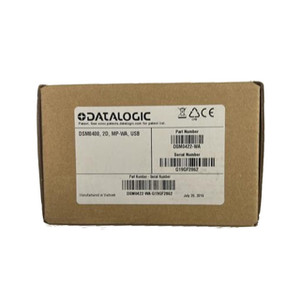
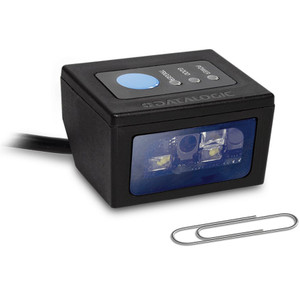
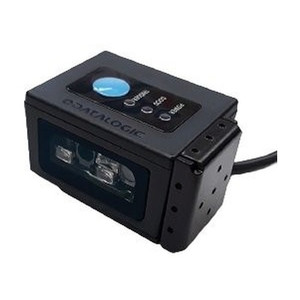
Datalogic DSM0422-WA 2D Scan Engine Module
The DSM0422-WA is a decoded 2D scan engine module engineered for OEM integration into embedded scanning solutions. Part of the barcode scanner family, this ultra-compact module delivers 60 fps imaging with onboard decoding and multi-protocol USB connectivity—eliminating the need for external decode hardware and reducing system complexity in kiosk, self-service terminal, and medical device deployments.
Key Features
- 2D Imager with 60 fps Capture: High-speed frame rate ensures consistent barcode capture in high-throughput environments. At 60 fps, the module handles rapid scanning sequences without dropped reads—critical for parcel sorting, warehouse automation, and retail checkout lines where throughput directly affects operational cost.
- Onboard Decoded Processing: Decoding happens inside the module, not on the host system. This reduces latency and eliminates dependency on external processors, freeing up host CPU cycles for other functions—especially valuable in resource-constrained embedded systems and legacy terminal architectures.
- Multi-Protocol USB Connectivity: Supports HID (keyboard emulation), COM (serial), and standard USB modes. HID mode plugs directly into any terminal without driver installation; COM mode integrates with older serial-based infrastructure; standard USB works with modern systems. This flexibility removes integration barriers across mixed deployment environments.
- Compact Form Factor (25 x 20 x 30 mm, 27g): Weighing just under an ounce, the DSM0422-WA fits into space-constrained designs—handheld terminals, compact kiosks, and medical devices—without adding bulk or thermal load. Small enough to mount in tight spaces, yet engineered to industrial durability standards.
- Omnidirectional Barcode Support: Native decoding for all standard 1D formats (UPC, Code 128, Code 39, EAN) and 2D formats (QR, Data Matrix, PDF417, Aztec). Handles barcodes at various angles and orientations, reducing operator training and re-scan rates in mixed-barcode environments.
- Flexible OEM Mounting: Designed for design-in, not retrofit. The module accepts custom mounting brackets and cable configurations, allowing integrators to embed scanning into proprietary enclosures and control panels without structural redesign.
Integration and Deployment Context
The DSM0422-WA targets system integrators building new scanning workflows or retrofitting legacy infrastructure. Kiosk manufacturers use it to standardize barcode input across payment terminals and parcel drop-off stations without redesigning the host CPU. Medical device OEMs embed it for specimen or patient ID scanning without adding separate USB peripherals. Warehouse automation engineers integrate it into embedded sorters and conveyor-mounted readers where power and space budgets are tight.
The decoded output simplifies host integration—your application receives clean, ready-to-use barcode data, not raw image streams. USB connectivity via HID means zero driver overhead on Windows, macOS, or Linux systems; COM mode pairs with legacy serial interfaces on industrial controllers and older PLC networks.
When to Choose a Different Model
If your application requires imaging-only output (raw pixel data for custom decoding), consider a raw-image variant in the Datalogic scan engine portfolio. If you need higher frame rates beyond 60 fps or larger sensor resolution for long-distance reads (>12 inches), consult Datalogic's higher-end decoder modules. For handheld cordless scanning, explore Datalogic's mobile computer or cordless scanner families instead.
Warranty
The DSM0422-WA includes a 1-Year Limited Warranty covering defects in materials and workmanship under normal operating conditions.
Frequently Asked Questions
Q: Does the DSM0422-WA require host-side software to operate?
A: No. In HID mode, it emulates a keyboard and works immediately on any USB host. In COM mode, it outputs decoded barcode data as serial strings. Onboard decoding means the module handles all barcode processing—the host simply receives text output.
Q: What barcode formats does the DSM0422-WA decode?
A: All standard 1D formats (UPC, EAN, Code 128, Code 39, Codabar, Interleaved 2 of 5) and 2D formats (QR Code, Data Matrix, PDF417, Aztec Code). It supports mixed-format deployments without configuration changes.
Q: Is the DSM0422-WA suitable for harsh industrial environments?
A: The module itself is rated for standard operating temperatures and humidity. For harsh environments (dust, temperature extremes), pair it with appropriate protective enclosures and cooling/heating. Consult the datasheet for exact environmental specs.
Q: Can the DSM0422-WA be integrated into a custom medical device?
A: Yes—the module is designed for OEM integration into medical devices, kiosks, and terminals. You will need to handle regulatory compliance (CE marking, 21 CFR Part 11, IEC 60601 if applicable) at the system level. The module itself provides the barcode scanning function.
Q: What is the maximum scanning distance for the DSM0422-WA?
A: Distance depends on barcode size and lighting. For typical UPC codes, expect reliable reading at 2–8 inches; for larger 2D codes (QR, Data Matrix), 4–12 inches or more. Test with your specific barcode format and environment before final integration.
Q: Does the DSM0422-WA support Bluetooth or wireless connectivity?
A: No—the DSM0422-WA is wired USB only. If wireless is required, consider Datalogic cordless scanner modules or mobile computer platforms that add wireless functionality at the application level.
Ted PerryPerspective based on aggregated IP Security Depot and affiliated engineering team experience.
The DSM0422-WA is a textbook example of embedded decode simplification. Most OEMs trying to add barcode capability to a kiosk or medical device face a choice: bolt on a USB scanner (bulky, expensive) or license decode software and build an image pipeline (complex, CPU-hungry). The DSM0422-WA eliminates both problems—it's a complete scanning solution in a 27-gram module that outputs decoded text via USB HID or serial. That's powerful for integrators working under space and power constraints.
Technical Highlights:
- 60 fps Frame Rate: Fast enough for high-speed conveyor reads and rapid multi-scan sequences. At 60 fps, orientation and lighting variations matter less—the module captures enough frames per second to find a readable barcode even if the operator moves quickly or the angle shifts mid-scan.
- Onboard Decoding Eliminates External Processing: No host CPU overhead for barcode algorithm execution. In embedded systems running tight real-time loops, every CPU cycle counts. The DSM0422-WA decodes internally, freeing your application to focus on business logic instead of image processing.
- Three USB Modes (HID, COM, Standard): HID mode is plug-and-play on Windows, macOS, and Linux—zero driver installation. COM mode talks to legacy serial interfaces on factory automation controllers from the 1990s and 2000s. Standard USB mode integrates with modern middleware. One module, three deployment scenarios.
Deployment Considerations:
- Scanning distance is bounded—expect 2–8 inches for typical UPC, longer for larger 2D codes. If your use case involves long-range reads (>12 inches), this is not the right choice; escalate to a higher-resolution fixed-mount scanner.
- USB power draw is modest (exact wattage unspecified in the datasheet excerpt, but at 27 grams it's unlikely to exceed 5W), so even low-power host systems can supply it. That said, test your specific USB power budget before committing to production.
- No wireless. If the host terminal must be cordless or remote, integrate a wireless gateway at the system level or select a Datalogic cordless handheld scanner instead.
The DSM0422-WA is the right choice when space is precious, host CPU is limited, and you need reliable decoding without external infrastructure. Kiosk manufacturers, medical device OEMs integrating specimen ID tracking, and warehouse automation engineers building compact embedded sorters will find immediate value here. If you're retrofitting a legacy system with poor USB support, the COM mode support is a real differentiator—few modern decoders bother with serial fallback anymore.