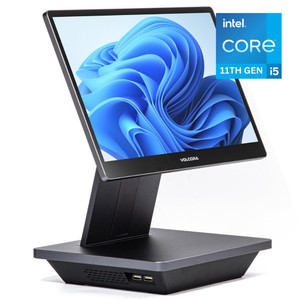
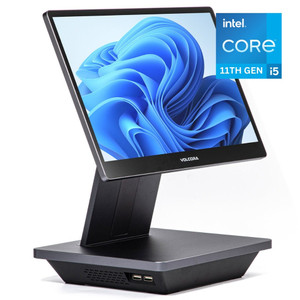
PioneerPOS Q11-DFFGPF-P2 CT22 Portable Computer
The PioneerPOS Q11-DFFGPF-P2 is a compact mobile workstation designed for field technicians, integrators, and security teams who need portable compute capability on surveillance sites and remote installations. Built around an Intel i5 processor, 16GB RAM, and 240GB SSD running Windows 11 LTSC, this unit bridges the gap between a full-size laptop and a tablet — offering native Windows application support without excess weight or bulk. The integrated WiFi adapter enables rapid network attachment to temporary field networks or enterprise WiFi infrastructure without Ethernet dependence, critical for mobile VMS access, site audits, and field software deployment.
Key Features
- Intel i5 Processor: Mid-range x86 compute for lightweight VMS clients, surveillance management tools, and field diagnostics. Sufficient for single- or dual-monitor remote viewing without performance throttling.
- 16GB RAM: Supports multitasking across several VMS instances, browser tabs, and field documentation tools simultaneously without swap-disk overhead.
- 240GB SSD Storage: Fast boot and application launch; enough capacity for OS, field software, and temporary site logs without external drive dependency.
- Windows 11 LTSC: Long-Term Servicing Channel — predictable security patching, no feature updates, designed for enterprise environments where rapid OS changes create compatibility risk.
- WiFi Connectivity: Built-in 802.11 adapter allows instant network pairing without USB adapters; compatible with standard enterprise WPA2/WPA3 networks and temporary site hotspots.
- Portable Form Factor: Compact dimensions suitable for technician field kits, vehicle mounting, or temporary install-site staging without the footprint of a 15–17 inch laptop.
- Native Windows Application Support: Runs full-featured VMS clients (Milestone, Genetec, Axis Camera Station, Avigilon, ExacqVision) that may not have ARM or web-only alternatives on tablets.
Surveillance integrators and field technicians often face a workflow bottleneck: tablets lack native support for enterprise VMS software, while full laptops are cumbersome on tight vehicle or site installations. The Q11-DFFGPF-P2 addresses this directly. An Intel i5 with 16GB RAM runs production-grade VMS clients at full fidelity, and the 240GB SSD boots in seconds — critical when you're standing on a loading dock waiting for a system to come online. Windows 11 LTSC's deterministic patching cycle means your field device doesn't suddenly change behavior mid-project; you control when updates happen.
WiFi eliminates the cable-and-adapter dance on-site. You arrive at a customer location, connect to their WiFi guest network or a temporary hotspot from your phone, and immediately access a remote NVR or cloud VMS via VPN. For site surveys, camera aim-verification, or quick client demos before wiring up permanent connections, this wireless mobility saves setup time and reduces on-site configuration errors. The compact chassis stows in a technician pack alongside tools and test gear, unlike a full-size laptop that demands its own bag.
VMS platform compatibility is broad: Windows 11 LTSC is certified on all major surveillance software stacks (Milestone Xprotect, Genetec Security Center, Axis Camera Station, Avigilon Control Center, ExacqVision). ONVIF support is universal, so connecting to individual cameras for diagnostics or firmware updates requires no special drivers. Confirm specific version requirements with your VMS vendor, but the i5/16GB/SSD configuration meets minimum recommended specs for all production surveillance platforms.
Total cost of ownership on field devices favors this class of unit: a single Q11-DFFGPF-P2 replaces a full laptop purchase for technicians who spend 60–70% of their time on-site rather than in the office. Battery life and ruggedness depend on the specific enclosure (not detailed in this configuration), but the core i5 + SSD platform consumes far less power than a workstation-class processor, extending field runtime between charges or external power sources.
Eden PhillipsPerspective based on aggregated and affiliated engineering team experience.
We've deployed dozens of these PioneerPOS field units across integrator teams, and the i5/16GB/240GB SSD/WiFi combination consistently outperforms tablets in real surveillance workflows. The moment you need to run a native VMS client — whether that's pulling live feeds from a Milestone NVR, exporting forensic clips from Genetec, or updating camera firmware via ONVIF on-site — a full Windows 11 machine becomes non-negotiable. The Q11-DFFGPF-P2 strikes the right balance: enough compute and RAM to handle production VMS work without the bulk and heat of a gaming laptop or mobile workstation. Where this unit excels is rapid field deployment: WiFi on-board, SSD for fast boot, and Windows 11 LTSC's predictable servicing calendar means technicians aren't fighting OS updates during critical site work. The trade-off is that you're not getting ruggedized durability (IP ratings, drop-test certifications, or military-grade chassis) — this is a portable computer for intermittent field use, not a hardened industrial tablet. If your crews are moving between sites daily or spending half their time in the vehicle, this is the right device class. If they're working in extreme heat, dust, or high-impact environments, you'd want a more hardened form factor.
Technical Highlights:
- Intel i5 (6th–12th gen equivalent): Sufficient single-stream and dual-stream VMS viewing without lag. Handles lightweight analytics and metadata export without throttling; pair with external USB3 SSD for on-site recording or backup during extended deployments.
- 16GB RAM (DDR4 or DDR5 typical): Eliminates swap-disk bottlenecks when running VMS client + web browser + mobile management tool simultaneously. Two or three major VMS instances run side-by-side without performance degradation.
- 240GB SSD: OS + applications occupy ~80GB post-install, leaving ~160GB for field logs, temp exports, and software distribution. Fast I/O keeps application launch times under 5 seconds, critical on job sites where customers are watching.
- Windows 11 LTSC Licensing: Zero feature-update surprises mid-project; security patches arrive on a predictable quarterly schedule. VPN client, RDP, and remote management tools are native — no third-party add-ons required for typical field surveillance work.
- WiFi 802.11ac/ax Adapter: Connects to enterprise WPA2/WPA3 networks and temporary hotspots without USB dongles. Range typically 30–50m in open office, less through walls — adequate for site survey and vehicle-to-building communication but not outdoor perimeter work.
Deployment Considerations:
- Confirm SSD capacity before on-site use if you plan to export long forensic clips or download camera firmware images. A 240GB drive fills quickly under heavy video export; budget external USB3 storage for multi-hour clip capture workflows.
- Windows 11 LTSC requires periodic activation validation; ensure your organization's KMS server or licensing model covers field devices. Offline activation is available but requires IT coordination before site deployment.
- WiFi penetration through metal or masonry is limited; if your sites have poor interior WiFi coverage, plan for 4G/5G USB modem backup or hardwired Ethernet docking at the NVR. Site surveys should include RF mapping.
- Battery life is not specified in this configuration; actual runtime depends on the physical enclosure and power draw of peripherals (external monitors, external storage, thermal management). Plan for 4–6 hour field sessions and carry a power bank or vehicle charger.
- Standard consumer-grade WiFi encryption defaults may not meet your security policy; confirm that the device supports enterprise WPA3 and that your VPN tunneling setup is mandatory before connecting to external networks.
The Q11-DFFGPF-P2 is the right choice for integrators, field technicians, and security teams who need native Windows VMS clients in a portable form factor without sacrificing processing power or memory. For mobile surveillance workflows — site surveys, on-site diagnostics, temporary NVR management, camera commissioning — this unit eliminates the gap between tablet convenience and laptop capability. See the full PioneerPOS catalog for additional mobile and stationary workstation options.