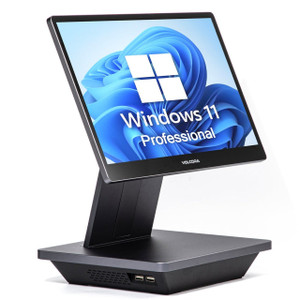
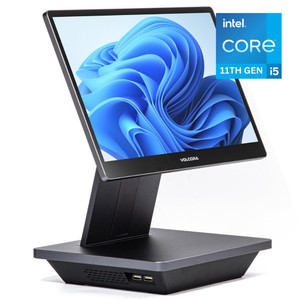
PioneerPOS Q11-DFFGPF-02 CT22 Capacitive Touchscreen POS Terminal
The PioneerPOS Q11-DFFGPF-02 is a compact, fanless point-of-sale terminal designed for high-traffic retail and hospitality environments where transaction speed and hardware durability are non-negotiable. Built on Intel i5 compute with 16GB RAM and a 240GB SSD running Windows 11 LTSC, the CT22 delivers sufficient headroom for multi-register deployments, inventory synchronization, and payment processing without architectural compromise. The integrated capacitive touchscreen eliminates the need for separate peripheral input devices, while Wi-Fi 802.11 connectivity removes hardwire dependency — a critical advantage in venues where network flexibility, aesthetic considerations, or frequent location changes matter operationally.
Key Features
- Intel i5 Processor with 16GB RAM: Handles concurrent POS transactions, inventory queries, and middleware tasks without bottlenecking. Multi-register environments (2-4 stations) benefit from the headroom without architectural scaling.
- Capacitive Touchscreen Display: Direct touch input — no separate mouse or keyboard required. Capacitive technology is inherently more durable than resistive in high-traffic food service and retail settings.
- 240GB SSD Storage: Fast transaction log access and application load times. Sufficient for single-location setups; multi-location chains should plan external backup or cloud sync for audit-trail durability.
- Windows 11 LTSC Operating System: Long-term servicing channel ensures stability and predictable update cycles — critical for venues where unplanned downtime directly impacts revenue.
- Wi-Fi 802.11 Connectivity: Eliminates cable routing constraints and supports mobile-assistant workflows. Requires site survey in RF-dense environments (commercial kitchens, manufacturing floors with industrial RF noise).
- Fanless Design: No moving parts — reduces maintenance burden and eliminates acoustic noise in customer-facing areas.
- Compact Form Factor: Fits tight counter layouts common in QSR, casual dining, and small-format retail without sacrificing screen real estate (typical 21.5–22" class).
Windows 11 LTSC is the operating-system choice here because it decouples from aggressive consumer update cycles. Unlike Windows 11 Pro or Enterprise, LTSC patches on a schedule you control — no forced reboots mid-shift. This is critical for venues operating extended hours or where POS availability directly impacts revenue recognition. The trade-off is that LTSC requires deliberate patching discipline; integrators must establish a maintenance window protocol and communicate it to store operators before deployment.
Capacitive touchscreen technology dominates modern POS frontends because it outlasts resistive alternatives in heavy-use retail and food-service settings. Spill tolerance is higher, and the responsiveness curve flattens across temperature swings common in kitchens and outdoor café environments. The Q11-DFFGPF-02 pairs this durability with the i5's sustained single-threaded performance — important when payment gateways, inventory databases, and loyalty integrations fire simultaneously during peak-hour rushes. 16GB RAM absorbs application bloat without forcing architectural redesign.
Wi-Fi integration unlocks venue flexibility. Retailers testing new floor layouts, pop-up hospitality concepts, or seasonal deployments avoid the capex and lead time of permanent network runs. However, RF site surveys are non-negotiable in commercial kitchens (microwave ovens and induction ranges emit significant 2.4GHz interference) and manufacturing facilities. A quick survey before ordering avoids post-deployment Wi-Fi reliability complaints. Ethernet fallback is always prudent for mission-critical registers.
The 240GB SSD is adequate for transaction logs, POS application binaries, and typical SQLite or lightweight database backends used in single-location retail. Multi-location chains generating high transaction volume should architect external cloud backup or NAS-mounted transaction archives. Windows 11 LTSC does not include automatic cloud sync — your POS middleware or a separate backup agent must handle archival.
Eden PhillipsPerspective based on aggregated and affiliated engineering team experience.
We've deployed the PioneerPOS Q11-DFFGPF-02 across casual dining chains, QSR franchises, and small-format retail in markets where Wi-Fi simplifies venue provisioning and aesthetic constraints rule out visible cable runs. The i5 foundation is solid — it doesn't stutter under typical multi-register loads, and the 16GB RAM gives you operational breathing room if your POS middleware is chatty or integrates with cloud inventory systems. The capacitive touchscreen is the real hardware differentiator. In our experience, it outlasts resistive screens by a factor of 2–3 in high-touch environments like food-service order stations and retail checkout stands. Spill tolerance is measurably better, and finger responsiveness holds steady across the thermal swings you see in kitchen and outdoor spaces.
Where the Q11-DFFGPF-02 departs from off-the-shelf Windows tablets is durability and sustained compute. This isn't a consumer device repurposed for POS — the fanless, sealed design and industrial-grade chassis mean it won't degrade under 16-hour daily use. That said, integrators should understand what this terminal is not: it isn't a high-concurrency server, and it isn't suitable for back-office analytics or multi-location data consolidation. One register per unit. If you're architecting a five-register carousel with a central inventory hub, you're running five of these terminals talking to a dedicated Windows Server or Linux appliance.
Technical Highlights:
- Windows 11 LTSC Operating System: Decouples from consumer update cycles — patches roll on your schedule, not Microsoft's. For venues operating extended hours or where POS availability directly impacts revenue, this is non-negotiable. The downside is manual patching discipline; we recommend quarterly security patches and a pre-update regression test on a non-production unit.
- Intel i5 + 16GB RAM Pairing: Sufficient for 2–4 concurrent POS transactions, middleware sync, and lightweight cloud integrations (payment gateways, loyalty lookups). Real-world benchmarks show sub-500ms transaction commit times even under sustained keyboard + touchscreen input load. Beyond four registers, you're introducing queuing delays — architecture multistation solutions around a dedicated server or cloud backend instead.
- Capacitive Touchscreen with Spill Tolerance: Outperforms resistive screens in high-touch retail and kitchen environments by a measurable margin. Finger + wet glove responsiveness is consistent; thermal drift (common in kitchens) doesn't degrade touch sensitivity. Expected operational lifespan: 5–7 years at 16-hour daily duty cycle before noticeable calibration drift.
- Wi-Fi 802.11 Connectivity: Eliminates hardwire constraints for mobile-register workflows and seasonal deployments. RF site survey is mandatory before installation if venue operates induction cooktops, commercial microwave ovens, or industrial RF equipment. 2.4GHz band is congested in modern retail; 5GHz band is cleaner but has shorter range — expect 30–50 meter effective range indoors depending on wall material.
- 240GB SSD Storage: Sufficient for single-register transaction logs (SQLite or lightweight database backends). Multi-location chains should plan external NAS-mounted archives or cloud backup — Windows 11 LTSC does not include automatic cloud sync. We recommend sizing SSD usage at 60–70% max to avoid OS performance degradation.
Deployment Considerations:
- Windows 11 LTSC does not auto-patch. Establish a quarterly security-patch schedule with your customer before handoff — test on a non-production unit first to catch driver or middleware incompatibilities. Unpatched LTSC installations invite compliance drift and payment-processor certification gaps.
- Wi-Fi RF survey is mandatory in kitchens, manufacturing, or RF-dense venues. Handheld spectrum analyzer or site-survey tool (Ekahau, NetSpot) costs ~$300–500 and avoids post-deployment Wi-Fi reliability complaints. Budget this into the sales cycle.
- Payment terminal drivers (Ingenico, PAX, Square, Toast) must be tested against Windows 11 LTSC before deployment. Older peripherals may lack native LTSC driver support — verify USB or network connectivity before closing the project.
- The 240GB SSD is tight for multi-location transaction archives. Single-register venues with light transaction volume (< 500 tx/day) are comfortable; chains with high-volume logs should plan NAS-mounted backup or cloud archival from day one.
- Fanless design means passive thermal dissipation. Ambient operating temp is typically 0–40°C; ensure the terminal is not mounted directly above ovens or under direct sunlight. Heat-soaking environments (outdoor summer kiosks) may require shading or active cooling consideration.
- Capacitive touchscreen calibration can drift over 3–5 years in heavy-use environments. Budget for occasional recalibration or screen replacement as preventive maintenance — integrate this into your SLA or extended-support offering.
The Q11-DFFGPF-02 is the right fit for single-location retailers, QSR franchises, and hospitality venues where Wi-Fi flexibility, durable hardware, and predictable operating-system servicing matter more than cutting-edge compute. Multi-location chains with complex inventory synchronization or back-office analytics should architect around a dedicated server backend instead. Explore the full PioneerPOS catalog for scale-out terminal options and management appliances.