
Ubiquiti UWB-XG vs TP-Link EAP225-OUTDOOR: Specification Comparison
Both the Ubiquiti UWB-XG and the TP-Link EAP225-OUTDOOR are Wi-Fi 5 (802.11ac) outdoor-capable wireless access points, making them broadly cross-shoppable by buyers seeking enterprise or prosumer outdoor Wi-Fi coverage. However, they occupy significantly different performance tiers: the UWB-XG targets high-density enterprise venues with tri-band radios and a 10 GbE uplink, while the EAP225-OUTDOOR targets cost-conscious deployments needing basic dual-band outdoor coverage. This comparison covers throughput and radio architecture, power and environmental ratings, and management and uplink infrastructure.
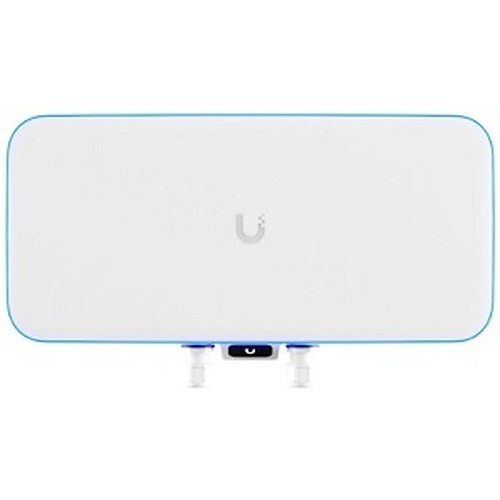
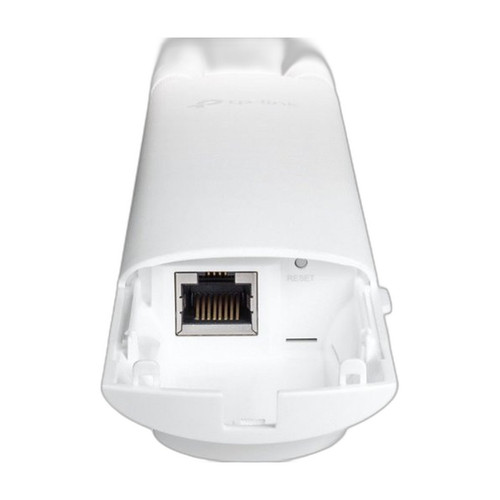
In This Guide
- Which access point delivers more throughput and radio capacity for dense deployments?
- How do these APs compare on power requirements and environmental durability?
- What management capabilities and uplink infrastructure does each access point support?
- Which should you choose: the UWB-XG or the EAP225-OUTDOOR?
- Side-by-Side Specs
- FAQ
Which access point delivers more throughput and radio capacity for dense deployments?
The Ubiquiti UWB-XG uses three independent 4x4 MIMO radios, each rated at 1.7 Gbps, for a combined aggregate throughput across tri-band operation. It is rated for 1,500+ concurrent clients and provides eight BSSIDs per radio (24 total), making it purpose-built for stadiums, auditoriums, and other high-density venues.
The TP-Link EAP225-OUTDOOR is a dual-band AC1200 access point, combining 867 Mbps on the 5 GHz band and 300 Mbps on the 2.4 GHz band for a combined maximum of 1,200 Mbps. Concurrent client capacity and BSSID count are not specified in the provided data.
The throughput gap is significant: the UWB-XG offers roughly 5.1 Gbps of aggregate radio capacity across three bands versus 1.2 Gbps across two for the EAP225-OUTDOOR. For any deployment requiring more than a few dozen simultaneous clients, the UWB-XG is in a different class entirely.
How do these APs compare on power requirements and environmental durability?
The UWB-XG requires PoE++ (802.3bt) at 44–57V DC with a maximum draw of 31W. This means the upstream switch or injector must support 802.3bt; standard 802.3af or 802.3at switches cannot power it without an upgrade or a dedicated injector. Its operating temperature range is -40°C to 70°C, covering extreme cold and heat environments. Weight is 3.2 kg. An IP rating is not listed in the provided specifications.
The TP-Link EAP225-OUTDOOR draws under 13W and is powered via standard 802.3af PoE, compatible with the vast majority of existing PoE switches and injectors. It carries an IP65 ingress protection rating, confirming dust-tight and water-jet resistance. Its operating temperature range is -30°C to 65°C.
For installations where existing 802.3af infrastructure is in place, the EAP225-OUTDOOR imposes no additional switching investment. The UWB-XG demands 802.3bt-capable ports. On environmental protection, the EAP225-OUTDOOR's IP65 rating is a specified, verifiable figure; no IP rating is available in the UWB-XG's provided specs. Temperature range favors the UWB-XG at the cold extreme (-40°C vs -30°C).
What management capabilities and uplink infrastructure does each access point support?
The UWB-XG integrates with Ubiquiti's UniFi wireless management platform and supports RadSec, captive portal, dynamic RADIUS VLAN assignment, guest isolation, and eight BSSIDs per radio. Its uplink port is a 10 GbE ICM interface, supplemented by a secondary 1 GbE RJ45 port. The 10 GbE uplink is critical: three 1.7 Gbps radios can collectively saturate a 1 GbE uplink, so the 10 GbE port prevents backhaul bottlenecks under load.
The TP-Link EAP225-OUTDOOR is managed via TP-Link's Omada platform (not explicitly named in the provided spec data, but implied by the EAP product line designation). Its uplink is a single Gigabit Ethernet port. Specific management features such as VLAN tagging, RADIUS integration, or captive portal support are not detailed in the provided specifications.
For enterprises requiring RADIUS authentication, dynamic VLAN assignment, or centralized UniFi management across multiple sites, the UWB-XG provides documented feature support. The EAP225-OUTDOOR's management feature set cannot be confirmed from the supplied data. The 10 GbE vs. 1 GbE uplink disparity is operationally decisive for high-throughput deployments.
Which should you choose: the UWB-XG or the EAP225-OUTDOOR?
Our take: The UWB-XG is the stronger choice when the deployment demands high client density, multi-band radio capacity, and a non-bottlenecked backhaul. Specifically: it delivers up to 5.1 Gbps aggregate radio throughput (three 4x4 MIMO radios at 1.7 Gbps each) versus 1.2 Gbps dual-band on the EAP225-OUTDOOR; it supports 1,500+ concurrent clients versus an unspecified capacity on the EAP225-OUTDOOR; and its 10 GbE uplink eliminates backhaul saturation that a 1 GbE port would face under the UWB-XG's own radio load. The EAP225-OUTDOOR has practical advantages the UWB-XG's spec sheet does not counter: a verified IP65 weatherproofing rating, 802.3af compatibility with standard PoE switches drawing under 13W, and a substantially lower equipment cost implied by its market tier. Choose the EAP225-OUTDOOR for basic outdoor coverage with existing 802.3af infrastructure; choose the UWB-XG for dense enterprise venues committed to the UniFi ecosystem with 802.3bt switching.
Side-by-Side Comparison
Spec-for-spec, from manufacturer data.
| Specification | Ubiquiti UWB-XG | TP-Link EAP225-OUTDOOR |
|---|---|---|
| Wi-Fi Standard | Wi-Fi 5 (802.11ac) | Wi-Fi 5 (802.11ac) |
| Radio Architecture | Tri-band, 4x4 MIMO (3 radios) | Dual-band (5 GHz + 2.4 GHz) |
| Aggregate Throughput | 5.1 Gbps (3 × 1.7 Gbps) | AC1200 (867 + 300 Mbps) |
| Concurrent Clients | 1,500+ | — |
| BSSIDs | 24 total (8 per radio) | — |
| Uplink Port | 10 GbE ICM + 1 GbE RJ45 | Gigabit Ethernet |
| PoE Standard | PoE++ (802.3bt) | PoE (802.3af) |
| Power Consumption | 31W max | Under 13W |
| Input Voltage | 44–57V DC | — |
| Operating Temp | -40°C to 70°C | -30°C to 65°C |
| IP Rating | — | IP65 |
| Weight | 3.2 kg | — |
| VLAN Support | Dynamic RADIUS VLAN, guest isolation | — |
| Management Platform | UniFi (RadSec, captive portal) | — |
| Certifications | CE, FCC, IC | — |
| Mount Types | Wall, Pole (1–3"), VESA | — |
Frequently Asked Questions
Which should you choose: the UWB-XG or the EAP225-OUTDOOR?
The UWB-XG is the stronger choice when the deployment demands high client density, multi-band radio capacity, and a non-bottlenecked backhaul. Specifically: it delivers up to 5.1 Gbps aggregate radio throughput (three 4x4 MIMO radios at 1.7 Gbps each) versus 1.2 Gbps dual-band on the EAP225-OUTDOOR; it supports 1,500+ concurrent clients versus an unspecified capacity on the EAP225-OUTDOOR; and its 10 GbE uplink eliminates backhaul saturation that a 1 GbE port would face under the UWB-XG's own radio load. The EAP225-OUTDOOR has practical advantages the UWB-XG's spec sheet does not counter: a verified IP65 weatherproofing rating, 802.3af compatibility with standard PoE switches drawing under 13W, and a substantially lower equipment cost implied by its market tier. Choose the EAP225-OUTDOOR for basic outdoor coverage with existing 802.3af infrastructure; choose the UWB-XG for dense enterprise venues committed to the UniFi ecosystem with 802.3bt switching.
Is the UWB-XG or EAP225-OUTDOOR better for larger outdoor deployments like stadiums or event venues?
The UWB-XG is purpose-specced for that scenario: three 4x4 MIMO radios, 1,500+ rated concurrent clients, 24 total BSSIDs, and a 10 GbE uplink prevent the radio and backhaul saturation that would limit the EAP225-OUTDOOR (AC1200 dual-band, 1 GbE uplink, no concurrent client count specified) in high-density conditions.
Can I power the UWB-XG from my existing PoE switch?
Only if your switch supports PoE++ (802.3bt). The UWB-XG requires 44–57V DC at up to 31W, which exceeds both 802.3af (15.4W) and 802.3at (30W) standards. The EAP225-OUTDOOR, by contrast, draws under 13W and works with standard 802.3af ports.
Which access point is rated for outdoor weatherproofing?
The TP-Link EAP225-OUTDOOR carries a documented IP65 rating (dust-tight, protected against water jets). The provided specifications for the UWB-XG do not include an IP ingress protection rating. Both units specify form factors suitable for outdoor mounting, but only the EAP225-OUTDOOR has a verifiable IP65 weather-resistance figure in the supplied data.
More Wireless Access Point Comparisons
Get a Second Opinion on Your Camera Choice
Share your site layout, coverage goals, and budget. Our team will validate the camera selection, flag anything we would change, and recommend products that match the use case.