
SDC S6101PU36B vs SDC S6203PU36EEK: Specification Comparison
Both the SDC S6101PU36B and S6203PU36EEK are wired, networked access control door controllers rated for up to 63 doors with a maximum of 250,000 user credentials. They share the same SDC platform, credential type support, and lifetime warranty. This comparison examines where their specified communication protocols, monitoring outputs, mounting options, and stated application contexts diverge—information relevant to integrators selecting a controller for a new deployment or a retrofit into an existing access control infrastructure.
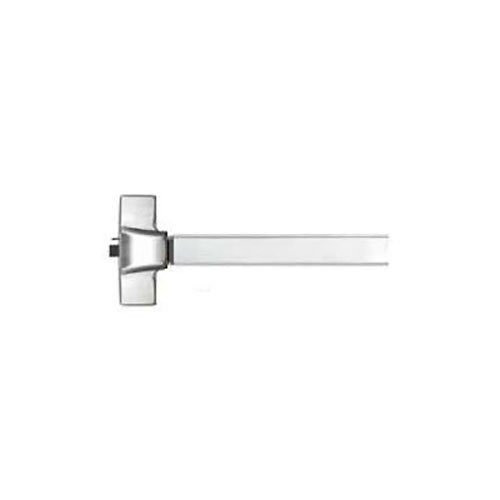
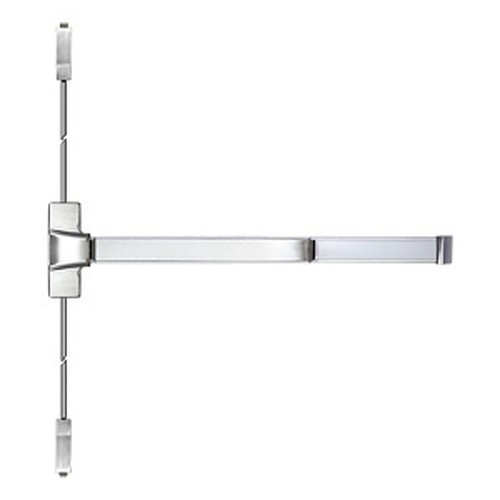
In This Guide
- Which controller offers more explicit communication and monitoring output detail?
- How do the two controllers differ in installation context and stated application fit?
- Are there any differences in credential support, user capacity, or reader compatibility?
- Which should you choose: the S6101PU36B or the S6203PU36EEK?
- Side-by-Side Specs
- FAQ
Which controller offers more explicit communication and monitoring output detail?
The S6101PU36B specifies monitoring outputs including REX (SPDT), Alarm, and Lock Secure (SPDT) relay outputs, and its datasheet-level specs call out OSDP and TCP/IP as communication protocols. The S6203PU36EEK lists OSDP and TCP/IP directly in its primary spec field (_Communication), making that disclosure more prominent in the product record. Both units therefore support OSDP and TCP/IP natively. However, the S6101PU36B's spec record additionally documents discrete SPDT relay outputs for REX, Alarm, and Lock Secure functions—detail that is absent from the S6203PU36EEK's published specifications. Integrators who need to confirm relay output types before wiring should note that this information is only confirmed for the S6101PU36B.
How do the two controllers differ in installation context and stated application fit?
The S6101PU36B is described as a networked centralized control unit and its applications are explicitly listed as retail loss prevention, pedestrian control, wandering patient control, and nursery infant protection. It also carries a 'Delayed Egress Locks' cable category and a 'RIM Delayed Egress Exit Device' product type designation in portions of its spec record, indicating it is positioned within delayed-egress use cases. The S6203PU36EEK lists Wall and Pendant as mount types—a spec absent from the S6101PU36B record—and its application field states high-traffic use and general access control systems. Its cable category is 'Exit Devices' and its strike type references Motorized ELR/ED, pointing toward electrified exit hardware integration. Buyers with delayed-egress or life-safety patient-wandering requirements have explicit application confirmation only for the S6101PU36B.
Are there any differences in credential support, user capacity, or reader compatibility?
Both controllers support an identical credential set: DESFire, MIFARE, NFC/13.56 MHz, and 125 kHz proximity. Both store up to 250,000 user credentials on-board. The S6203PU36EEK's spec record designates its reader type as 'OSDP-compliant,' while the S6101PU36B describes its reader type as 'Multi-credential.' Neither designation excludes the other in practice—OSDP readers are typically multi-credential—but the S6203PU36EEK's phrasing more directly signals readiness for OSDP reader wiring. The S6101PU36B notes compatibility with 'mid-to-large' deployments; the S6203PU36EEK notes 'mid.' No input voltage is listed in the S6203PU36EEK's primary spec fields, whereas the S6101PU36B specifies 24VDC ±10% input voltage. Weight is documented only for the S6101PU36B at 13 lbs; no weight spec is provided for the S6203PU36EEK.
Which should you choose: the S6101PU36B or the S6203PU36EEK?
Our take: The S6101PU36B is the stronger choice when the deployment involves delayed-egress life-safety applications—such as wandering patient control or nursery infant protection—or when the integrator requires confirmed relay output wiring detail (REX SPDT, Alarm SPDT, Lock Secure SPDT) before rough-in. The S6203PU36EEK is the more appropriate selection when the installation calls for wall or pendant mounting flexibility and involves high-traffic general access control with electrified exit devices (ELR/ED strike type). Both units are identical on the three most capacity-critical specs: 63-door maximum, 250,000 credentials, and DESFire/MIFARE/NFC/125 kHz credential support. The S6101PU36B additionally documents a 24VDC ±10% input voltage and a 13 lb unit weight—specs unconfirmed for the S6203PU36EEK. Platform integrators targeting Genetec, Milestone, or Honeywell will find native OSDP and TCP/IP on both units.
Side-by-Side Comparison
Spec-for-spec, from manufacturer data.
| Specification | SDC S6101PU36B | SDC S6203PU36EEK |
|---|---|---|
| Product Type | Controller | Controller |
| Door Capacity | 63 doors | 63 doors |
| Max User Credentials | 250,000 | 250,000 |
| Communication Protocol | OSDP, TCP/IP | OSDP, TCP/IP |
| Monitoring Outputs | REX (SPDT), Alarm (SPDT), Lock Secure (SPDT) | — |
| Input Voltage | 24VDC ±10% | — |
| Credential Types | DESFire, MIFARE, NFC 13.56 MHz, 125 kHz Prox | DESFire, MIFARE, NFC 13.56 MHz, 125 kHz Prox |
| Reader Type | Multi-credential | OSDP-compliant |
| Connectivity | Wired | Wired |
| Mount Type | — | Wall; Pendant |
| Strike Type | Delayed Egress (15/30 sec adjustable) | Motorized ELR / Electric Dogging (ED) |
| Application | Retail loss prevention, wandering patient, nursery infant protection, pedestrian control | High-traffic use, access control systems |
| Compatible With | Mid-to-large deployments | Mid deployments |
| Cable Category | Delayed Egress Locks | Exit Devices |
| Weight | 13 lbs | — |
| Warranty | Lifetime | Lifetime |
Frequently Asked Questions
Which should you choose: the S6101PU36B or the S6203PU36EEK?
The S6101PU36B is the stronger choice when the deployment involves delayed-egress life-safety applications—such as wandering patient control or nursery infant protection—or when the integrator requires confirmed relay output wiring detail (REX SPDT, Alarm SPDT, Lock Secure SPDT) before rough-in. The S6203PU36EEK is the more appropriate selection when the installation calls for wall or pendant mounting flexibility and involves high-traffic general access control with electrified exit devices (ELR/ED strike type). Both units are identical on the three most capacity-critical specs: 63-door maximum, 250,000 credentials, and DESFire/MIFARE/NFC/125 kHz credential support. The S6101PU36B additionally documents a 24VDC ±10% input voltage and a 13 lb unit weight—specs unconfirmed for the S6203PU36EEK. Platform integrators targeting Genetec, Milestone, or Honeywell will find native OSDP and TCP/IP on both units.
Is the S6101PU36B or S6203PU36EEK better for larger deployments?
Both controllers support exactly 63 doors and 250,000 user credentials—these figures are identical. The S6101PU36B's compatible-with field specifies 'mid-to-large' deployments, while the S6203PU36EEK specifies 'mid.' Based solely on the published specs, the S6101PU36B carries a slightly broader stated deployment-scale endorsement, but neither unit exceeds 63 doors or 250,000 credentials as documented.
Can either controller integrate with third-party VMS platforms like Genetec or Milestone?
Both units specify native OSDP and TCP/IP communication, which are the two protocols most commonly used for VMS and access control platform integration. The S6203PU36EEK's product bullets explicitly name Genetec, Milestone, and Honeywell as compatible platforms; the S6101PU36B's spec record does not name specific VMS platforms. Neither claim constitutes a certified integration—buyers should verify current SDK/driver support with SDC and the VMS vendor directly.
Do I need different readers for the S6101PU36B versus the S6203PU36EEK?
Both controllers accept the same credential types—DESFire, MIFARE, NFC 13.56 MHz, and 125 kHz proximity—so existing card infrastructure is compatible with either unit. The S6203PU36EEK specifies OSDP-compliant readers; the S6101PU36B describes its reader interface as multi-credential. If your reader fleet is OSDP-wired, both units support OSDP as a communication protocol, but the S6203PU36EEK's spec record makes that reader-side requirement more explicit.
Get a Second Opinion on Your Camera Choice
Share your site layout, coverage goals, and budget. Our team will validate the camera selection, flag anything we would change, and recommend products that match the use case.