
i-PRO S66300-Z4L vs i-PRO X66300-Z3S: Specification Comparison
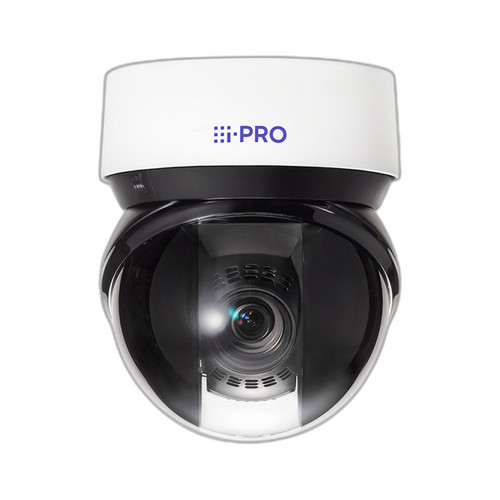
Both the i-PRO WV-S66300-Z4L and WV-X66300-Z3S are 2MP outdoor PTZ dome cameras sharing the same 1/2.8-inch CMOS sensor, IK10/IP66 housing, and Ambarella CV25m SoC. They target the same wide-area surveillance market but differ meaningfully in optical zoom range, IR range, frame rate, PoE power draw, and IR night-vision distance. This comparison covers imaging performance, installation requirements, and integration capabilities so integrators and IT buyers can match the right unit to their deployment scenario.

In This Guide
How do the imaging specs compare?
The S66300-Z4L offers a 40x optical zoom (4.25–170 mm focal length) with a digital extra-zoom ceiling of 60x at 1280×720, versus the X66300-Z3S at 32x optical (4.25–136 mm) with a 48x extra-zoom ceiling at 1280×720. In DORI terms this translates to a tele-end detect range of 2,199.9 m and recognition range of 440 m for the S66300-Z4L, compared to 1,833.2 m detect and 366.6 m recognition for the X66300-Z3S — a roughly 20% advantage in telephoto reach for the S model. Wide-end DORI figures are identical (detect 60.3 m, recognize 12.1 m) across both units, consistent with their shared 4.25 mm short-end focal length and F1.6 aperture.
Both cameras share a maximum 144 dB dynamic range under Super Dynamic (level 31), identical minimum illumination of 0.006 lx in BW mode at F1.6/1/30s, and the same DNR (0–255), BLC/HLC (0–31), fog compensation (0–8), and AGC (0–11) controls. Where they diverge sharply is IR illumination: the S66300-Z4L specifies dual IR LEDs reaching 350 m at 30IRE / 250 m at 50IRE, while the X66300-Z3S spec lists only a 3.0 m IR range — a figure that appears anomalously short for a camera of this class and should be verified against the manufacturer datasheet before purchase. Frame rate is another distinction: the X66300-Z3S supports 60 fps at 1920×1080, and explicitly lists a 4:3 mode at 1280×960 and 2048×1536; the S66300-Z4L lists frame rate as variable without a stated maximum fps in the provided specs.
What about installation and environment?
Both cameras share the same physical housing: φ167 mm × 205 mm (H) dome, approximately 3 kg, aluminum die-cast and polycarbonate construction, IK10 impact resistance, IP66 ingress protection, wind resistance up to 40 m/s, and an operating range of −50°C to +60°C at 10–100% humidity. The X66300-Z3S spec additionally lists NEMA 4X alongside IP66; the S66300-Z4L spec lists IP66 and NEMA-TS2 (a traffic-signal standard) but does not explicitly state NEMA 4X in the provided spec data. Both mount via RJ45 on 10/100Base-TX and require no separate power feed beyond PoE.
Power draw separates the two: the S66300-Z4L requires PoE++ (802.3bt) at 45.9 W, while the X66300-Z3S draws 37.8 W also via PoE++. Both are PoE Class 6, so the same 802.3bt switches apply, but installers should note the S model's 8.1 W higher worst-case load when sizing switch port budgets and UPS capacity. Both cameras carry UL/c-UL (UL62368-1 / CSA C22.2 No.62368-1), CE, IEC62368-1, FCC Part 15 Class A, ICES-003 Issue 7 Class A, EN55032 Class A, EN55035, and NEMA-TS2 certifications. The S66300-Z4L additionally carries FIPS 140-2 Level 3 certification; the X66300-Z3S spec does not list FIPS in the provided data.
Which fits your VMS and analytics better?
Both cameras support ONVIF Profiles G, M, S, and T; run on the same Ambarella CV25m SoC; deliver H.265/H.264/MJPEG streams to up to 14 simultaneous users; and carry identical AI analytics sets — AI motion, face, people, vehicle, mask, and occupancy detection — plus the same AI sound classification (gunshot, yell, vehicle horn, glass break). PTZ mechanics are also matched: 360° endless pan at manual 0.065–150°/s / preset 700°/s, tilt −20° to +90° at manual 0.065–150°/s / preset 500°/s, 256 preset positions, and Auto track/Auto pan/Preset sequence/Patrol modes.
On-board storage is microSDXC on both, with the X66300-Z3S spec explicitly citing 64 GB–512 GB microSDXC / 4 GB–32 GB microSDHC and recording modes (Manual, Alarm pre/post, Schedule, Network-failure backup). The S66300-Z4L spec states microSDXC support without specifying capacity ranges in the provided data. Audio I/O is present on both (3.5 mm stereo jacks, 600Ω output, G.726/G.711/AAC-LC codecs, full/half duplex), and both list 3× alarm I/O terminals. The X66300-Z3S spec includes SRTP, MQTT, and NTCIP in its IPv4 protocol list; the S66300-Z4L's provided spec data does not list those three protocols. FIPS 140-2 Level 3 is cited for the S66300-Z4L and absent from the X66300-Z3S spec, which is material for government or critical-infrastructure deployments.
Which should you choose: the S66300-Z4L or the X66300-Z3S?
Our take: The S66300-Z4L is the stronger choice when long-range identification and certified cybersecurity compliance are the primary requirements. Its 40x optical zoom (vs 32x) extends the tele-end DORI recognition range to 440 m versus 366.6 m — a 20% improvement — and its detect ceiling reaches 2,199.9 m versus 1,833.2 m. IR illumination on the S model is specified at 350 m (30IRE), whereas the X66300-Z3S lists only 3.0 m in the provided spec data — a figure that warrants verification before relying on it for night-vision planning. The S66300-Z4L also carries FIPS 140-2 Level 3 certification not present in the X66300-Z3S spec. The X66300-Z3S counters with a confirmed 60 fps capture rate, lower PoE draw (37.8 W vs 45.9 W), explicit SRTP/MQTT/NTCIP protocol support, and explicit NEMA 4X rating — advantages for high-frame-rate analytics, switch budget-constrained deployments, or traffic-management integration. Both units share the same SoC, AI analytics, and PTZ mechanics.
Side-by-Side Comparison
Spec-for-spec, from manufacturer data.
| Specification | i-PRO S66300-Z4L | i-PRO X66300-Z3S |
|---|---|---|
| Resolution | 2MP (1920×1080) | 2MP (1920×1080) |
| Image Sensor | 1/2.8" CMOS, 5.57×3.13 mm | 1/2.8" CMOS, 5.57×3.13 mm |
| Optical Zoom | 40x motorized (4.25–170 mm) | 32x motorized (4.25–136 mm) |
| Extra (Digital) Zoom | Max 60x at 1280×720 | Max 48x at 1280×720 |
| DORI Detect (Tele) | 2,199.9 m / 7,217.6 ft | 1,833.2 m / 6,014.4 ft |
| DORI Recognize (Tele) | 440.0 m / 1,443.5 ft | 366.6 m / 1,202.9 ft |
| Min Illumination | 0.006 lx (BW, F1.6, 1/30s) | 0.006 lx (BW, 50IRE, F1.6, 1/30s) |
| IR Range | 350 m (30IRE) / 250 m (50IRE) | 3.0 m (per provided spec — verify with datasheet) |
| WDR / Dynamic Range | Max 144 dB (Super Dynamic On, Level 31) | Max 144 dB (Super Dynamic On, Level 31) |
| Max Frame Rate | Variable (max not stated in provided specs) | 60 fps at 1920×1080 |
| Video Compression | H.265, H.264, MJPEG | H.265, H.264, MJPEG |
| Power Input / PoE | PoE++ 802.3bt, 45.9 W, Class 6 | PoE++ 802.3bt, 37.8 W, Class 6 |
| IP / NEMA Rating | IP66, NEMA-TS2 | IP66, NEMA 4X, NEMA-TS2 |
| IK / Impact Rating | IK10 (IEC 62262) | IK10 (IEC 62262) |
| Operating Temperature | -50°C to +60°C | -50°C to +60°C |
| Edge Storage | microSDXC (capacity not stated in specs) | microSDXC 64 GB–512 GB / microSDHC 4 GB–32 GB |
| ONVIF Profiles | G / M / S / T | G / M / S / T |
| AI Analytics | Motion, Face, People, Vehicle, Mask, Occupancy + AI Sound | Motion, Face, People, Vehicle, Mask, Occupancy + AI Sound |
| Cybersecurity Certification | FIPS 140-2 Level 3, HTTPS, IEEE 802.1X | HTTPS, IEEE 802.1X (FIPS not listed in provided specs) |
| Additional Protocols | Not listed in provided specs | SRTP, MQTT, NTCIP (IPv4 stack) |
| Dimensions | φ167 mm × 205 mm (H) | φ167 mm × 205 mm (H) |
| Weight | Approx. 3 kg (without attachment) | Approx. 3 kg (without attachment) |
| Warranty | 5 years | 5 years |
Frequently Asked Questions
Which should you choose: the S66300-Z4L or the X66300-Z3S?
The S66300-Z4L is the stronger choice when long-range identification and certified cybersecurity compliance are the primary requirements. Its 40x optical zoom (vs 32x) extends the tele-end DORI recognition range to 440 m versus 366.6 m — a 20% improvement — and its detect ceiling reaches 2,199.9 m versus 1,833.2 m. IR illumination on the S model is specified at 350 m (30IRE), whereas the X66300-Z3S lists only 3.0 m in the provided spec data — a figure that warrants verification before relying on it for night-vision planning. The S66300-Z4L also carries FIPS 140-2 Level 3 certification not present in the X66300-Z3S spec. The X66300-Z3S counters with a confirmed 60 fps capture rate, lower PoE draw (37.8 W vs 45.9 W), explicit SRTP/MQTT/NTCIP protocol support, and explicit NEMA 4X rating — advantages for high-frame-rate analytics, switch budget-constrained deployments, or traffic-management integration. Both units share the same SoC, AI analytics, and PTZ mechanics.
Is the S66300-Z4L or X66300-Z3S better for long-distance identification at night?
Based on the provided specs, the S66300-Z4L has a clear advantage in both dimensions. Its 40x optical zoom gives a tele-end recognition (125 ppm) range of 440 m versus 366.6 m for the 32x X66300-Z3S. For IR illumination, the S66300-Z4L specifies 350 m at 30IRE; the X66300-Z3S spec lists only 3.0 m, which is anomalously short — buyers should confirm that figure against the manufacturer datasheet before assuming the X model has limited night reach.
Can both cameras run on the same PoE switch infrastructure?
Yes — both require PoE++ (802.3bt) Class 6 ports. However, the S66300-Z4L draws up to 45.9 W while the X66300-Z3S draws 37.8 W, an 8.1 W difference per port. When sizing switches, UPS capacity, and cable runs for large deployments, the higher draw of the S model must be accounted for in per-port and total power budgets.
Does either camera meet government cybersecurity or traffic-system requirements?
The S66300-Z4L specifies FIPS 140-2 Level 3 certification, which is a common baseline for U.S. federal and critical-infrastructure deployments; this is not listed for the X66300-Z3S in the provided spec data. For traffic-management integration, both carry NEMA-TS2 certification, but the X66300-Z3S additionally lists NTCIP protocol support in its IPv4 protocol stack, which the S66300-Z4L spec does not include. Buyers should confirm both points directly with i-PRO for their specific compliance requirements.
Get a Second Opinion on Your Camera Choice
Share your site layout, coverage goals, and budget. Our team will validate the camera selection, flag anything we would change, and recommend products that match the use case.