
i-PRO S15701-Z3L vs i-PRO X15700-V2L: Specification Comparison
Both the i-PRO WV-S15701-Z3L and WV-X15700-V2L are 4K (8MP, 3840×2160) outdoor IP bullet cameras designed for perimeter and surveillance deployments. They share the same resolution class, same form factor, and are both fixed (non-PTZ) cameras with IR illumination, IK10 vandal resistance, and ONVIF compatibility. The key differentiators lie in lens range, IR distance, sensor size, power requirements, and the depth of their AI analytics suites — making this a meaningful cross-shop for buyers evaluating long-range zoom versus wide-angle sensitivity.
In This Guide
How do the imaging specs compare?
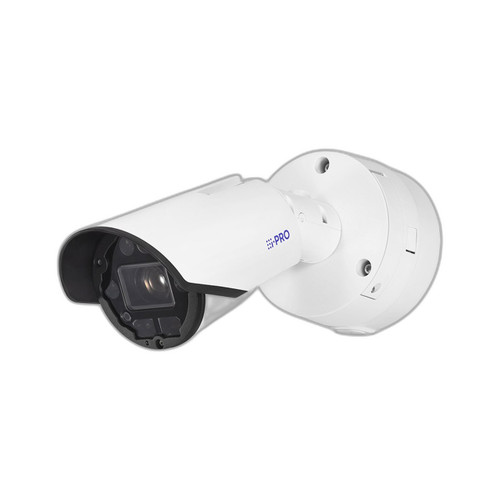
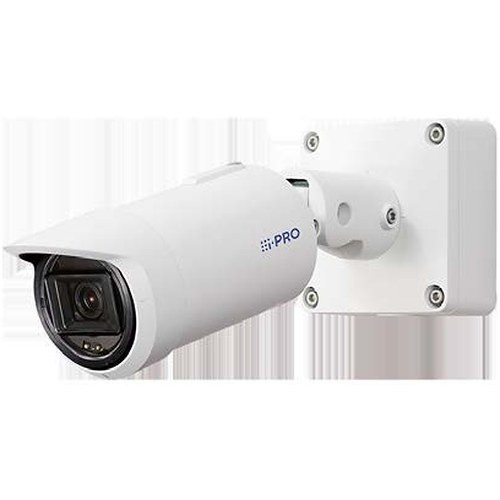
The S15701-Z3L uses a 1/2.8-inch CMOS sensor paired with a 30x motorized optical zoom lens (4.5–135mm, F1.8), delivering a minimum illumination of 0.13 lux in color mode and 0 lux in B&W with IR active. Its IR illuminators reach 140m at PoE++ power, 100m at PoE+, and 55m at DC 12V, using 850nm LEDs. WDR is rated at 132 dB (Super Dynamic). The X15700-V2L fields a larger 1/1.8-inch CMOS sensor with a 2.0x motorized varifocal lens (4.3–8.6mm, F1.5 wide), achieving a notably lower minimum illumination of 0.03 lux in B&W at 50IRE — more than 4× more sensitive in low light. Its IR range is 70m at 30IRE and 50m at 50IRE, significantly shorter than the S15701-Z3L. WDR is also rated at 132 dB (Super Dynamic) on the X15700-V2L.
In terms of optical reach, the S15701-Z3L's 30x zoom enables forensic detail at distance — DORI Identify figures are not explicitly listed in the provided specs, but the lens range (up to 135mm) and LPR analytics suggest it is purpose-built for long-range identification. The X15700-V2L provides explicit DORI figures: Identify distance of 6.0m (wide) to 15.4m (tele) at 250ppm, and Detect distance of 60.0m (wide) to 154.0m (tele) at 25ppm. The X15700-V2L's larger sensor and lower F-stop (F1.5) give it a clear low-light edge in wide-angle applications, while the S15701-Z3L's 30x zoom wins for long-distance identification.
What about installation and environment?
Both cameras carry IP66 and IK10 ratings and are NEMA 4X compliant, making them equally suitable for wet, dusty, and high-vandalism environments. The X15700-V2L adds an explicit IP67 rating and wind resistance up to 40 m/s (approx. 89 mph) from its spec sheet, while the S15701-Z3L's spec data lists IP66/IP67 in one field but the primary rated certification is IP66/IK10. Operating temperature for the S15701-Z3L spans -40°C to +60°C, giving it a 5°C advantage at the upper end over the X15700-V2L's -40°C to +55°C range (with a -30°C power-on threshold noted for the X15700-V2L). The X15700-V2L's physical dimensions are 133mm × 133mm × 383mm at approximately 2.5 kg; the S15701-Z3L's dimensions are not provided in the supplied specs.
Power requirements differ significantly. The S15701-Z3L requires PoE++ (IEEE 802.3bt) at up to 95W to achieve its full 140m IR range — a substantial infrastructure consideration, as PoE++ switches are costlier and less common than PoE+ switches. It also accepts 24V AC and 12V DC. The X15700-V2L operates on standard PoE+ (802.3at) at just 14W with a DC 12V 1.2A alternative, making it far more compatible with existing PoE infrastructure and keeping cabling heat dissipation low.
Which fits your VMS and analytics better?
Both cameras support ONVIF Profiles G, S, T, and M, ensuring broad VMS compatibility. Both offer H.265, H.264, and MJPEG compression with Smart Coding (GOP control, Smart VIQS, Smart P-picture) and microSD edge storage. The X15700-V2L specifies support for microSD/microSDHC/microSDXC cards up to 512GB; the S15701-Z3L's spec lists microSD storage but does not specify a maximum capacity in the provided data. The X15700-V2L supports up to 14 simultaneous users and provides 3x Alarm IN, 1x Alarm OUT, and 1x AUX OUT terminals — the S15701-Z3L's alarm I/O terminal count is not specified in the provided specs.
On analytics, the S15701-Z3L carries a broader listed suite: AI LPR, Facial Recognition, People Detection, Vehicle Detection, Occupancy Detection, Scene Change Detection, Privacy Guard, and Face Detection — all edge-based, with FIPS 140-2 Level 3 cybersecurity via an EdgeLock SE050F SecureElement and Signed Firmware. The X15700-V2L includes AI Video Analytics (face, people, vehicle, motion detection), Scene Change Detection, AI Sound Classification (gunshot, yell, vehicle horn, glass break), and a built-in gyro image stabilizer. Audio support differs: the S15701-Z3L lists both audio input and a built-in microphone; the X15700-V2L provides a 3.5mm audio input jack and a 3.5mm audio output jack but does not list a built-in microphone in the provided specs. Both cameras list Android mobile compatibility.
Which should you choose: the S15701-Z3L or the X15700-V2L?
Our take: The S15701-Z3L is the stronger choice when long-range identification, LPR, or facial recognition at distance is the mission. Its 30x optical zoom (4.5–135mm vs. 4.3–8.6mm / 2.0x on the X15700-V2L) and 140m IR range at PoE++ (vs. 70m at 30IRE on the X15700-V2L) make it purpose-built for perimeter and entrance forensics. It also carries FIPS 140-2 Level 3 certification, a broader AI analytics suite, and a slightly higher upper operating temperature (+60°C vs. +55°C). However, these advantages come at a steep infrastructure cost: the S15701-Z3L demands PoE++ at up to 95W, requiring switch upgrades in most existing deployments. The X15700-V2L counters with a larger 1/1.8-inch sensor, a lower minimum illumination of 0.03 lux (vs. 0.13 lux), PoE+ at only 14W, explicit IP67 rating, wind resistance to 40 m/s, AI sound classification, and a 5-year warranty. Choose the S15701-Z3L for long-range forensic zoom sites with PoE++ infrastructure; choose the X15700-V2L for wide-area low-light coverage on standard PoE deployments.
Side-by-Side Comparison
Spec-for-spec, from manufacturer data.
| Specification | i-PRO S15701-Z3L | i-PRO X15700-V2L |
|---|---|---|
| Resolution | 3840×2160 (4K / 8MP) | 3840×2160 (4K / 8MP) |
| Image Sensor | 1/2.8-inch CMOS | 1/1.8-inch CMOS |
| Lens / Focal Length | 30x motorized zoom, 4.5–135mm, F1.8 | 2.0x motorized varifocal, 4.3–8.6mm, F1.5–F2.4 |
| Minimum Illumination | 0.13 lux (color, F1.8, 1/30s); 0 lux (B&W, IR on) | 0.03 lux (B&W, 50IRE, F1.5, 1/30s) |
| IR Range | 140m @ PoE++; 100m @ PoE+; 55m @ DC 12V (850nm) | 70m @ 30IRE; 50m @ 50IRE |
| WDR | 132 dB (Super Dynamic) | 132 dB (Super Dynamic) |
| Max Frame Rate | 30 fps | 30 fps |
| Video Compression | H.265, H.264, MJPEG | H.265, H.264, MJPEG |
| IP Rating | IP66 / IP67 / NEMA 4X | IP66 / IP67 / NEMA 4X |
| IK / Impact Rating | IK10 | IK10 |
| Operating Temperature | -40°C to +60°C | -40°C to +55°C (-30°C power-on) |
| Power Input / PoE | PoE++ (802.3bt), 95W max; 24V AC; 12V DC | PoE+ (802.3at), 14W; DC 12V 1.2A |
| Edge Storage | microSD (max capacity not specified in provided specs) | microSD/microSDHC/microSDXC up to 512GB |
| Audio | Audio input; built-in microphone | 3.5mm audio input; 3.5mm audio output (no built-in mic listed) |
| AI Analytics | LPR, Facial Recognition, People, Vehicle, Occupancy, Scene Change, Privacy Guard | Face, People, Vehicle, VMD, Scene Change, AI Sound Classification (gunshot, yell, horn, glass break) |
| Cybersecurity | FIPS 140-2 Level 3 (EdgeLock SE050F); Signed Firmware | Signed Firmware; Secure Boot (FIPS not listed in provided specs) |
| Dimensions | Not specified in provided specs | 133mm (W) × 133mm (H) × 383mm (D) |
| Weight | Not specified in provided specs | Approx. 2.5 kg (5.6 lbs) |
| Warranty | Not specified in provided specs | 5-Year Warranty |
Frequently Asked Questions
Which should you choose: the S15701-Z3L or the X15700-V2L?
The S15701-Z3L is the stronger choice when long-range identification, LPR, or facial recognition at distance is the mission. Its 30x optical zoom (4.5–135mm vs. 4.3–8.6mm / 2.0x on the X15700-V2L) and 140m IR range at PoE++ (vs. 70m at 30IRE on the X15700-V2L) make it purpose-built for perimeter and entrance forensics. It also carries FIPS 140-2 Level 3 certification, a broader AI analytics suite, and a slightly higher upper operating temperature (+60°C vs. +55°C). However, these advantages come at a steep infrastructure cost: the S15701-Z3L demands PoE++ at up to 95W, requiring switch upgrades in most existing deployments. The X15700-V2L counters with a larger 1/1.8-inch sensor, a lower minimum illumination of 0.03 lux (vs. 0.13 lux), PoE+ at only 14W, explicit IP67 rating, wind resistance to 40 m/s, AI sound classification, and a 5-year warranty. Choose the S15701-Z3L for long-range forensic zoom sites with PoE++ infrastructure; choose the X15700-V2L for wide-area low-light coverage on standard PoE deployments.
Is the S15701-Z3L or X15700-V2L better for low-light performance?
The X15700-V2L has the low-light edge: its larger 1/1.8-inch sensor and F1.5 aperture yield a minimum illumination of 0.03 lux (B&W, 50IRE), versus 0.13 lux (color, F1.8) for the S15701-Z3L. However, the S15701-Z3L's IR illuminators reach 140m at PoE++ versus the X15700-V2L's 70m at 30IRE, so for long-range IR coverage the S15701-Z3L extends further despite the higher lux floor.
Will both cameras work with my existing PoE switch?
Only the X15700-V2L will work with a standard PoE+ (802.3at) switch — it draws just 14W. The S15701-Z3L requires PoE++ (IEEE 802.3bt) at up to 95W to achieve its full IR range of 140m. Running the S15701-Z3L on a PoE+ switch will reduce its IR range to 100m, and on DC 12V to 55m. Budget for PoE++ switch infrastructure if deploying the S15701-Z3L.
Which camera is better suited for license plate reading (LPR)?
The S15701-Z3L is explicitly specified with AI LPR as an edge-based analytic, paired with a 30x optical zoom lens that can reach 135mm — giving it the focal reach to capture plate detail at distance. The X15700-V2L's provided specs list AI analytics including face, people, and vehicle detection but do not explicitly list LPR as a named analytic. For dedicated LPR applications, the S15701-Z3L is the specified choice.
Get a Second Opinion on Your Camera Choice
Share your site layout, coverage goals, and budget. Our team will validate the camera selection, flag anything we would change, and recommend products that match the use case.