
Digital Watchdog B6883WTIRW vs Digital Watchdog DWC-XSBA08Mi: Specification Comparison
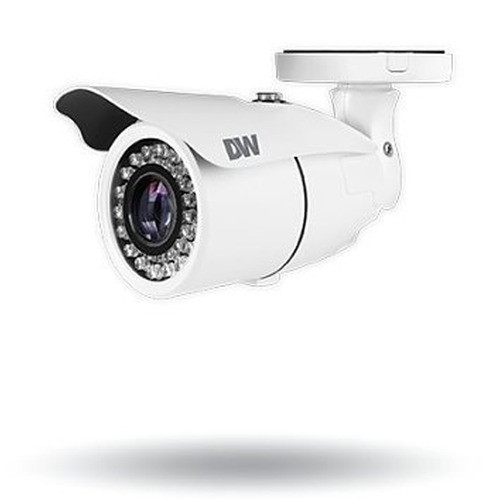
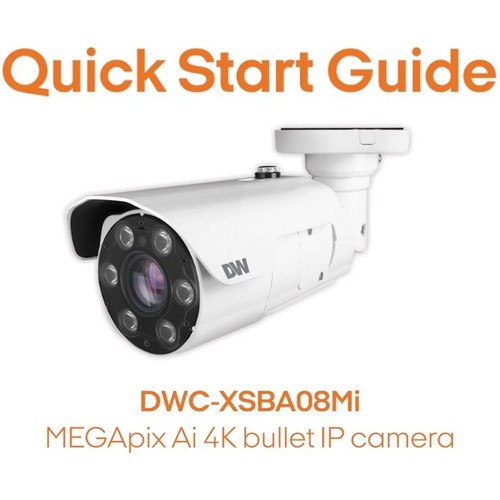
Both the Digital Watchdog DWC-B6883WTIRW and DWC-XSBA08Mi are 8MP (4K) outdoor bullet IP cameras targeted at professional surveillance installations. They share the same resolution class, form factor, motorized varifocal lenses, Smart IR night vision, and 120dB True WDR. The comparison is meaningful for integrators deciding between a cost-optimized PoE Class 2 camera with a proven analog-hybrid signal output and a newer AI-analytics platform camera with hardened vandal resistance, extended IR throw, and onboard edge storage.
In This Guide
How do the imaging specs compare?
Both cameras deliver 8MP progressive-scan 4K imagery and identical minimum scene illumination: 0.09 lux in color and 0.0 lux in B/W. The B6883WTIRW uses a larger 1/1.8" CMOS sensor at 3864×2176 active pixels, while the XSBA08Mi uses a 1/2.8" CMOS sensor at 3840×2160 active pixels with DW's Star-Light Plus branding. The larger sensor on the B6883WTIRW captures more light per pixel, which is a meaningful physical advantage in low-light scenarios even though rated lux values are identical for both. The B6883WTIRW's Smart IR reaches 120 feet; the XSBA08Mi extends that to 140 feet—a 17% increase in IR throw useful for longer corridors or perimeter runs.
On the lens side, the B6883WTIRW covers 3.6mm–10mm (98.4°–45.7° HFOV) while the XSBA08Mi offers a wider zoom range of 2.7mm–13.5mm (90.3°–33.1° HFOV), giving installers finer telephoto reach at the long end. Both feature motorized varifocal with auto-focus and P-iris. Both specify True WDR at 120dB. The B6883WTIRW supports Star-Light sense-up (x2–x32) but disables it at 4K resolution per spec; the XSBA08Mi lists a slow shutter mode (Off, x2, x3, x5, x6, x7.5, x10) available across its resolution range. The B6883WTIRW's shutter spans 1/30–1/30000s; the XSBA08Mi's spans 1/15–1/32000s, offering a slightly longer low-light exposure floor.
What about installation and environment?
The B6883WTIRW carries an IP66 rating (dust-tight, protected against powerful water jets) in an aluminum die-cast bullet housing weighing 1.76 lbs at 9.92"×3.8" body dimensions. The XSBA08Mi is rated IP67 (dust-tight, protected against temporary immersion) and additionally carries an IK10 vandal impact rating—neither of which the B6883WTIRW specifies. The XSBA08Mi is also heavier at 2.64 lbs and slightly larger at 12.2"×3.81". For exposed outdoor installations subject to physical tampering or wash-down environments, the XSBA08Mi's IP67+IK10 combination provides a higher protection class.
Power requirements diverge significantly. The B6883WTIRW draws a maximum of 7.81W and is classified PoE Class 2 (802.3af), keeping it compatible with standard PoE switches without budget port upgrades. It also accepts 24V AC and 12VDC. The XSBA08Mi draws up to 14.8W on PoE and is PoE Class 4, requiring 802.3at (PoE+) infrastructure; it also accepts DC12V at up to 13.2W. Operating temperature is another key delta: the B6883WTIRW is rated –4°F to 122°F (–20°C to 50°C), while the XSBA08Mi is rated –40°F to 122°F (–40°C to 50°C)—a 36°F lower cold-start threshold that matters for unheated northern installations. Both ship without mounting accessories included.
Which fits your VMS and analytics better?
Both cameras are ONVIF-compliant and support H.265, H.264, and MJPEG compression with dual-stream capability. The XSBA08Mi explicitly lists VMS compatibility with DW Spectrum, Genetec, and Milestone, and provides detailed network protocol support including SNMPv3, 802.1x, HTTPS/TLS, and IP filtering. The B6883WTIRW's spec does not enumerate the same protocol depth, though ONVIF conformance covers baseline VMS interoperability. The XSBA08Mi also supports 1000Base-T (Gigabit Ethernet), whereas Gigabit port support is not specified for the B6883WTIRW.
Analytics and edge capabilities are where the two cameras diverge most sharply. The XSBA08Mi includes a comprehensive AI analytics suite: intrusion detection, line crossing, tailgating, dwell, direction, enter/exit, counting, counting lines, appear/disappear, stopped, and logical rules—plus tamper and metadata. It also provides onboard microSD/SDHC/SDXC storage up to 1TB, 1-in/1-out alarm I/O, 1-in/1-out audio I/O, and operational notifications via email, FTP, alarm output, and SD card. The B6883WTIRW specifies an audio input and 24 programmable privacy zones (vs. 16 on the XSBA08Mi), but does not list alarm I/O, onboard storage, or AI analytics in the provided spec data. The B6883WTIRW retains CVBS analog test output supporting 960H/HD-CVI/HD-TVI/HD-CoAx signal formats, which can be useful during commissioning on hybrid analog/IP sites.
Which should you choose: the B6883WTIRW or the DWC-XSBA08Mi?
Our take: The DWC-XSBA08Mi is the stronger choice when the deployment demands AI-driven perimeter analytics, hardened vandal resistance, or cold-climate operation, while the DWC-B6883WTIRW is the appropriate selection for standard PoE budget-switch environments or hybrid analog/IP sites. Three concrete spec deltas drive that split: first, the XSBA08Mi adds IK10 vandal rating and steps up to IP67 versus the B6883WTIRW's IP66, material for exposed or public-access mounting points; second, the XSBA08Mi's operating floor of –40°F versus –4°F on the B6883WTIRW is a non-negotiable difference for cold-storage or northern outdoor installs; third, the XSBA08Mi's onboard AI analytics suite and up-to-1TB edge storage eliminate server-side analytic licensing on smaller sites, whereas the B6883WTIRW offers no edge analytics per its spec sheet. Conversely, if your switch plant is 802.3af-only, the B6883WTIRW's PoE Class 2 (7.81W max) avoids a hardware refresh that the XSBA08Mi's Class 4 (14.8W) would require.
Side-by-Side Comparison
Spec-for-spec, from manufacturer data.
| Specification | Digital Watchdog B6883WTIRW | Digital Watchdog DWC-XSBA08Mi |
|---|---|---|
| Resolution (Active Pixels) | 3864 × 2176 | 3840 × 2160 |
| Image Sensor | 4K 1/1.8" CMOS (Star-Light) | 4K 1/2.8" CMOS (Star-Light Plus) |
| Min. Illumination (Color / B&W) | 0.09 lux / 0.0 lux | 0.09 lux / 0.0 lux |
| Lens / Focal Length | Motorized varifocal 3.6–10mm | Motorized varifocal 2.7–13.5mm |
| Horizontal FOV | 98.4° – 45.7° | 90.3° – 33.1° |
| IR Range | 120 ft Smart IR | 140 ft Smart IR |
| Wide Dynamic Range | True WDR 120dB | True WDR 120dB |
| Max Frame Rate | Variable (spec does not state max fps) | Up to 30fps at all resolutions |
| Video Compression | H.265, H.264, MJPEG | H.265, H.264, MJPEG |
| IP Rating | IP66 | IP67 |
| IK / Impact Rating | — | IK10 |
| Operating Temperature | –4°F to 122°F (–20°C to 50°C) | –40°F to 122°F (–40°C to 50°C) |
| Power Input / PoE Class | PoE 802.3af Class 2; 24V AC; 12VDC — max 7.81W | PoE Class 4 — max 14.8W; DC12V max 13.2W |
| Edge Storage | — | microSD/SDHC/SDXC up to 1TB |
| Alarm I/O | — | 1 input, 1 output |
| Audio I/O | 1 input | 1 input, 1 output |
| AI / Edge Analytics | — | Intrusion, line crossing, tailgating, dwell, direction, counting, and more |
| Privacy Zones | 24 programmable zones | 16 programmable masks |
| Analog Test Output | CVBS (supports 960H, HD-CVI, HD-TVI, HD-CoAx) | CVBS 1.0V p-p (75Ω), 4:3 |
| Dimensions (L × Dia.) | 9.92" × 3.8" | 12.2" × 3.81" |
| Weight | 1.76 lbs (0.8 kg) | 2.64 lbs (1.2 kg) |
| Warranty | 5 years | 5 years |
Frequently Asked Questions
Which should you choose: the B6883WTIRW or the DWC-XSBA08Mi?
The DWC-XSBA08Mi is the stronger choice when the deployment demands AI-driven perimeter analytics, hardened vandal resistance, or cold-climate operation, while the DWC-B6883WTIRW is the appropriate selection for standard PoE budget-switch environments or hybrid analog/IP sites. Three concrete spec deltas drive that split: first, the XSBA08Mi adds IK10 vandal rating and steps up to IP67 versus the B6883WTIRW's IP66, material for exposed or public-access mounting points; second, the XSBA08Mi's operating floor of –40°F versus –4°F on the B6883WTIRW is a non-negotiable difference for cold-storage or northern outdoor installs; third, the XSBA08Mi's onboard AI analytics suite and up-to-1TB edge storage eliminate server-side analytic licensing on smaller sites, whereas the B6883WTIRW offers no edge analytics per its spec sheet. Conversely, if your switch plant is 802.3af-only, the B6883WTIRW's PoE Class 2 (7.81W max) avoids a hardware refresh that the XSBA08Mi's Class 4 (14.8W) would require.
Is the DWC-B6883WTIRW or DWC-XSBA08Mi better for low-light performance?
Both cameras reach the same rated minimums—0.09 lux in color and 0.0 lux in B/W—so lux specs alone do not separate them. The B6883WTIRW uses a physically larger 1/1.8" sensor versus the XSBA08Mi's 1/2.8" sensor, which provides a greater light-gathering area per pixel and is generally advantageous in marginal light. The XSBA08Mi extends IR throw to 140 feet versus 120 feet on the B6883WTIRW, giving it longer-range night coverage. For near-field low-light scenes the larger sensor is the more important variable; for long-corridor or perimeter runs the additional 20 feet of IR on the XSBA08Mi matters more.
Can I run the DWC-B6883WTIRW on the same PoE switch as my existing cameras without upgrading ports?
Yes, provided your switch delivers 802.3af (standard PoE). The B6883WTIRW is PoE Class 2 with a maximum draw of 7.81W, well within the 15.4W 802.3af per-port budget. The DWC-XSBA08Mi is PoE Class 4 and draws up to 14.8W, which requires 802.3at (PoE+) ports rated at 30W. If your infrastructure is 802.3af-only, the B6883WTIRW is a drop-in fit; adding XSBA08Mi units would require switch port upgrades or a PoE injector.
Does the DWC-XSBA08Mi support onboard recording without an NVR?
Yes. The XSBA08Mi spec lists a microSD/SDHC/SDXC card slot supporting up to 1TB of onboard edge storage, with notifications to SD card as one of its alert delivery methods. The DWC-B6883WTIRW does not list any local storage slot in its provided specifications. If edge recording for failover or standalone operation is a project requirement, only the XSBA08Mi supports it per the available spec data.
Get a Second Opinion on Your Camera Choice
Share your site layout, coverage goals, and budget. Our team will validate the camera selection, flag anything we would change, and recommend products that match the use case.