
Hanwha XNV-6083R vs i-PRO X66300-Z3S: Specification Comparison
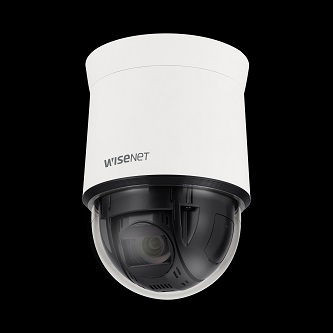
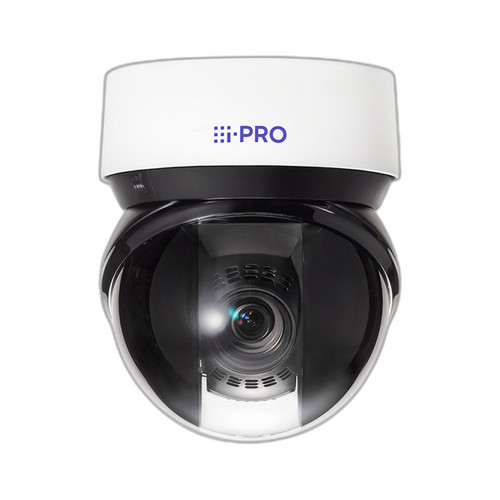
Both the Hanwha XNV-6083R (listed under SKU QNP-6320) and the i-PRO WV-X66300-Z3S are outdoor 2MP PTZ dome cameras in the same resolution class, sharing 32× optical zoom, 1/2.8" CMOS sensors, 60fps capability, and PoE-powered network operation. This comparison covers their imaging performance, environmental and installation characteristics, and integration capabilities to help installers and IT buyers evaluate which unit best fits a given deployment scenario.
In This Guide
How do the imaging specs compare?
Both cameras use a 1/2.8" CMOS sensor and deliver 1920×1080 at 60fps with H.265/H.264/MJPEG compression. Focal length ranges are similar—4.44–142.6mm on the XNV-6083R versus 4.25–136mm on the X66300-Z3S—and both achieve F1.6 at wide end. Low-light minimum illumination is 0.05 Lux color / 0.005 Lux B/W for the XNV-6083R; the X66300-Z3S specifies 0.006 Lux (B/W, 50IRE, F1.6, 1/30s) with no color-mode Lux figure provided. WDR is rated at 120dB on the XNV-6083R (SSDR) versus a maximum of 144dB on the X66300-Z3S (Super Dynamic, level 31).
The X66300-Z3S adds an extended 48× extra zoom mode at 1280×720 resolution, which the XNV-6083R does not list. DORI detection range at tele is 1921.3m for the XNV-6083R versus 1833.2m for the X66300-Z3S at the standard 25ppm threshold—a modest difference attributable to the slightly longer focal length of the Hanwha unit. The XNV-6083R includes a built-in gyro sensor for digital image stabilization; the X66300-Z3S also specifies a built-in gyro-based image stabilizer. Both support auto-tracking, Day/Night ICR switching, backlight/highlight compensation (BLC/HLC), and defog.
What about installation and environment?
The XNV-6083R carries an IP67 rating and is housed in white plastic, weighing 1700g (3.75 lb) with dimensions ø152×218mm. It is powered by PoE+ (IEEE 802.3at, Class 4) at a maximum of 14.5W. Operating temperature range is -10°C to +55°C. Safety certifications include UL 62368-1 and CAN/CSA C22.2 No. 62368-1; EMC covers FCC Class A, CE/UKCA, VCCI, and RCM.
The X66300-Z3S is rated IP66 and IK10 (IEC 62262) with NEMA 4X and NEMA-TS2 compliance, housed in aluminum die cast with a polycarbonate dome, weighing approximately 3kg with dimensions ø167×205mm. It requires PoE++ (37.8W, Class 6), which demands a PoE++ capable switch or injector—an infrastructure consideration. Its operating temperature range is significantly wider: -50°C to +60°C, making it suitable for extreme-cold environments where the XNV-6083R (-10°C lower bound) would not qualify. The X66300-Z3S also specifies wind resistance up to 40m/s (~89mph) and a tamper-resistant enclosure; the XNV-6083R does not list a wind resistance figure. The i-PRO unit's IK10 vandal resistance and aluminum housing contrast with the Hanwha's plastic construction, which carries no IK rating in the provided specs.
Which fits your VMS and analytics better?
Both cameras support ONVIF Profile S, G, and T. The XNV-6083R additionally lists ONVIF Profile M is not explicitly stated, while the X66300-Z3S lists Profiles G, M, S, and T—giving the i-PRO unit broader ONVIF M (metadata/analytics) compatibility for AI-capable VMSs. The XNV-6083R uses Hanwha's SUNAPI and Wisenet open platform; the X66300-Z3S runs on an Ambarella CV25m SoC. The X66300-Z3S includes on-device AI analytics covering face, people, vehicle, non-mask detection, occupancy detection, and AI sound classification (gunshot, yell, vehicle horn, glass break). The XNV-6083R provides motion detection, directional detection, virtual line crossing, tampering, and audio detection, but does not list on-camera AI object classification in the provided specs.
Both support microSD/SDHC/SDXC edge storage: the XNV-6083R up to 256GB; the X66300-Z3S up to 512GB microSDXC. Audio input/output is present on both—the XNV-6083R via selectable mic/line-in with 2.5VDC bias and line-out; the X66300-Z3S via 3.5mm stereo jacks with specified sensitivity (-51dB to -38dB) and 600Ω output impedance. The X66300-Z3S supports up to 256 preset positions versus no maximum preset count stated in the XNV-6083R specs. Network protocol support is broadly equivalent, with both supporting SRTP, HTTPS, 802.1X, SNMPv1/v2c/v3, and NTP; the X66300-Z3S additionally lists MQTT and NTCIP in its IPv4 protocol set, while the XNV-6083R lists NTCIP1205. The XNV-6083R supports up to 20 unicast users and 10 stream profiles; the X66300-Z3S specifies up to 14 simultaneous users.
Which should you choose: the XNV-6083R or the X66300-Z3S?
Our take: The XNV-6083R is the stronger choice when infrastructure is limited to PoE+ (802.3at) switches and ambient temperatures stay above -10°C, particularly in cost-sensitive deployments where Hanwha's SUNAPI ecosystem or Wisenet VMS is already in use. The X66300-Z3S holds the advantage in three measurable areas: its IK10-rated aluminum die-cast housing versus the XNV-6083R's plastic (no IK rating listed), its wider operating temperature floor of -50°C versus -10°C, and its maximum WDR rating of 144dB versus 120dB—relevant in scenes with extreme contrast. It also doubles the edge storage ceiling to 512GB and adds on-device AI object and sound classification not listed in the Hanwha specs. However, the X66300-Z3S requires PoE++ (Class 6, 37.8W) infrastructure and carries a heavier form factor (~3kg vs 1.7kg). The X66300-Z3S is better suited to harsh outdoor environments, AI-VMS integrations, and sites with PoE++ infrastructure; the XNV-6083R is a practical fit for standard PoE+ installations with Hanwha-ecosystem VMSs.
Side-by-Side Comparison
Spec-for-spec, from manufacturer data.
| Specification | Hanwha XNV-6083R | i-PRO X66300-Z3S |
|---|---|---|
| Resolution | 2MP (1920×1080) | 2MP (1920×1080) |
| Image Sensor | 1/2.8" CMOS | Approx. 1/2.8" CMOS |
| Optical Zoom / Focal Length | 32× / 4.44–142.6mm | 32× / 4.25–136mm (48× extra zoom at 720p) |
| Max Frame Rate | 60fps | 60fps |
| Min. Illumination | 0.05 Lux color / 0.005 Lux B/W | 0.006 Lux B/W (50IRE, F1.6, 1/30s); color figure not specified |
| WDR | 120dB (SSDR) | Max 144dB (Super Dynamic, level 31) |
| IP Rating | IP67 | IP66 / NEMA 4X |
| IK / Impact Rating | — (not specified) | IK10 (IEC 62262) |
| Operating Temperature | -10°C to +55°C | -50°C to +60°C |
| Power Input / PoE Class | PoE+ IEEE 802.3at, Class 4 (max 14.5W) | PoE++ 37.8W, Class 6 |
| Edge Storage | microSD/SDHC/SDXC up to 256GB | microSDHC 4–32GB / microSDXC 64–512GB |
| Pan Speed (Preset / Manual) | 700°/s preset / 0.024°–200°/s manual | 700°/s preset / 0.065°–150°/s manual |
| Tilt Speed (Preset / Manual) | 300°/s preset / 0.024°–200°/s manual | 500°/s preset / 0.065°–150°/s manual |
| ONVIF Profiles | S, G, T | G, M, S, T |
| On-Camera AI Analytics | Motion, directional detection, virtual line crossing, tampering, audio detection | AI face, people, vehicle, non-mask, occupancy, scene change; AI sound classification (gunshot, yell, horn, glass break) |
| Housing Material | Plastic | Aluminum die cast, polycarbonate dome |
| Weight | 1700g (3.75 lb) | Approx. 3kg (without attachment) |
| Warranty | 3-year | 5-year |
Frequently Asked Questions
Which should you choose: the XNV-6083R or the X66300-Z3S?
The XNV-6083R is the stronger choice when infrastructure is limited to PoE+ (802.3at) switches and ambient temperatures stay above -10°C, particularly in cost-sensitive deployments where Hanwha's SUNAPI ecosystem or Wisenet VMS is already in use. The X66300-Z3S holds the advantage in three measurable areas: its IK10-rated aluminum die-cast housing versus the XNV-6083R's plastic (no IK rating listed), its wider operating temperature floor of -50°C versus -10°C, and its maximum WDR rating of 144dB versus 120dB—relevant in scenes with extreme contrast. It also doubles the edge storage ceiling to 512GB and adds on-device AI object and sound classification not listed in the Hanwha specs. However, the X66300-Z3S requires PoE++ (Class 6, 37.8W) infrastructure and carries a heavier form factor (~3kg vs 1.7kg). The X66300-Z3S is better suited to harsh outdoor environments, AI-VMS integrations, and sites with PoE++ infrastructure; the XNV-6083R is a practical fit for standard PoE+ installations with Hanwha-ecosystem VMSs.
Is the XNV-6083R or the X66300-Z3S better for low-light performance?
Based on provided specs, the XNV-6083R lists 0.005 Lux B/W minimum illumination. The X66300-Z3S specifies 0.006 Lux B/W (at 50IRE, F1.6, 1/30s). These figures are close and measured under different stated conditions, so a direct numerical comparison should be treated with caution. The X66300-Z3S's WDR is rated higher (max 144dB vs 120dB), which may benefit mixed-lighting scenes. Neither spec sheet provides a color-mode Lux figure for the X66300-Z3S.
Can I power either camera from a standard PoE switch?
No—not both. The XNV-6083R requires PoE+ (IEEE 802.3at, Class 4, max 14.5W), which is supported by most mid-range managed PoE+ switches. The X66300-Z3S requires PoE++ (37.8W, Class 6), which demands a PoE++ (802.3bt) capable switch or dedicated injector. Deploying the X66300-Z3S on a PoE+ switch will result in insufficient power.
Which camera is more vandal-resistant?
The X66300-Z3S is rated IK10 (IEC 62262) with an aluminum die-cast housing and is described as a tamper-resistant enclosure. The XNV-6083R's provided specifications do not include an IK impact rating and list a plastic housing material. On the provided specs alone, the X66300-Z3S has a documented, higher level of vandal resistance.
Get a Second Opinion on Your Camera Choice
Share your site layout, coverage goals, and budget. Our team will validate the camera selection, flag anything we would change, and recommend products that match the use case.