
Hanwha XNV-6083R vs i-PRO X66300-Z3LS: Specification Comparison
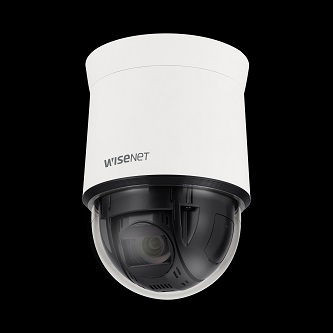
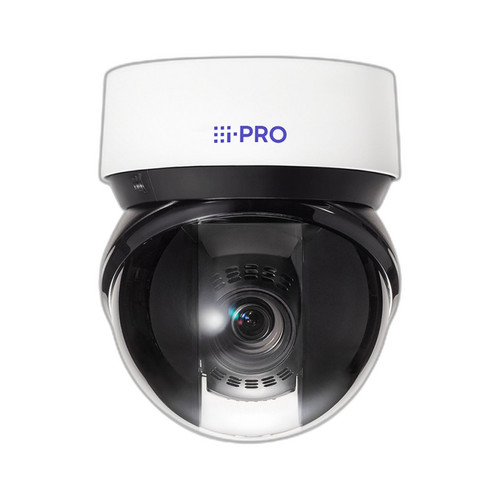
Both the Hanwha XNV-6083R and the i-PRO WV-X66300-Z3LS are outdoor 2MP PTZ dome cameras with 32x optical zoom, 60fps frame rates, and PoE power — a direct cross-shop pairing for perimeter and large-area surveillance projects. The comparison covers imaging performance, environmental and installation requirements, and platform integration, drawing exclusively from the published specifications of each model. Neither product is a fixed camera; both are motorized PTZ domes targeting similar deployment scenarios.
In This Guide
How do the imaging specs compare?
Both cameras use a 1/2.8-inch CMOS sensor at 2MP (1920×1080) and deliver 60fps. Low-light sensitivity differs slightly: the Hanwha XNV-6083R is rated at 0.05 Lux color / 0.005 Lux B&W, while the i-PRO WV-X66300-Z3LS is specified at 0.006 Lux B&W (50IRE, F1.6, 1/30s) — no color-mode Lux figure is published for the i-PRO. WDR performance is a meaningful delta: the XNV-6083R is rated at 120dB, whereas the i-PRO's Super Dynamic WDR reaches a specified maximum of 144dB at level 31. The i-PRO also lists AI Sound Classification (gunshot, yell, vehicle horn, glass break) beyond its optical specs.
Lens range is similar but not identical: the XNV-6083R covers 4.44–142.6mm (32x optical, plus 32x digital for a stated 1024x total), aperture F1.6–F4.4. The i-PRO covers 4.25–136mm (32x optical, up to 48x extra zoom at 1280×720 resolution), aperture F1.6–F4.4. IR range is a major differentiator: the XNV-6083R spec lists only 1.5m IR distance (as published), while the i-PRO specifies 350m IR range at 30IRE. DORI figures for detection at tele are 1,921m (Hanwha) vs 1,833m (i-PRO), both at 25ppm — the Hanwha slightly longer at full tele based on its published focal length. Both include a built-in gyro-based image stabilizer.
What about installation and environment?
The Hanwha XNV-6083R is rated IP67 and carries no published IK impact rating. The i-PRO WV-X66300-Z3LS is rated IP66, NEMA 4X, and IK10 (IEC 62262), providing a specified vandal/impact resistance level that the Hanwha spec does not include. The i-PRO also lists wind resistance up to 40 m/s (~89 mph) — no equivalent figure is published for the Hanwha. Operating temperature range differs significantly: the XNV-6083R is specified for -10°C to +55°C, while the i-PRO is specified for -50°C to +60°C, a substantially wider thermal envelope relevant to extreme-climate installations.
Power requirements diverge at the PoE class level. The XNV-6083R draws PoE+ (IEEE 802.3at, Class 4), with a maximum of 14.5W — compatible with standard PoE+ switches. The i-PRO WV-X66300-Z3LS requires PoE++ (IEEE 802.3bt), consuming 45.9W, which mandates a PoE++ (Class 6) capable switch or injector — a real infrastructure cost and planning consideration. The Hanwha is plastic-housed in RAL9003 white; the i-PRO uses aluminum die cast with a polycarbonate dome and stainless steel, noted as a tamper-resistant enclosure. Both mount via dome form factor; the Hanwha publishes an extensive accessory mount list (wall, pole, parapet, corner, in-ceiling, cabinet); no equivalent mount list is present in the i-PRO spec provided.
Which fits your VMS and analytics better?
Both cameras support ONVIF Profile S, G, and T. The i-PRO additionally supports ONVIF Profile M (which covers metadata including AI object types), giving it a broader ONVIF footprint for VMS platforms that consume AI metadata streams. The XNV-6083R supports Hanwha's SUNAPI (HTTP API) and the Wisenet open platform in addition to ONVIF. The i-PRO specifies Ambarella CV25m as its SoC and includes on-camera AI analytics for people, vehicle, face, occupancy, motion, and mask detection, plus AI Sound Classification. The XNV-6083R lists motion detection, directional detection, virtual line crossing, tampering alerts, and audio detection as analytics — no published on-camera AI object classification.
Edge storage capacity differs: the XNV-6083R supports up to 256GB microSD/SDHC/SDXC; the i-PRO supports up to 512GB microSDXC. Both support H.265, H.264, and MJPEG compression with CBR/VBR modes. The XNV-6083R supports up to 10 simultaneous streaming profiles and 20 unicast users; the i-PRO lists up to 14 simultaneous users. Audio: the XNV-6083R provides a selectable mic/line input and line output; the i-PRO uses a 3.5mm stereo mini jack for input and a 3.5mm stereo jack output (600Ω), and supports AAC-LC in addition to G.726 and G.711. The XNV-6083R supports 4 alarm inputs / 2 outputs; the i-PRO has 3 alarm inputs / 1 alarm output / 1 AUX output. Warranty is 3 years for the Hanwha and 5 years for the i-PRO as published.
Which should you choose: the XNV-6083R or the X66300-Z3LS?
Our take: The i-PRO WV-X66300-Z3LS is the stronger choice when the deployment demands extreme-temperature operation, long-range IR, on-camera AI analytics, or IK10 impact resistance — but only where the infrastructure can supply PoE++ (45.9W, 802.3bt). Its -50°C to +60°C operating range dwarfs the Hanwha's -10°C to +55°C, its 350m IR outperforms the Hanwha's published 1.5m IR, its 144dB Super Dynamic WDR exceeds the Hanwha's 120dB, and it adds ONVIF Profile M plus on-camera AI object classification (people, vehicle, face) absent from the Hanwha spec. The XNV-6083R is the practical choice where PoE+ switches are already in place, budget per-port matters, and Hanwha/Wisenet VMS integration (SUNAPI, Wisenet platform) is preferred — it also publishes a broader mounting accessory catalog. Verify PoE++ switch availability before specifying the i-PRO.
Side-by-Side Comparison
Spec-for-spec, from manufacturer data.
| Specification | Hanwha XNV-6083R | i-PRO X66300-Z3LS |
|---|---|---|
| Resolution | 2MP (1920×1080) | 2MP (1920×1080) |
| Image Sensor | 1/2.8" CMOS | Approx. 1/2.8" CMOS |
| Max Frame Rate | 60fps | 60fps |
| Focal Length / Optical Zoom | 4.44–142.6mm / 32x optical | 4.25–136mm / 32x optical (up to 48x extra zoom at 720p) |
| Min. Illumination | 0.05 Lux color / 0.005 Lux B&W | 0.006 Lux B&W (50IRE, F1.6, 1/30s); color figure not published |
| IR Range | 1.5m (as published) | 350m at 30IRE |
| WDR | 120dB | 144dB max (Super Dynamic level 31) |
| IP Rating | IP67 | IP66, NEMA 4X |
| IK / Impact Rating | — (not published) | IK10 (IEC 62262) |
| Operating Temperature | -10°C to +55°C | -50°C to +60°C |
| Power Input / PoE Class | PoE+ (802.3at, Class 4, max 14.5W) | PoE++ (802.3bt, Class 6, 45.9W) |
| Video Compression | H.265, H.264, MJPEG | H.265, H.264, MJPEG |
| ONVIF Profiles | S, G, T | G, M, S, T |
| Edge Storage | microSD/SDHC/SDXC up to 256GB | microSDXC up to 512GB |
| Alarm I/O | 4 inputs / 2 outputs | 3 inputs / 1 output / 1 AUX output |
| Audio | Mic/line selectable input; line output | 3.5mm stereo input; 3.5mm stereo output (600Ω); AAC-LC, G.726, G.711 |
| Dimensions (approx.) | ø152×218mm / 1,700g (3.75 lb) | ø167×205mm / approx. 3kg (without attachment) |
| Warranty | 3 years | 5 years |
Frequently Asked Questions
Which should you choose: the XNV-6083R or the X66300-Z3LS?
The i-PRO WV-X66300-Z3LS is the stronger choice when the deployment demands extreme-temperature operation, long-range IR, on-camera AI analytics, or IK10 impact resistance — but only where the infrastructure can supply PoE++ (45.9W, 802.3bt). Its -50°C to +60°C operating range dwarfs the Hanwha's -10°C to +55°C, its 350m IR outperforms the Hanwha's published 1.5m IR, its 144dB Super Dynamic WDR exceeds the Hanwha's 120dB, and it adds ONVIF Profile M plus on-camera AI object classification (people, vehicle, face) absent from the Hanwha spec. The XNV-6083R is the practical choice where PoE+ switches are already in place, budget per-port matters, and Hanwha/Wisenet VMS integration (SUNAPI, Wisenet platform) is preferred — it also publishes a broader mounting accessory catalog. Verify PoE++ switch availability before specifying the i-PRO.
Is the XNV-6083R or the X66300-Z3LS better for low-light performance?
Based on published specs, the i-PRO X66300-Z3LS has the edge in IR range — 350m at 30IRE versus the Hanwha XNV-6083R's published 1.5m IR distance. For passive low-light sensitivity, the Hanwha specifies 0.005 Lux B&W; the i-PRO specifies 0.006 Lux B&W at 50IRE (F1.6, 1/30s). These figures use different IRE and shutter references, so direct comparison is approximate, but they are in the same range. For long-distance IR illumination the i-PRO's 350m specification is substantially greater.
Can I power both cameras from a standard PoE+ switch?
No. The Hanwha XNV-6083R operates on PoE+ (IEEE 802.3at, Class 4, max 14.5W) and is compatible with standard PoE+ switches. The i-PRO WV-X66300-Z3LS requires PoE++ (IEEE 802.3bt) at 45.9W — this is a PoE Class 6 load and requires a PoE++ capable switch or injector. Using a PoE+ switch with the i-PRO will not supply adequate power.
Which camera includes on-board AI analytics, and what types?
The i-PRO WV-X66300-Z3LS specifies on-camera AI analytics for people, vehicle, face, occupancy, and motion detection, plus AI Sound Classification for gunshot, yell, vehicle horn, and glass break. The Hanwha XNV-6083R specifies motion detection, directional detection, virtual line crossing, tampering alerts, and audio detection — no on-camera AI object classification (people, vehicle, face) is listed in the published specification.
Get a Second Opinion on Your Camera Choice
Share your site layout, coverage goals, and budget. Our team will validate the camera selection, flag anything we would change, and recommend products that match the use case.