
Hanwha XNV-6083R vs i-PRO S66300-Z4L: Specification Comparison
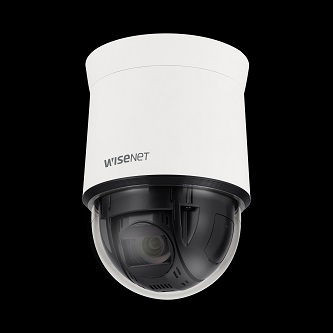
Both the Hanwha XNV-6083R (sold as QNP-6320) and the i-PRO WV-S66300-Z4L are outdoor 2MP PTZ dome cameras aimed at wide-area surveillance requiring long-range optical zoom. Each ships with motorized zoom optics, built-in IR illumination, PoE power, and ONVIF compatibility — making them legitimate cross-shop candidates for installers evaluating a high-speed PTZ for perimeter or campus applications. The comparison below is drawn strictly from the published specifications for each model.

In This Guide
How do the imaging specs compare?
Both cameras use a 1/2.8-inch CMOS sensor at 1920×1080 (2MP). The Hanwha XNV-6083R provides a 32x optical zoom (4.44–142.6 mm, F1.6–F4.4) with an additional 32x digital zoom for 1024x total. The i-PRO S66300-Z4L offers 40x optical zoom (4.25–170 mm, F1.6–F4.95) and up to 60x extra zoom at 1280×720 resolution — a meaningful reach advantage at the telephoto end. In tele detection range (25 PPM/8 PPF), the i-PRO reaches 2,199.9 m versus the Hanwha's 1,921.3 m; at recognition range (125 PPM/38 PPF) the i-PRO yields 440 m versus 384.3 m for the Hanwha.
For low-light performance, the Hanwha specifies 0.05 Lux color / 0.005 Lux B/W, while the i-PRO specifies 0.006 Lux B/W (color minimum illumination is not stated in the provided i-PRO spec). The i-PRO's IR illuminators are rated to 350 m at 30 IRE / 250 m at 50 IRE; the Hanwha lists an IR distance of 1.5 m in the provided spec fields — a figure that appears inconsistent with a PTZ of this class, and no long-range IR distance is confirmed in the remaining spec data for the Hanwha. The i-PRO's dynamic range is specified at up to 144 dB (Super Dynamic on, Level 31); the Hanwha specifies 120 dB WDR. The i-PRO also includes AI Sound Classification (gunshot, yell, vehicle horn, glass break) alongside its video analytics, while the Hanwha specifies audio detection only. The Hanwha supports 60 fps; the i-PRO specs list variable frame rate without a maximum fps value stated.
What about installation and environment?
The i-PRO S66300-Z4L carries an IP66 and IK10 rating and is specified for operation from -50°C to +60°C with wind resistance up to 40 m/s (~89 mph). It is powered by PoE++ (802.3bt) at up to 45.9 W (PoE Class 6). Its housing is aluminum die cast, stainless steel, and polycarbonate, with a tamper-resistant enclosure noted in the spec. Dimensions are φ167 mm × 205 mm (H), weight approximately 3 kg (6.61 lb).
The Hanwha XNV-6083R carries an IP67 rating — one step higher on dust/water ingress than the i-PRO's IP66 — but no IK vandal-impact rating is stated in the provided specs. Operating temperature is -10°C to +55°C, a narrower range than the i-PRO at both ends. Power is PoE+ (802.3at, Class 4) at a maximum of 14.5 W, substantially lower than the i-PRO. The Hanwha housing is plastic, dimensions φ152 × 218 mm, weight 1,700 g (3.75 lb). The Hanwha spec sheet lists a broad range of compatible mounting accessories (wall, pole, ceiling, in-ceiling, parapet, corner, cabinet); the i-PRO spec does not enumerate compatible mounts in the provided data.
Which fits your VMS and analytics better?
Both cameras support ONVIF — the Hanwha covers Profiles S, G, and T; the i-PRO covers Profiles G, M, S, and T, adding Profile M which includes metadata streaming for analytics events. The Hanwha exposes SUNAPI (HTTP API) and the Wisenet open platform in addition to ONVIF. The i-PRO is built on an Ambarella CV25m SoC and delivers onboard AI analytics including motion, face, people, vehicle, mask, and occupancy detection, plus AI sound classification across four event types. The Hanwha provides motion detection (8 polygonal zones), directional detection, virtual line crossing, tampering alerts, and audio detection, but does not specify face, people, or vehicle AI classification in the provided specs.
Edge storage is microSD/SDHC/SDXC (up to 256 GB) on the Hanwha and microSDXC (capacity not stated in the i-PRO spec) on the i-PRO. The Hanwha supports unicast streaming to 20 users and up to 10 stream profiles; the i-PRO supports up to 14 simultaneous users. Audio input on the Hanwha is a selectable mic/line-in with 2.5 VDC bias; the i-PRO lists four 3.5 mm stereo mini-jack audio inputs and a 3.5 mm stereo audio output. The i-PRO is certified to FIPS 140-2 Level 3; the Hanwha specifies AES encryption, firmware encryption, 802.1X, and digest authentication but does not cite FIPS certification in the provided specs. The Hanwha carries a 3-year warranty; the i-PRO carries a 5-year warranty.
Which should you choose: the XNV-6083R or the S66300-Z4L?
Our take: The i-PRO S66300-Z4L is the stronger choice when maximum optical reach, extreme-environment survivability, and onboard AI classification are the primary requirements. Its 40x optical zoom (vs. 32x) extends tele detection to 2,199.9 m versus the Hanwha's 1,921.3 m — a 278 m advantage — while recognition range improves from 384.3 m to 440 m. Its operating window of -50°C to +60°C is dramatically wider than the Hanwha's -10°C to +55°C, and IK10 impact resistance is confirmed where the Hanwha provides no IK rating in the available spec data. On the other side, the Hanwha holds IP67 versus IP66, consumes roughly one-third the power (14.5 W PoE+ vs. 45.9 W PoE++), and weighs 1.3 kg less — relevant where PoE++ infrastructure is not yet deployed. Choose the Hanwha for lower-power, IP67-sealed installations on existing PoE+ switches; specify the i-PRO for harsh outdoor environments, long-distance identification, or sites requiring certified AI object classification and FIPS-level security.
Side-by-Side Comparison
Spec-for-spec, from manufacturer data.
| Specification | Hanwha XNV-6083R | i-PRO S66300-Z4L |
|---|---|---|
| Resolution | 2MP (1920×1080) | 2MP (1920×1080) |
| Image Sensor | 1/2.8" CMOS | Approx. 1/2.8" CMOS (5.57×3.13 mm scanning area) |
| Optical Zoom / Focal Length | 32x / 4.44–142.6 mm | 40x / 4.25–170 mm |
| Digital / Extra Zoom | 32x digital (1024x total) | Up to 60x at 1280×720 |
| Max Aperture | F1.6 (Wide) / F4.4 (Tele) | F1.6 (Wide) / F4.95 (Tele) |
| Min Illumination (B/W) | 0.005 Lux | 0.006 Lux (F1.6, 1/30s) |
| IR Range | 1.5 m (as specified; long-range value not confirmed in provided specs) | 350 m (30 IRE) / 250 m (50 IRE) |
| Wide Dynamic Range | 120 dB | 144 dB (Super Dynamic On, Level 31) |
| Tele Detection Range (25 PPM) | 1,921.3 m | 2,199.9 m |
| Tele Recognition Range (125 PPM) | 384.3 m | 440.0 m |
| Max Frame Rate | 60 fps | Variable (max fps not stated in provided specs) |
| Video Compression | H.265, H.264 (Main/High), MJPEG | H.265, H.264, MJPEG |
| IP Rating | IP67 | IP66 |
| IK / Impact Rating | — (not stated in provided specs) | IK10 (IEC 62262) |
| Operating Temperature | -10°C to +55°C | -50°C to +60°C |
| Power Input / PoE Class | PoE+ 802.3at, Class 4, max 14.5 W | PoE++ 802.3bt, Class 6, 45.9 W |
| Pan Speed (Preset) | 700°/sec | 700°/sec |
| Tilt Speed (Preset) | 300°/sec | 500°/sec |
| Preset Positions | Not stated in provided specs | 256 positions |
| ONVIF Profiles | S, G, T | G, M, S, T |
| AI Object Analytics | Motion, direction, line crossing, tampering, audio detection | AI motion, face, people, vehicle, mask, occupancy; AI sound classification (4 types) |
| Edge Storage | MicroSD/SDHC/SDXC up to 256 GB | MicroSDXC (max capacity not stated in provided specs) |
| Audio Input | Selectable mic/line-in (2.5 VDC bias, 2K Ohm) | 4× 3.5 mm stereo mini jack |
| Audio Output | Line out, max 1 Vrms | 3.5 mm stereo jack, 600Ω, -20 dBV |
| Alarm I/O | 4 inputs / 2 outputs | 3 alarm I/O terminals |
| Housing Material | Plastic | Aluminum die cast, stainless steel, polycarbonate |
| Dimensions | φ152 × 218 mm | φ167 × 205 mm (H) |
| Weight | 1,700 g (3.75 lb) | Approx. 3,000 g (6.61 lb) |
| Security Certification | AES encryption, 802.1X, firmware encryption (FIPS not stated) | FIPS 140-2 Level 3, HTTPS, IEEE 802.1X |
| Warranty | 3 years | 5 years |
Frequently Asked Questions
Which should you choose: the XNV-6083R or the S66300-Z4L?
The i-PRO S66300-Z4L is the stronger choice when maximum optical reach, extreme-environment survivability, and onboard AI classification are the primary requirements. Its 40x optical zoom (vs. 32x) extends tele detection to 2,199.9 m versus the Hanwha's 1,921.3 m — a 278 m advantage — while recognition range improves from 384.3 m to 440 m. Its operating window of -50°C to +60°C is dramatically wider than the Hanwha's -10°C to +55°C, and IK10 impact resistance is confirmed where the Hanwha provides no IK rating in the available spec data. On the other side, the Hanwha holds IP67 versus IP66, consumes roughly one-third the power (14.5 W PoE+ vs. 45.9 W PoE++), and weighs 1.3 kg less — relevant where PoE++ infrastructure is not yet deployed. Choose the Hanwha for lower-power, IP67-sealed installations on existing PoE+ switches; specify the i-PRO for harsh outdoor environments, long-distance identification, or sites requiring certified AI object classification and FIPS-level security.
Is the XNV-6083R or S66300-Z4L better for low-light performance?
The i-PRO S66300-Z4L specifies IR illumination to 350 m at 30 IRE, and a minimum illumination of 0.006 Lux B/W. The Hanwha XNV-6083R specifies 0.005 Lux B/W minimum illumination; however, its IR range is listed as 1.5 m in the provided spec data — a value that appears inconsistent with its PTZ optics, and no confirmed long-range IR distance is available in the specs provided. Based on the IR distance data available, the i-PRO's 350 m IR reach is the only verified long-range IR figure between the two models.
Which camera requires less infrastructure investment for power?
The Hanwha XNV-6083R requires only PoE+ (802.3at, Class 4, max 14.5 W), which is supported by most modern PoE+ switches. The i-PRO S66300-Z4L requires PoE++ (802.3bt, up to 45.9 W, Class 6), which demands a PoE++ capable switch or injector. If your existing switch infrastructure is PoE+ only, the Hanwha avoids a switch upgrade; the i-PRO will require either a PoE++ switch upgrade or a local mid-span injector.
Does either camera support AI-based object classification out of the box?
Yes — the i-PRO S66300-Z4L specifies onboard AI analytics for motion, face, people, vehicle, mask, and occupancy detection, plus AI Sound Classification covering gunshot, yell, vehicle horn, and glass break events, all running on the embedded Ambarella CV25m SoC. The Hanwha XNV-6083R provides motion detection with polygonal zones, directional detection, virtual line crossing, tampering alerts, and audio detection, but the provided specifications do not include face, people, or vehicle AI object classification.
Get a Second Opinion on Your Camera Choice
Share your site layout, coverage goals, and budget. Our team will validate the camera selection, flag anything we would change, and recommend products that match the use case.